


Most lists of cat facts give you the exact same handful of trivia you have heard a hundred times. This guide is different. Here, you will discover 30 amazing facts about cats, and every one is checked against veterinary sources, scientific studies, or Guinness World Records.
However, loving cats does not mean knowing everything about them. In fact, some popular internet claims about our furry friends are simply wrong. In addition to the real facts, this article busts a few widespread myths along the way.
Read on to discover incredible cat facts that will make you see your favorite domestic predator in a whole new light.

Cat Facts: Quick Stats
- Species: Felis catus
- Ancestor: African wildcat
- Lifespan (indoor): 13–17 years (ASPCA)
- Lifespan (outdoor): 2–5 years
- Sleep: 12–16 hours a day
- Bones: About 230–250
- Body temperature: 100.5–102.5 °F
- Hearing: Up to about 85 kHz
Amazing Cat Facts About the Body and Senses
1. Cats Hear Sounds You Never Will
Cats hear up to about 85 kHz in laboratory tests. That is more than four times the upper human limit of 20 kHz. As a result, your pet can easily detect the high-pitched squeaks of hidden rodents.
2. Their Ears Work Like Radar Dishes
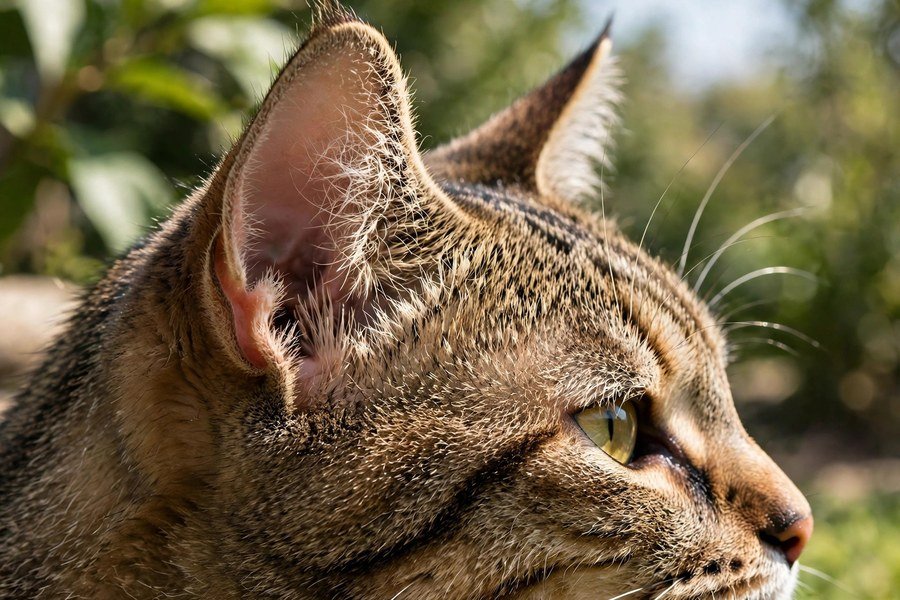
Each ear is powered by about 32 individual muscles. Additionally, a cat can rotate its ears up to 180 degrees, independently of each other. This movement lets a cat pinpoint where a sound is coming from without turning its head.
3. Cats Cannot Taste Sweetness
Cats lack the ability to enjoy sugary treats, because their sweet-taste gene, Tas1r2, is a non-functional pseudogene. Furthermore, they have only about 473 taste buds, compared to roughly 9,000 in humans. Interestingly, big wild cats like tigers and cheetahs share this exact genetic defect.
4. Night Vision Is Great, but Not Unlimited
In fact, cats can see in light about six times dimmer than what human eyes require. They achieve this thanks to a reflective layer called the tapetum lucidum, and 6 to 8 times more rod cells. However, cats cannot see in total darkness.
5. Their Sense of Smell Is Astonishing
A domestic cat’s nose holds around 200 million scent receptors. In contrast, human noses contain a mere 5 million. Consequently, scent plays a far larger role in a cat’s daily life than visual cues.
6. They Can “Taste-Smell” Scent Messages
In addition, cats possess a specialized second scent organ called Jacobson’s organ in the roof of their mouth. When you see a cat make a funny, open-mouthed grimace, it is displaying the flehmen response. This action allows the cat to analyze complex chemical messages left by other animals.
7. Whiskers Are High-Tech Sensors
Whiskers are deep-rooted sensors packed with sensitive nerves that detect tiny changes in surrounding air currents. Beyond their cheeks, cats also have whiskers above their eyes and behind their front legs. You should never trim them, though naturally shed whiskers will regrow over time.

8. Purring Takes Surprisingly Little Effort
The low purring sound is produced in the cat’s larynx. A 2023 University of Vienna study discovered special fibrous pads within the vocal folds. These pads allow cats to produce low-frequency vibrations with minimal physical effort.
Cat Behavior Facts That Explain Your Cat
9. They Are Built for Dawn and Dusk
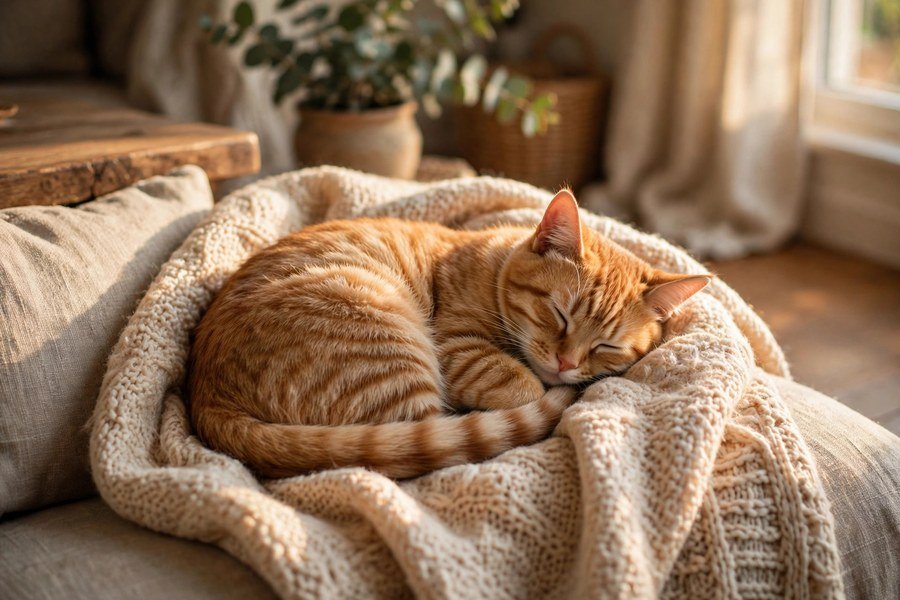
Cats typically sleep 12 to 16 hours a day, while kittens and seniors can snooze up to 20 hours. Meanwhile, they are naturally crepuscular, meaning they are most active during dawn and dusk. This schedule mirrors the active hours of their wild prey.
10. Grooming Keeps Them Cool and Healthy
Cats spend between 30% and 50% of their waking hours grooming their fur, according to Cornell experts. This habit does far more than keep them clean. For example, grooming helps cool the body through evaporation and spreads protective skin oils.
11. The Slow Blink Is a Secret Sign of Trust
The slow blink is a real form of feline communication. In a 2020 study, cats slow-blinked back at their owners far more often. Interestingly, they were also more likely to approach strangers who slow-blinked at them first.
12. Kneading Is an Instinct From Kittenhood
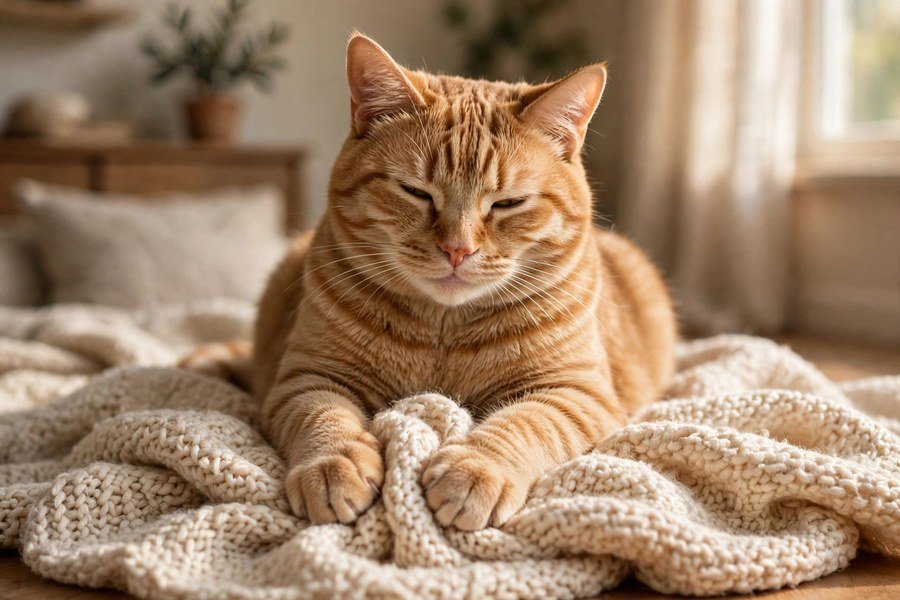
Kneading, often called “making biscuits,” is a kitten behavior carried directly into adulthood. Kittens push against their mother to stimulate milk flow. In addition, scent glands in the paw pads mean the action also marks you as theirs.
13. Headbutting Is a Friendly Marking Ritual
Headbutting and cheek-rubbing, known as bunting, is a friendly scent-marking ritual. Glands on the cheeks, chin, and forehead deposit friendly pheromones. Ultimately, it is your cat’s way of saying, “You are safe, and you belong to me.”
14. Bringing Prey Home Is a Teaching Habit
A cat bringing you dead prey is treating you like an inexperienced kitten. According to Cornell experts, mother cats teach their offspring how to hunt in gradual stages. Therefore, bringing you a catch stems from a deep teaching instinct, rather than a gift.
15. Tail Language Works Differently Than a Dog’s
For instance, an upright tail acts as a warm, friendly greeting across the room. On the other hand, slow, wide tail sweeps usually mean irritation is building up. This movement is almost the exact opposite of a happy dog’s tail wag.
16. Meowing Is Reserved for Humans
Adult cats rarely meow at one another. Instead, kittens meow to get their mother’s attention. As domestic pets, adult cats keep this vocal habit mostly for communicating with humans.
Record-Breaking Cats
17. The Oldest Cat Lived Nearly Four Decades
The oldest cat ever documented was Creme Puff of Austin, Texas. She lived to an incredible 38 years and 3 days, spanning from 1967 to 2005. Remarkably, her owner had also owned the previous record holder, who reached 34 years of age.
18. A British Cat Hits a Major Milestone
The oldest living cat on record is Flossie from the United Kingdom. Born on December 29, 1995, she turned 30 in December 2025. Today, she lives comfortably despite being deaf and partially sighted.
19. Maine Coons Hold the Record for Length
Moreover, the longest cat ever recorded was a Maine Coon named Stewie, who measured 123 cm (48.5 in) from nose to tail tip. Meanwhile, the longest living cat is Barivel of Italy. He measured an impressive 120 cm.

20. Two Cats Share the Loudest Purr
The record for the loudest purr stands at 67.8 decibels. This record is shared by two UK cats, Smokey (2011) and Merlin (2015). For comparison, their purrs were roughly as loud as an operating vacuum cleaner.
21. A Feline Inheritance Worth Millions
The wealthiest cat in history was a cat named Blackie. In 1988, a British antiques dealer left him £7 million in his will. Three cat charities held and managed the funds to ensure his lifelong care.
Cats in History: 10,000 Years Beside Humans
22. Farmers First Attracted Wildcats
Domestic cats descend directly from the African wildcat. Domestication began roughly 10,000 years ago in the Fertile Crescent, when agricultural grain stores attracted rodents, which in turn drew cats. Additionally, a 2025 study notes that true domestic cats only arrived in Europe about 2,000 years ago, likely aboard Roman ships.
23. A 9,500-Year-Old Grave Proves Early Friendship
Similarly, the earliest hard evidence of a tame cat comes from a 9,500-year-old burial site in Cyprus. Archaeologists found a human and a young cat buried just 40 cm apart. Because cats are not native to Cyprus, the animal must have arrived by boat with people.
24. Ancient Egypt Revered Feline Traits
Ancient Egyptians closely linked cats to the goddess Bastet. However, a Smithsonian curator notes that Egyptians honored feline traits in their deities, rather than literally worshipping the animals. Regardless, millions of cats were mummified as sacred temple offerings over the centuries.
25. One Brave Stray Traveled to Space
Félicette remains the first and only cat to travel into space. France launched the Paris stray on October 18, 1963, reaching an altitude of about 155 km. She survived the 15-minute flight, and a statue honoring her now stands in Strasbourg. Sadly, she did not live long after her return flight.
26. Ship’s Cats Earned High Honors
For centuries, ship’s cats protected vital food stores from destructive rats on long voyages. A famous cat named Simon, aboard HMS Amethyst, was wounded during the 1949 Yangtze Incident. Despite his injuries, he kept catching rats and became the only cat ever awarded the Dickin Medal — the animal equivalent of the Victoria Cross.
Weird Cat Science
27. Purrs Vibrate at a Mysterious Frequency
Cat purrs vibrate at frequencies between 25 and 150 Hz. Coincidentally, this exact frequency band is used in some human bone therapy. Scientists have suggested that purring might aid healing, but this idea is not proven. Moreover, cats also purr when injured or frightened, not just when happy.
28. Groups of Cats Have Unusual Names
Collective nouns for animals can be quite quirky. For example, a group of adult cats is formally called a clowder. Meanwhile, a group of young kittens is referred to as a kindle.
29. Paw Preferences Depend on Sex
Much like human hand dominance, cats show distinct paw preferences. Multiple studies suggest that females tend to favor their right paw for complex tasks. Conversely, male cats tend to prefer using their left paw.
30. Falling Cats Rely on an Internal Gyroscope
Falling cats twist mid-air using a flexible spine and an inner-ear balance system, known as the righting reflex. Kittens perfect this ability by about 7 weeks old. However, the claim that a cat “always lands safely” is a myth. Vets treat fall injuries, known as high-rise syndrome, all the time, and studies disagree on overall survival patterns.
5 Cat Myths, Busted
“Cats Have Nine Lives”
This idea is purely folklore. In reality, cats have just one life and are easily hurt by traffic, falls, and disease, like any other animal.
“Black Cats Bring Bad Luck”
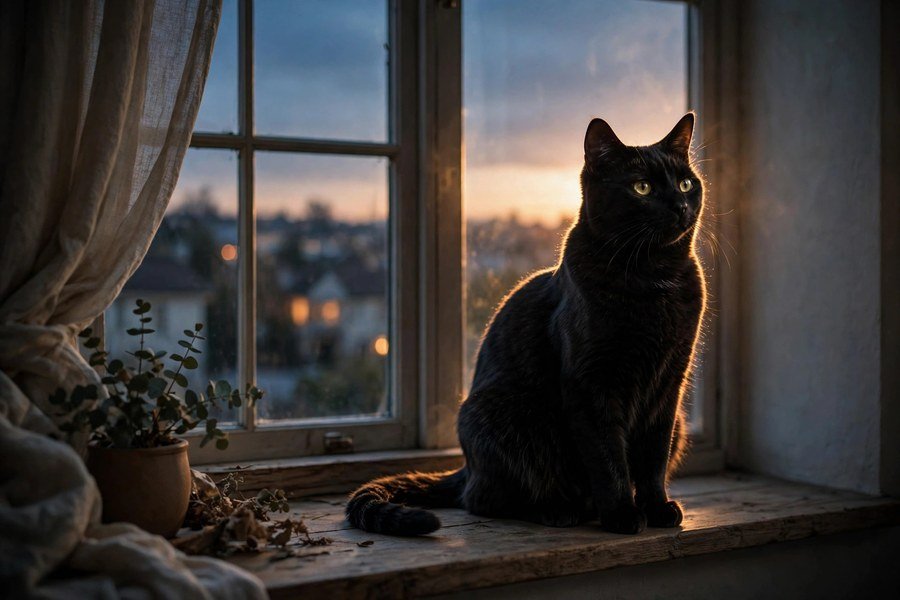
In many cultures, including Britain and Japan, black cats are traditionally considered symbols of good luck. Ultimately, coat color is simply a matter of genetics.
“Purring Always Means a Happy Cat”
While cats purr when content, they also purr when stressed, in pain, or frightened. Therefore, you must read their entire body language to understand their mood.
“Milk Is the Perfect Cat Treat”
Most adult cats are actually lactose intolerant. Consequently, giving them cow’s milk often causes stomach upset and diarrhea. Clean water is always the right drink for your cat.
“Isaac Newton Invented the Cat Flap”
This story is a popular legend with no supporting evidence in Newton’s writings. In fact, cat holes are mentioned in Chaucer’s Canterbury Tales, written centuries earlier.
FAQs About Cat Facts
How long do cats sleep?
Cats sleep between 12 and 16 hours every day on average. Kittens and elderly cats may sleep up to 20 hours daily. This long rest helps them conserve energy for short bursts of hunting activity.
Can cats see in the dark?
Cats cannot see in complete and total darkness. However, they can see remarkably well in very dim light. Their eyes need only about one-sixth of the light that human eyes require.
Why do cats purr?
The purr is produced in the cat’s larynx. While cats often purr to express happiness, they also purr to self-soothe when injured, scared, or stressed.
How old is the oldest cat ever?
In short, the oldest verified cat in history was Creme Puff from Austin, Texas. She lived to be 38 years and 3 days old before passing away in 2005.
Do cats really have nine lives?
No. Despite what many cat facts lists claim, cats do not have nine lives. This widespread phrase is just a myth, stemming from their impressive agility and righting reflex.
Why does my cat bring me dead animals?
Your cat is expressing an instinctive teaching behavior. In the wild, mother cats bring dead or injured prey to their kittens to teach them how to hunt.
Conclusion
These cat facts barely scratch the surface: cats have lived beside human civilization for roughly 10,000 years, yet they continue to surprise scientists and veterinarians today. From their high-frequency hearing to their subtle communication signals, these remarkable creatures remain endlessly fascinating.
Which of these facts about cats surprised you the most? Share your favorite in the comments, or drop a story about your own cat’s quirky habits. And if you love discovering strange animal facts, wait until you meet the world’s slowest mammal in our sloth facts article.
Sources: Cornell Feline Health Center, Guinness World Records, Smithsonian Magazine, ASPCA. Every fact in this article was checked against sources like these before publishing.
If you enjoyed these, don’t miss our complete collection of fun facts about animals — 40 amazing creatures from across the animal kingdom, all in one place.