


Mercury is the planet most people rush past, yet these fun facts about Mercury show it may be the strangest world in the solar system. It is the smallest planet and the closest to the Sun. Even so, it hides water ice, a giant iron heart and a surface that is slowly wrinkling. Almost everything about it breaks the rules.
Heat is only half the story. One side roasts hot enough to melt lead, while the other freezes harder than an Antarctic night. A single day there lasts as long as two of its years. Meanwhile, the Sun can appear to stop, slide backwards and rise twice.
Below are 35 fun facts about Mercury in five themed groups, from record-breaking speed to the spacecraft now heading its way. A fresh mission arrives in November 2026, so several facts are about to get even more interesting. First, the basics.

Mercury Quick Facts
| Quick Fact | Detail |
|---|---|
| Diameter | 4,879 km |
| Average distance from the Sun | 57.9 million km |
| One year (one full orbit) | 88 Earth days |
| One day (sunrise to sunrise) | 176 Earth days |
| Rotation (one full spin) | 59 Earth days |
| Daytime temperature | Up to 430 °C |
| Night temperature | Down to −180 °C |
| Moons | 0 |
| Gravity | 38% of Earth’s |
| Named after | The Roman messenger god |
The Fastest, Smallest Planet
Our fun facts about Mercury begin with speed and size, because this tiny planet holds two solar-system records at once.
1. Mercury Is the Fastest Planet of All
Mercury races around the Sun at roughly 47 kilometres per second, faster than any other planet. As a result, its year lasts just 88 Earth days. You would celebrate four birthdays there for every one on Earth. Nothing else in the solar system completes an orbit so quickly, and that speed shapes almost everything else about this restless little world.

2. Its Orbit Is the Wonkiest in the Solar System
Mercury does not circle the Sun in a neat loop. Instead, it follows the most stretched, eccentric orbit of all eight planets. At its closest it swings within 46 million kilometres of the Sun. However, at its farthest it drifts out to nearly 70 million. That huge swing helps explain the planet’s wild mood swings in heat and light.
3. Mercury Is Barely Bigger Than Our Moon
With a diameter of 4,879 kilometres, Mercury is the smallest of the eight planets. It is only slightly wider than Earth’s Moon. In fact, two of the solar system’s moons, Ganymede and Titan, are actually bigger than it. Yet Mercury is a true planet in every way, with its own geology, gravity and surprisingly powerful personality.
4. For Its Size, Mercury Is Extraordinarily Heavy
Mercury is the second-densest planet in the solar system, beaten only by Earth. That seems odd for such a small world. The secret sits deep inside: an enormous iron core fills most of the planet. Because of that metal heart, Mercury packs far more mass into its small body than its modest size would ever suggest.
5. Mercury Is Earth’s Closest Neighbour — on Average
Here is a fact that surprises almost everyone. Although Venus comes nearer at its closest, Mercury is Earth’s closest planet on average. Simulations published in 2019 showed why: Mercury spends the most time nearby, so it wins the long-term average. Remarkably, the same holds for every other planet too — Mercury is everyone’s nearest neighbour, on average.
6. Mercury Has Almost No Tilt, So It Has No Seasons
Earth leans by 23.5 degrees, which gives us seasons. Mercury, by contrast, stands almost perfectly upright, with a tilt of about 0.03 degrees — the smallest in the solar system. As a result, it has no real seasons at all. Some polar craters never see sunlight, and that permanent shadow becomes important later in this list.
7. You Would Weigh Just 38% of Your Earth Weight
Gravity on Mercury is only 38% of Earth’s, the same as on Mars. So a person who weighs 70 kilograms at home would weigh about 27 kilograms there. Meanwhile, the Sun would loom up to three times bigger than from Earth, and you would feel light on your feet beneath its glare.
Hot, Cold and Airless
Next, our fun facts about Mercury turn to brutal temperatures and a missing sky — why this world is both oven and freezer.
8. Daytime Heat Reaches 430 °C
When the Sun shines on Mercury, the surface bakes at up to 430 °C. That is hot enough to melt lead, tin and zinc. Rocks endure this roasting for weeks, because one daytime stretch lasts months of Earth time. No planet’s sunny side gets fiercer.

9. Nights Plunge to −180 °C — a 600-Degree Swing
Turn away from the Sun, though, and the cold is savage. Night temperatures fall to around −180 °C. The difference between day and night is roughly 600 degrees, the most extreme swing of any planet. Because Mercury has almost no air to hold warmth, heat escapes straight back into space as soon as the Sun moves on.
10. Mercury’s “Atmosphere” Is Barely There at All
Mercury has no real atmosphere, only a wispy skin called an exosphere. It contains traces of oxygen, sodium, hydrogen, helium and potassium, knocked loose from the surface itself. Worse still, the solar wind constantly blasts these atoms away into space. The planet keeps losing its thin veil and rebuilding it, in a cycle that never settles.
11. The Sky Stays Black Even at Noon
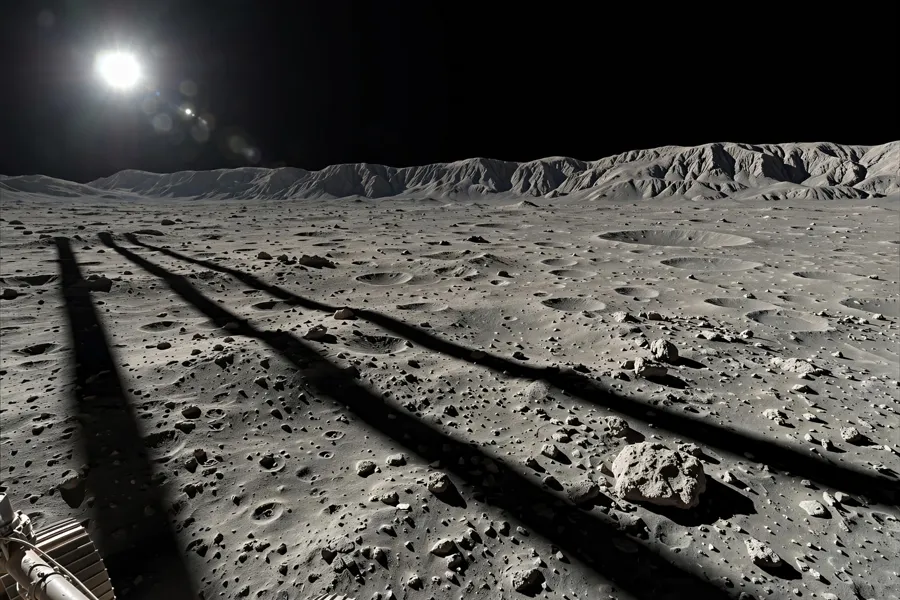
With almost no air to scatter sunlight, the sky stays pitch black even at midday. There is no weather, no wind you could feel and no air to carry sound. Stand there at noon and you would see a huge white Sun burning in a starless black sky.
12. Mercury Has a Comet-Like Tail
Sunlight pushes sodium atoms off Mercury so hard that they stream behind the planet in a glowing tail. This tail stretches for millions of kilometres, far longer than the planet itself. It brightens and fades along Mercury’s orbit, and astronomers on Earth can photograph it with modest telescopes and filters.
13. Water Ice Hides in Mercury’s Polar Craters
Here is the twist nobody expected on the closest planet to the Sun. Radar hints from Earth suggested ice in the permanently shadowed craters near Mercury’s poles. Then, in 2012, NASA’s MESSENGER probe confirmed it: real water ice, sitting in darkness that never warms up. In those frozen traps, the ice can survive for billions of years.
14. Ancient Space Deliveries Left Dark Material in the Shadows
Those same shadowed craters hold something else intriguing. MESSENGER found dark, organic-rich material coating parts of the polar deposits. Scientists believe comets and asteroids delivered it long ago, then the polar cold preserved it. In short, the building blocks of life may have been stockpiled on the last planet anyone thought to check.
The Cratered Iron World
Some of the best fun facts about Mercury are written on its battered face — time to dig into its iron heart and scars.
15. Mercury’s Iron Core Fills About 85% of the Planet
Slice Mercury open in your imagination and you would mostly find metal. Its iron core stretches across about 85% of the planet’s radius. Earth’s core, by comparison, spans only about half of ours in proportional terms, and Mercury’s rocky outer shell is comparatively thin. This strange inside-out design is the biggest clue to the planet’s violent early history.
16. Tiny Mercury Somehow Keeps a Magnetic Field
Small planets are supposed to lose their magnetic fields as their cores cool and freeze. Mercury refused to follow that script. It still generates a global magnetic field, roughly 1% as strong as Earth’s. That field proves part of its giant core is still liquid and moving. For scientists, it is one of the planet’s most delightful puzzles.
17. Mercury Is Shrinking and Wrinkling Like a Dried Apple
As Mercury’s huge core slowly cools, the whole planet contracts. The surface has nowhere to go, so it crumples. Enormous cliffs and wrinkle ridges, some hundreds of kilometres long, scar the landscape where the crust buckled. Geologists estimate the planet has shrunk by several kilometres in radius. Picture a dried apple’s wrinkled skin, scaled up to an entire world.
18. The Caloris Basin Is One of the Biggest Craters Anywhere
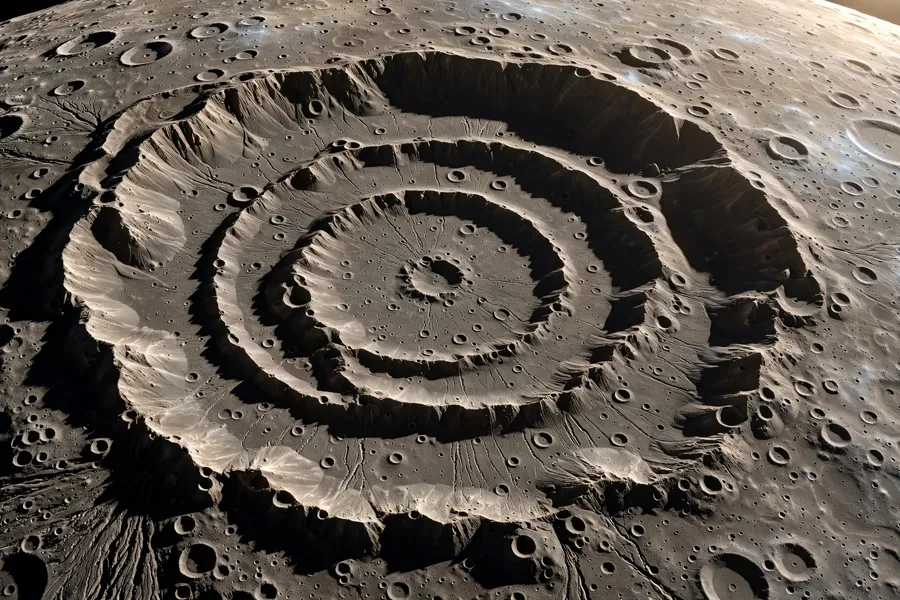
A colossal impact carved the Caloris Basin, a crater about 1,550 kilometres wide. It ranks among the largest impact scars in the entire solar system. Oddly, the shock waves met on the exact opposite side of the planet and jumbled the ground there into chaotic “weird terrain”. One ancient collision literally shook Mercury to its antipode.
19. A Giant “Spider” Spreads Across the Caloris Floor
Inside the Caloris Basin sits one of the strangest sights in planetary science. Over a hundred troughs radiate from near a small crater, Apollodorus, forming a pattern nicknamed the Pantheon Fossae — “the Spider”. Nothing quite like it exists on any other world, and scientists cannot fully explain how it formed.
20. Mercury’s Craters Are Named After Artists and Musicians
Every crater on Mercury honours a creative soul. There is a Beethoven crater, a Shakespeare crater, and hundreds named for painters, writers, poets and composers — by rule, each honoree must have been dead for at least three years. Mercury is also among the most heavily cratered worlds known, because it has almost no air to burn up incoming rocks and no weather to erase the scars.
21. Mercury’s Surface May Be Darkened by Pencil Lead
Mercury looks oddly dark in photographs, darker even than the Moon. One leading explanation points to graphite, the carbon in pencil lead. Long ago a graphite-rich crust may have covered the young planet; later impacts punched through and mixed that dark material across the surface. Mercury’s grey-brown face may owe its shade to ancient carbon.
Strange Skies and Weird Orbits
More fun facts about Mercury appear when you look up: its sky and orbit break rules that hold everywhere else.
22. One Sunrise-to-Sunrise Day Lasts 176 Earth Days
Mercury spins once on its axis every 59 Earth days, which sounds manageable. But because it also races around the Sun so fast, a full cycle from one sunrise to the next takes 176 Earth days. That is exactly two Mercurian years. In other words, your birthday would come around twice before a single day had passed.
23. At Some Spots, the Sun Rises Twice in One Morning
Near its closest approach to the Sun, Mercury’s orbital speed briefly outruns its slow spin. From the surface, the rising Sun can appear to stop, dip back below the horizon, then rise again — a genuine double sunrise. Elsewhere, the Sun seems to loop backwards across the sky before resuming its crawl.
24. Mercury’s Wobbly Orbit Helped Prove Einstein Right
Precise measurements showed Mercury’s orbit slowly swivelling by 43 arc-seconds per century more than Newton’s laws could explain. Astronomers hunted in vain for a hidden planet tugging at it. Then, in 1915, Einstein’s general relativity predicted exactly that extra wobble, with no hidden planet needed. Mercury’s odd orbit became one of the first great proofs of relativity.
25. Mercury Crosses the Sun’s Face Only 13 or 14 Times a Century
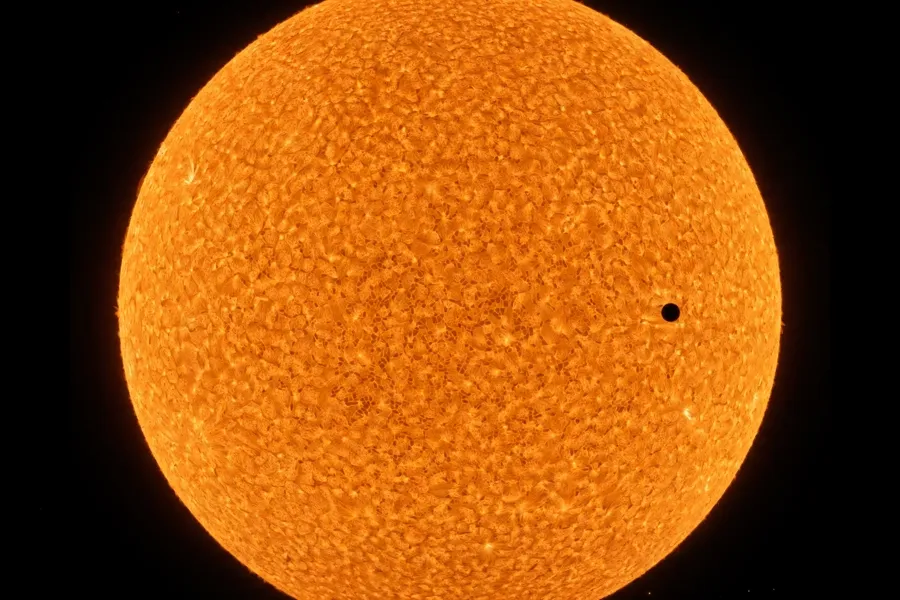
Sometimes Mercury passes directly between Earth and the Sun, appearing as a tiny black dot crossing the solar disc. These transits are rare, happening just 13 or 14 times each century. The last one took place on 11 November 2019. Patient sky-watchers must wait until 13 November 2032 for the next chance to see it.
26. You Can Spot Mercury With the Naked Eye — at Dawn or Dusk
Despite its reputation as elusive, Mercury is visible without any telescope. Look low on the horizon just after sunset or before sunrise, near its widest separation from the Sun. However, you will never see it overhead at midnight, because it never strays far from the Sun’s glare. Many people have seen it without ever realising.
27. Even the Hubble Telescope Cannot Safely Look at Mercury
Hubble has photographed galaxies billions of light-years away, yet it cannot be pointed at little Mercury. The planet hugs the Sun so closely that aiming the telescope its way risks flooding its sensitive instruments with sunlight and damaging them. Visiting spacecraft and ground telescopes must do the job instead.
28. Far in the Future, Mercury’s Orbit Might Unravel
Long-term computer models of the solar system carry one unsettling footnote. They suggest a small chance, around 1%, that over billions of years Mercury’s orbit could destabilise. In those simulations it might collide with the Sun or Venus, or be flung out of the solar system entirely. Distant speculation, not a prediction — but Mercury keeps surprising us.
Missions and Mysteries
The final group of fun facts about Mercury belongs to the spacecraft that reached it — and the mysteries they left behind.
29. Mariner 10 Gave Us Our First Close Look in 1974
For most of history, Mercury was little more than a fuzzy dot. Then NASA’s Mariner 10 flew past three times in 1974 and 1975, sending home the first close-up photographs. It mapped under half of the surface before its mission ended. For three decades afterwards, Mercury’s other half stayed completely unseen — a blank patch on our map of the planets.
30. MESSENGER Orbited Mercury, Then Crashed on Purpose
NASA’s MESSENGER became the first spacecraft ever to orbit Mercury, working there from 2011 to 2015. It mapped the whole planet, sniffed its exosphere and confirmed the polar ice. When its fuel ran out, controllers let it fall. On 30 April 2015 it slammed into the surface, digging itself a fresh crater — a fitting end on a cratered world.
31. BepiColombo Arrives on 21 November 2026
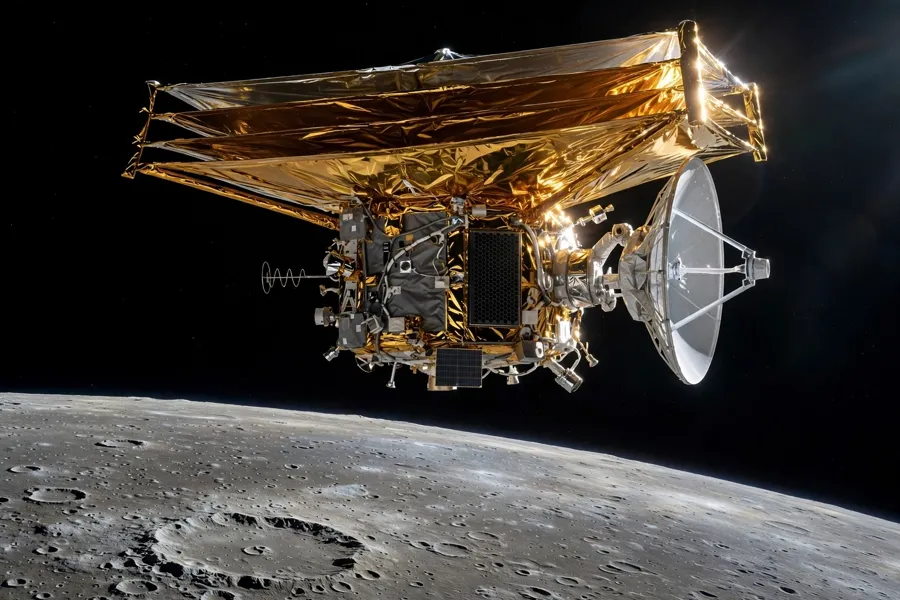
Right now, a third mission is closing in. BepiColombo, a joint European and Japanese venture launched in October 2018, has already flown past Mercury six times. On 21 November 2026 it will finally enter orbit, releasing two orbiters: ESA’s Planetary Orbiter and JAXA’s Mio. In the weeks after arrival, the pair will begin studying the planet together.
32. Reaching the Closest Planet Takes About Seven Years
Here is a puzzle: Mercury is our nearest neighbour on average, yet spacecraft need roughly seven years to reach it. A craft leaving Earth must shed enormous orbital speed to fall towards the Sun without overshooting. That takes more energy than sending a craft clean out of the solar system. So missions cheat, using gravity assists — BepiColombo needs nine flybys in total.
33. Mercury Has “Hollows” Found Nowhere Else
Scattered across Mercury are shallow, rimless pits with bright halos, called hollows. They cluster inside craters and look astonishingly fresh and young. Nothing like them exists on the Moon or anywhere else we have looked. Scientists think some material in the surface is still slowly evaporating into space, which means Mercury’s face may be quietly changing even today.
34. Ancient Volcanoes Once Flooded Mercury With Lava
Mercury is quiet now, but its youth was fiery. Vast smooth plains show where lava once flooded low ground and buried older craters. Other deposits reveal explosive eruptions that scattered ash-like material widely. This happened billions of years ago, long before any spacecraft arrived. The frozen lava seas remain as proof the smallest planet once raged like its bigger siblings.
35. A Giant Collision May Have Stripped Mercury Down to Its Core
Finally, the deepest mystery of all: why is Mercury mostly iron? The leading theory says the young planet was once much larger, until a giant impact blasted away most of its rocky mantle. The remnant shrank into the metal-rich world we see today. That one ancient catastrophe would explain the oversized core, the thin crust and the second-highest density in the solar system.
Why Mercury Still Surprises Scientists
Mercury keeps humbling the people who study it. Ice on the closest planet to the Sun, a magnetic field that should have died, a surface that shrinks and evaporates — every mission rewrites the textbook. If these fun facts about Mercury have whetted your appetite, our collection of fun facts about space ranges across the whole solar system and beyond. And for a very different kind of cosmic giant, do not miss our supermassive black hole facts, about monsters millions of times heavier than the Sun.
The best part is that the story is still unfolding. BepiColombo settles into orbit in November 2026, carrying instruments to map the surface, probe the interior and untangle its magnetic mysteries. For the latest mission science, NASA’s Mercury page and ESA’s BepiColombo mission page are the sources to watch. Expect a few of these fun facts about Mercury to be sharpened — or overturned — within a few years.
Fun Facts About Mercury — Frequently Asked Questions
Still curious? These fun facts about Mercury tend to raise the same follow-up questions, so here are the short answers.
A real spacecraft takes roughly seven years. BepiColombo launched in October 2018 and only enters orbit on 21 November 2026. Although Mercury sits just 57.9 million kilometres from the Sun on average, no probe can fly straight there. The journey is a long, looping fall inwards, slowed by repeated flybys of Earth, Venus and Mercury.
Speed is the problem, not distance. Anything leaving Earth whips around the Sun at high speed, and must shed much of it to drop inwards without overshooting Mercury. Braking that hard takes more energy than escaping the solar system altogether. Instead, missions borrow gravity assists from planets — nine flybys in BepiColombo’ case — which stretches the trip to years.
You would weigh about 38% of your Earth weight. Someone who weighs 70 kilograms at home would register roughly 27 kilograms on Mercury, the same as on Mars. Your mass stays identical, of course; only gravity’s pull changes. On the plus side, you could jump higher and lift far heavier objects than you can here.
Strange and hostile. By day, heat up to 430 °C would surround you, while the sky stayed black and the Sun loomed up to three times its Earthly size. At night, temperatures would crash towards −180 °C. With no real air, there would be no sound, no weather and nothing to breathe — a spacesuit would be doing everything.
More Mercury Questions, Answered
The next transit happens on 13 November 2032. During a transit, Mercury crosses the Sun’s face and appears as a small black dot, visible only with proper solar filters or a safely equipped telescope. These events are rare: just 13 or 14 occur each century. The most recent one took place on 11 November 2019.
Mercury never strays far from the Sun in our sky. Pointing Hubble in that direction would risk letting intense sunlight into the telescope, which could permanently damage its sensitive instruments. So Hubble is simply never aimed that close to the Sun. Spacecraft like MESSENGER and BepiColombo, plus ground-based telescopes, handle Mercury instead.
Probably not — but the possibility is real. Long-term simulations suggest about a 1% chance that, over billions of years, Mercury’s orbit could destabilise. In those unlikely scenarios it collides with the Sun or Venus, or gets ejected from the solar system. This is model speculation about the extremely distant future, not something anyone needs to worry about.
Look low in the west after sunset, or low in the east just before sunrise, on a clear day when Mercury sits at its widest separation from the Sun. Binoculars help pick it out of the twilight, though it is bright enough to see unaided. You will never catch it at midnight, because it never climbs far from the Sun.