
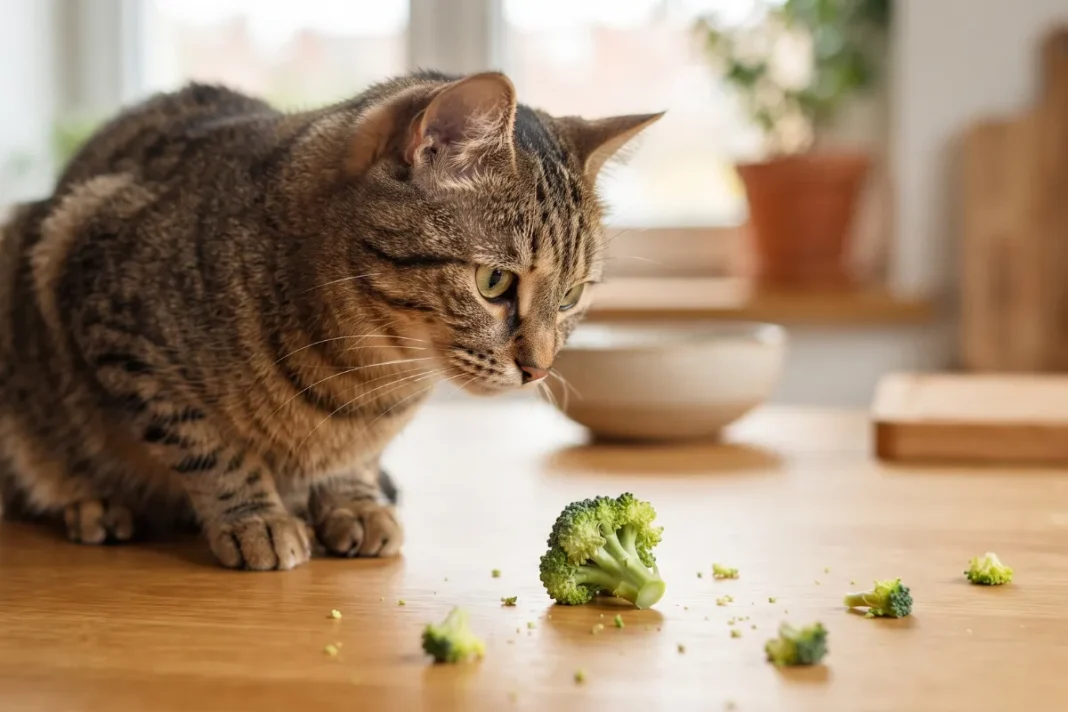

If your cat suddenly becomes interested in the broccoli on your dinner plate, you may wonder whether sharing a small piece is safe. So, can cats eat broccoli?
Yes, cats can eat small amounts of plain broccoli. Broccoli is not considered toxic to cats, but it should only be an occasional treat. Cats have different nutritional needs from humans, so broccoli should never replace their regular, complete and balanced cat food. The way you prepare broccoli also matters. Plain, cooked broccoli cut into small pieces is generally easier for a cat to manage than a large, hard piece. At the same time, too much broccoli can cause digestive problems. Before introducing any new food, especially if your cat has a health condition or follows a special diet, it is wise to ask your veterinarian.
Can Cats Eat Broccoli?
Yes, cats can eat broccoli in moderation.
Broccoli itself is not toxic to cats. However, cats are obligate carnivores, which means their bodies are adapted to getting essential nutrients from animal-based foods. They do not need vegetables to maintain a balanced diet.
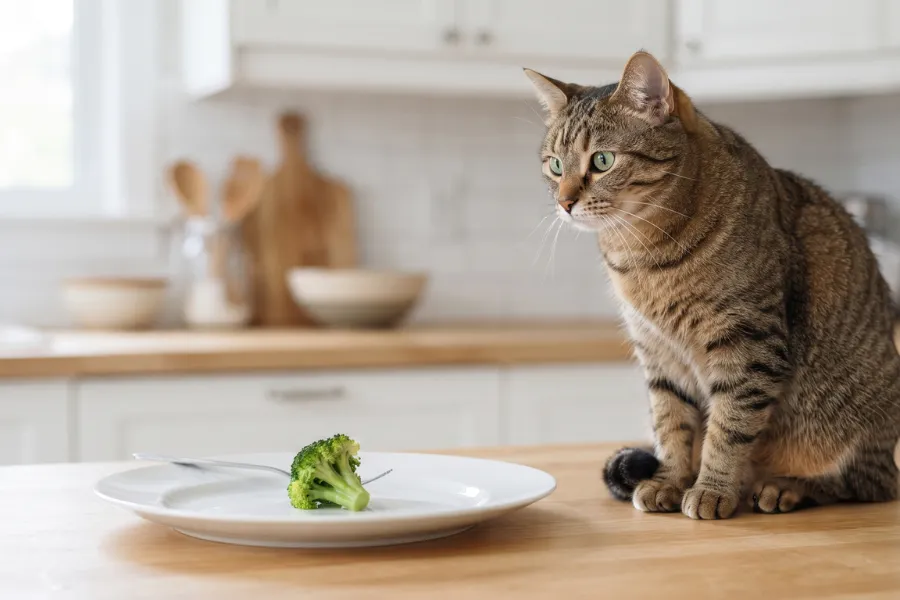
That does not mean every vegetable is automatically harmful. A small amount of plain broccoli can work as an occasional snack for many healthy cats. The key is moderation. Your cat’s normal food should remain the main source of nutrition, while broccoli should stay a small extra. If your cat has never eaten broccoli before, start with a tiny piece and watch for any digestive reaction.
Is Broccoli Good for Cats?
Broccoli can provide a few useful nutrients, but it is not an essential food for cats.
Fiber
Broccoli contains dietary fiber. In small amounts, fiber can support normal digestion. However, too much fiber can have the opposite effect and may lead to gas, diarrhea, vomiting, or general stomach discomfort. Therefore, more broccoli is not necessarily better.
Water Content
Broccoli contains a good amount of water. While it cannot replace fresh drinking water or proper hydration, moisture from foods can contribute a little to a cat’s overall fluid intake.
Antioxidants and Plant Compounds
Broccoli contains antioxidants and plant compounds such as sulforaphane. These compounds are widely studied for their potential health effects. However, it is important not to overstate these benefits for cats. Your cat should get its essential nutrients from a properly formulated diet rather than relying on broccoli.
Vitamins and Minerals
Broccoli contains nutrients such as vitamin A, vitamin K, potassium, calcium, and iron. Still, a complete cat food is designed to provide the nutrients cats require in appropriate amounts. So, think of broccoli as an optional snack rather than a nutritional necessity.
Can Cats Eat Raw Broccoli?
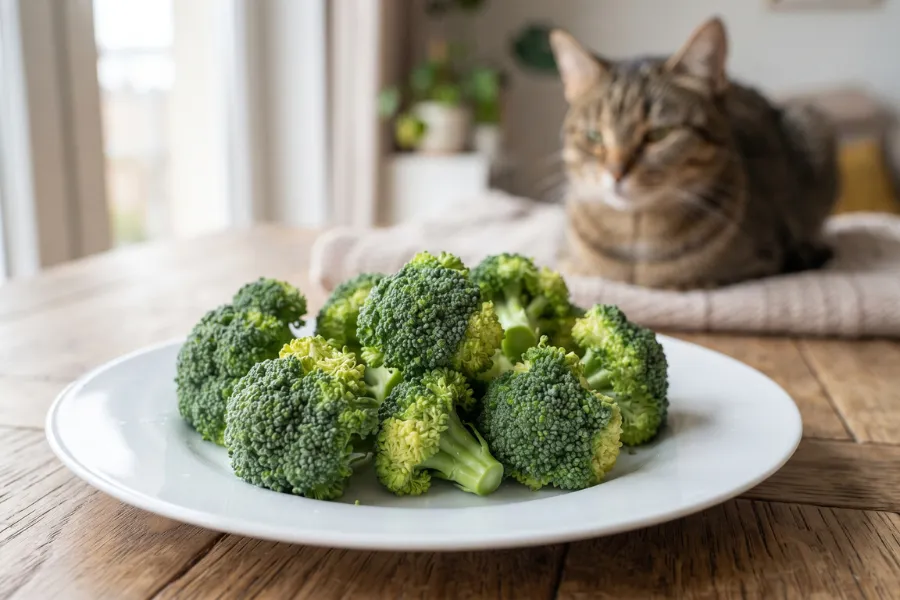
Cats can eat raw broccoli, but it is not necessarily the easiest form for them to handle. Raw broccoli can be firm and difficult for some cats to chew. Large pieces can also create a choking risk. If you want to offer raw broccoli, use a very small piece and cut it into a manageable size. However, plain cooked broccoli is usually a more practical choice because cooking softens the vegetable.
Can Cats Eat Cooked Broccoli?
Yes, cats can eat plain cooked broccoli in small amounts.
Steaming, boiling, or baking can soften broccoli and make it easier to chew. The important part is what you do not add to it.
Avoid serving broccoli with:
- Butter
- Salt
- Heavy sauces
- Cheese
- Spices
- Garlic
- Onion
Garlic and onions are especially important to avoid because they can be harmful to cats. For a simple treat, plain broccoli is the safest approach.
Is Boiled Broccoli Safe for Cats?
Plain boiled broccoli can be safe for cats when served in a small portion. Let the broccoli cool before giving it to your cat, then cut it into small pieces. Do not add salt, butter, seasoning, garlic, or onion. Boiling can make broccoli softer, which may make it easier for a cat to chew. However, you do not need to make broccoli a regular part of your cat’s meals.
How Much Broccoli Can Cats Eat?
There is no single portion that works perfectly for every cat. A cat’s size, age, health, normal diet, and individual tolerance all matter. For a healthy adult cat trying broccoli for the first time, start with one very small piece. If your cat handles it without digestive problems, you can occasionally offer another small piece. Broccoli should remain a treat rather than becoming a regular part of the diet.
A useful general rule is to keep treats and extras limited so they do not displace your cat’s nutritionally complete food. If your cat has diabetes, digestive disease, kidney disease, food allergies, or follows a veterinary prescription diet, speak with your veterinarian before adding human foods.
What Parts of Broccoli Can Cats Eat?
You may wonder whether cats can eat more than the familiar green florets.
Broccoli Florets
The florets are the part most people serve. If you give your cat broccoli, use a small, plain piece and cut it into an appropriate size.
Broccoli Stems
The stems are edible, but they can be tougher and harder to chew. If you offer a stem, cook it until soft and cut it into very small pieces.
Broccoli Leaves
Broccoli leaves are also part of the plant. However, there is no nutritional reason to make them a regular part of a cat’s diet. When introducing any part of the vegetable, moderation remains important.
How to Prepare Broccoli Safely for Cats
If you decide to give your cat broccoli, preparation is just as important as portion size.
Follow these simple steps:
- Choose fresh broccoli.
- Cook it plainly by steaming, boiling, or baking.
- Let it cool completely.
- Remove large or tough pieces.
- Cut the broccoli into tiny, manageable pieces.
- Do not add butter, oil, salt, sauces, or spices.
- Never add garlic or onion.
- Give only a small amount as an occasional treat.
This simple approach keeps the snack uncomplicated and reduces the chance of your cat consuming ingredients that are unsuitable for them.
Can Broccoli Be Bad for Cats?
Broccoli itself is not toxic to cats, but eating too much can cause problems.
Too Much Fiber
A sudden increase in fiber may upset your cat’s digestive system. Some cats are more sensitive than others.
Gas and Bloating
Because broccoli contains fiber and other plant compounds, eating too much may cause gas or abdominal discomfort.
Vomiting or Diarrhea
A cat that eats a large amount of an unfamiliar food may develop vomiting or diarrhea. If symptoms are severe, persistent, or accompanied by other worrying signs, contact your veterinarian.
Choking Risk
Large pieces of raw or cooked broccoli can be difficult for a cat to chew or swallow. Cutting the vegetable into small pieces can reduce this risk.
Problematic Ingredients
The bigger concern may sometimes be what is served with the broccoli. Garlic, onion, heavy seasoning, rich sauces, and other ingredients can make a seemingly harmless vegetable dish unsuitable for cats.
For general feline nutrition guidance, the VCA Animal Hospitals nutrition guide explains why cats require animal-based nutrition and a properly balanced diet.
What If Your Cat Eats Too Much Broccoli?
Don’t panic if your cat steals a larger piece of plain broccoli.
In many cases, the main concern is temporary digestive upset. Keep an eye on your cat and watch for signs such as:
- Vomiting
- Diarrhea
- Gas
- Loss of appetite
- Abdominal discomfort
- Unusual tiredness
If your cat swallowed a large piece and appears to be choking, struggling to breathe, or showing serious distress, seek emergency veterinary help. You should also contact your veterinarian if vomiting or diarrhea continues, your cat refuses food, or your pet seems unusually uncomfortable. If the broccoli contained garlic, onion, or another potentially harmful ingredient, contact a veterinarian promptly rather than assuming the broccoli itself is the problem.
Can Kittens Eat Broccoli?
Kittens have different nutritional needs from adult cats because they are still growing.
Their diet should focus on a complete kitten food that provides the energy, protein, vitamins, minerals, and other nutrients required for healthy development. A tiny accidental bite of plain broccoli is not the same as making broccoli a regular part of a kitten’s diet. Because young cats have developing digestive systems and specific nutritional requirements, it is best to ask your veterinarian before introducing new treats.
What Vegetables Can Cats Eat?
Some cats can enjoy small amounts of certain vegetables as occasional treats.
Examples may include:
- Carrots
- Green beans
- Zucchini
- Peas
- Sweet potatoes
- Broccoli
Preparation matters. Vegetables should generally be plain and served in small portions. However, vegetables should not replace a nutritionally complete cat food. Cats have dietary requirements that are different from humans and dogs.
If you are interested in learning more about animals and their surprising characteristics, you can also check out our guide to fun facts about dogs.
What Vegetables Should Cats Avoid?
Not every plant or vegetable is suitable for cats.
In particular, avoid foods containing:
- Onion
- Garlic
- Leeks
- Chives
- Heavy seasoning
- Rich sauces
You should also keep other known toxic human foods, such as chocolate and alcohol, away from cats. When you are unsure about a particular food, do not guess. Check with a veterinarian or a trusted veterinary resource before offering it.
Can Cats Eat Broccoli Every Day?
It is better not to make broccoli an everyday food.
Cats do not need broccoli to meet their nutritional requirements, and regularly replacing part of their normal diet with vegetables could reduce the amount of nutritionally complete food they eat. An occasional small piece is a much better approach for a healthy cat that tolerates broccoli well.
Can Cats Eat Broccoli With Cheese or Butter?
It is best to avoid it.
Plain broccoli is much simpler than broccoli covered in cheese, butter, sauces, or seasonings. These additions can introduce extra fat, salt, calories, or ingredients that are unsuitable for cats. For example, garlic and onion can be dangerous for cats. Therefore, if you want to share broccoli, keep it plain.
Frequently Asked Questions About Cats and Broccoli
Can cats eat broccoli?
Yes. Cats can eat small amounts of plain broccoli as an occasional treat. It should not replace their normal complete and balanced cat food.
Is broccoli safe for cats?
Plain broccoli is generally considered safe for cats in small amounts. However, too much can cause digestive upset, and large pieces may pose a choking risk.
Can cats eat raw broccoli?
Yes, raw broccoli is not considered toxic to cats. However, cooked broccoli is softer and may be easier for cats to chew and handle.
Is boiled broccoli safe for cats?
Plain boiled broccoli can be given in a small amount. Allow it to cool and cut it into small pieces before offering it.
How much broccoli can a cat eat?
Start with a tiny piece, especially if your cat has never eaten broccoli before. If your cat tolerates it well, an occasional small portion is enough.
Can cats eat broccoli stems?
Cats can eat small pieces of broccoli stem, but stems can be tough. Cook them until soft and cut them into very small pieces if you decide to offer them.
Can kittens eat broccoli?
Kittens have specific nutritional needs while they grow. Their main diet should be complete kitten food, so ask your veterinarian before adding broccoli or other new treats.
What happens if a cat eats too much broccoli?
Too much broccoli may cause gas, vomiting, diarrhea, or stomach discomfort. Monitor your cat and contact a veterinarian if symptoms are severe, persistent, or concerning.
Final Answer: Can Cats Eat Broccoli?
Yes, cats can eat broccoli in small amounts.
Plain broccoli can be an occasional snack for many healthy cats, but it is not a necessary part of their diet. Cats need a nutritionally complete diet designed around their unique requirements, so broccoli should always remain a small extra. For the safest option, serve plain cooked broccoli, cut it into small pieces, and avoid butter, sauces, salt, garlic, onion, and other seasonings. And remember: when introducing any new food, moderation matters more than quantity.