
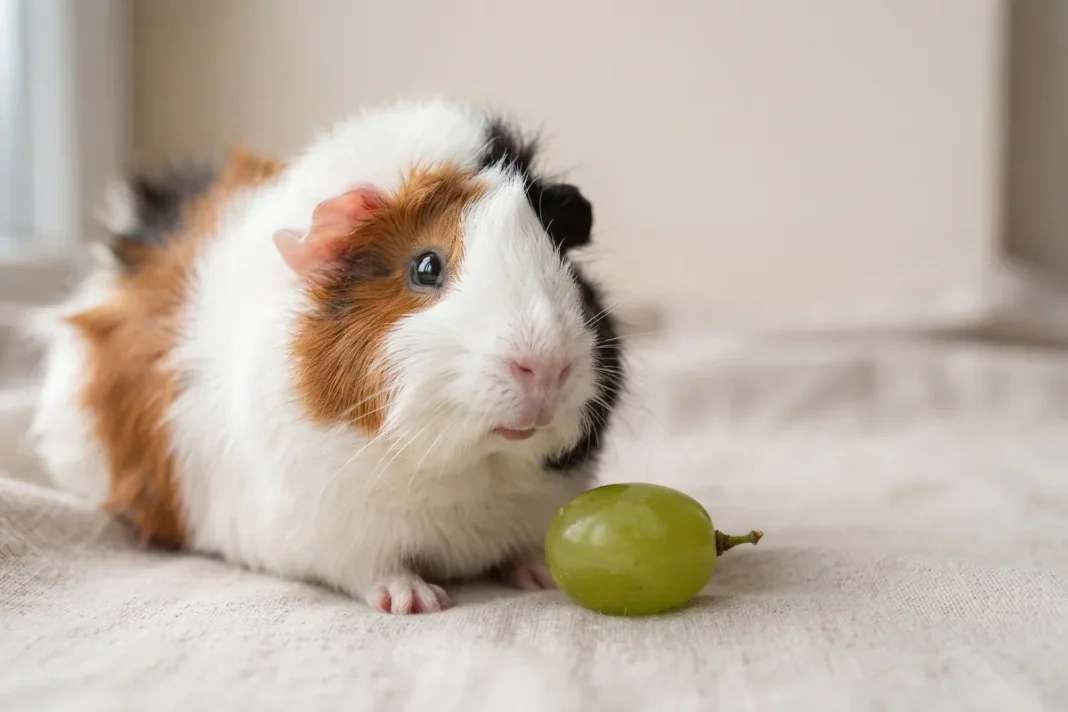

Can guinea pigs eat grapes? Yes, guinea pigs can eat fresh grapes, but only as an occasional treat. While these juicy fruits contain helpful vitamins, they are also high in natural sugar and water content. To keep your pet safe, you must wash them thoroughly, remove any seeds, and cut them into small pieces before feeding.
Can Guinea Pigs Eat Grapes?
Fresh grapes are a delicious snack for cavies, but they are certainly not a staple food. Guinea pigs are herbivores that require a continuous, high-fiber diet to maintain their delicate digestive system. Because grapes contain high amounts of fructose and water, offering too many can quickly disrupt their intestinal bacteria.
Although grapes offer hydration and nutrients, feeding them excessively leads to upset stomach and diarrhea. Therefore, you should treat grapes as a rare indulgence rather than a regular daily meal.
How Many Grapes Can a Guinea Pig Eat?
Portion control is the most critical factor when feeding sweet fruit to your pet. Because a guinea pig’s digestive system is sensitive to natural sugars, moderation is essential.
Recommended Serving Size
The recommended serving size is one medium grape per guinea pig, once or twice a week. Offering a small portion ensures your cavy enjoys the taste without overloading their digestive tract. Furthermore, keeping portions tiny prevents sudden spikes in blood sugar.
Why Should Grapes Be Limited?
Grapes contain high sugar levels and heavy water content. Consequently, overfeeding can cause severe gastrointestinal issues, loose stool, and long-term weight gain leading to obesity. Additionally, filling up on sweet fruits reduces your pet’s appetite for essential high-fiber hay.
How to Prepare Grapes for Guinea Pigs
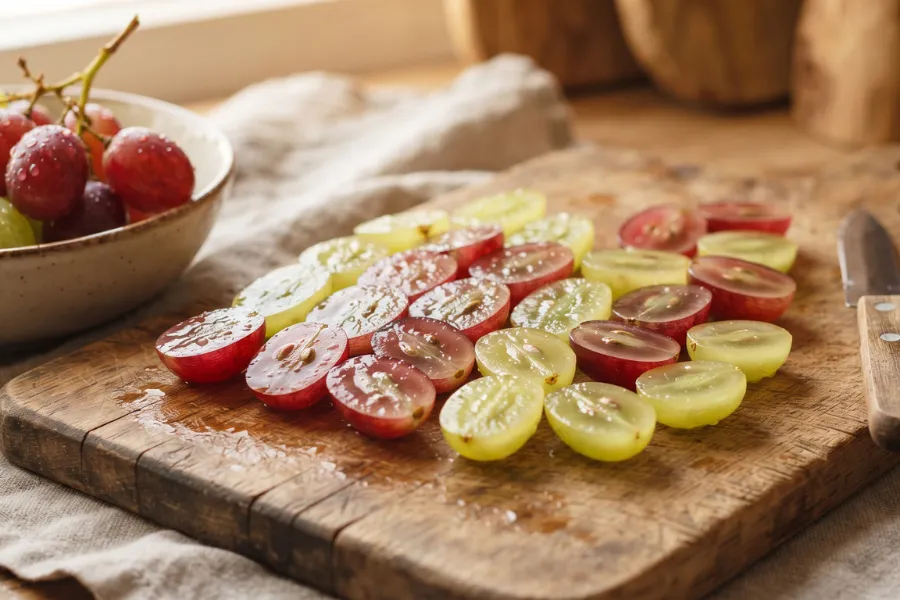
Preparing fruit properly removes potential hazards and ensures a safe snack time for your cavy.
1.Wash the Grapes Thoroughly:Removes pesticides and bacteria.
Rinse the fruit completely under clean running water. This step effectively removes dirt, chemical residues, and pesticides that could harm your pet’s gut bacteria.
2.Remove Seeds and Pips:Prevents choking risks.
Always slice the grape open to check for hidden pips. Seeds present a major choking hazard, so choosing a seedless variety is the safest option.
3.Cut Into Small Pieces:Serves safe portion sizes.
Slice the grape into small, bite-sized pieces roughly the size of a guinea pig pellet or nugget. Smaller pieces prevent choking and allow for easier chewing.
Can Guinea Pigs Eat Grape Skin?
Yes, guinea pigs can safely eat grape skin. The skin contains beneficial dietary fiber and antioxidants. However, because pesticide residues often cling to the exterior, you must wash the skin thoroughly before serving it to your pet.
Can Guinea Pigs Eat Different Types of Grapes?
All common varieties of fresh grapes are generally safe for guinea pigs when offered in tiny amounts.
Can Guinea Pigs Eat Red Grapes?
Yes, red grapes are completely safe for cavies. They contain beneficial antioxidants like resveratrol, which support overall health. Always serve them seedless and sliced.
Can Guinea Pigs Eat Green Grapes?
Yes, green grapes are another fine option. Although they are sometimes slightly more tart, their nutritional profile is very similar to red varieties.
Can Guinea Pigs Eat Black or Purple Grapes?
Yes, dark and purple grapes are equally safe. They share similar sugar levels and water content with green and red grapes, so the same strict portion limits apply.
Are Grapes Good for Guinea Pigs?
When served sparingly, grapes provide valuable health benefits that support your guinea pig’s health.
- Vitamin C: Cavies cannot produce their own Vitamin C, so dietary sources are essential to prevent scurvy.
- Antioxidants: Compounds such as resveratrol protect cells from oxidative stress and support heart health.
- Water Content: Fresh grapes offer extra hydration during warm summer days.
- Essential Minerals: Small amounts of calcium, magnesium, and phosphorus contribute to overall cellular function.
Note: While these nutritional benefits are positive, grapes should never replace vital daily staples like fresh hay and leafy greens.
What Happens If a Guinea Pig Eats Too Many Grapes?
If a cavy consumes too many grapes, the excessive fructose disrupts their gut flora. Consequently, you may notice symptoms like bloating, severe diarrhea, and an upset stomach. Over time, high-sugar diets also cause dangerous weight gain and dental issues.
If your guinea pig accidentally eats a large quantity of grapes and shows signs of lethargy or ongoing diarrhea, remove all treats immediately. Provide plenty of fresh water and grass hay, and promptly contact a qualified veterinarian for professional advice.
Can Guinea Pigs Eat Raisins?
No, guinea pigs should never eat raisins, sultanas, or currants. Dried fruits have concentrated sugar levels and very low moisture, making them extremely dangerous for a cavy’s sensitive digestive system. Additionally, their sticky texture can adhere to teeth, accelerating decay.
Can Guinea Pigs Eat Grape Juice or Grape Jelly?
You should strictly avoid giving your pet grape juice, grape jelly, or any processed grape products. These manufactured foods contain added sugars, artificial preservatives, and chemicals that severely damage a cavy’s health. Fresh, whole, and thoroughly washed fruit is always the only safe choice.
How Often Should Guinea Pigs Eat Fruit?
Fruit Should Be an Occasional Treat
Fruit must remain an occasional treat, offered no more than once or twice a week. Rotating small pieces of safe fruits keeps snack time exciting without causing nutritional imbalances.
Fruit vs. Hay and Vegetables
Unlike humans, cavies require a high-fiber diet dominated by forage. High-sugar fruits can easily ruin their appetite for basic forage. For instance, just like learning fun facts about dogs helps canine owners provide better care, understanding cavy nutrition ensures your pet thrives on appropriate daily foods.
What Fruits Can Guinea Pigs Eat?
In addition to grapes, you can occasionally offer small pieces of other safe fruits:
- Apples (without seeds)
- Blueberries
- Strawberries
- Kiwi
- Melon
- Pear
- Watermelon
What Foods Should Guinea Pigs Avoid?
To maintain a healthy diet, keep the following harmful or toxic foods away from your pet:
- Raisins, Sultanas, and Currants: Excessively high in concentrated sugar.
- Chocolate and Dairy: Toxic and completely indigestible for herbivores.
- Onions and Garlic: Cause severe blood disorders in small animals.
- Potatoes and Avocado: Contain toxic compounds and unsafe fat levels.
- Nuts and Seeds: Present serious choking hazards and contain too much fat.
Just as you might check if cats can eat broccoli before feeding your feline, always verify every food item before introducing it to your cavy.
What Should a Healthy Guinea Pig Diet Include?
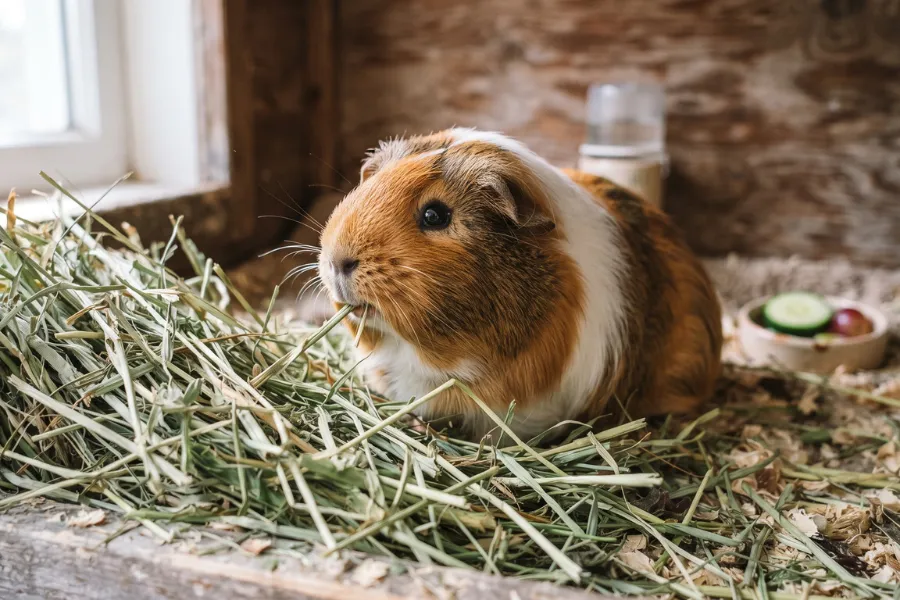
A balanced guinea pig diet consists of four core elements that support healthy digestion and continuously wearing teeth:
| Food Category | Daily Requirement | Purpose |
| Timothy Hay & Grass | 80%–85% (Unlimited access) | Essential dietary fiber; wears down growing teeth |
| Fresh Vegetables | 10%–15% (1 cup daily) | Provides natural Vitamin C and key nutrients |
| Fortified Pellets | 5% (1-2 tablespoons daily) | Supplies stabilized Vitamin C and essential minerals |
| Fresh Water | Unlimited continuous access | Maintains hydration and kidney function |
For detailed veterinary guidelines on exotic pet care and feeding standards, consult the official guidelines at the RSPCA Pet Care Guide.
Frequently Asked Questions About Guinea Pigs and Grapes
Can guinea pigs eat grapes every day?
No, guinea pigs cannot eat grapes every day. Because of the high natural sugar content, you should only feed them grapes once or twice a week as a special treat.
Can guinea pigs eat red grapes?
Yes, red grapes are safe for guinea pigs in small portions. Simply remove any seeds, wash the skin well, and slice the grape before serving.
Can guinea pigs eat green grapes?
Yes, green grapes are completely safe when served seedless, washed, and cut into tiny pieces.
Can guinea pigs eat grape skin?
Yes, grape skin is safe to eat and provides extra dietary fiber. However, you must wash it thoroughly to remove lingering pesticides.
Can guinea pigs eat grape seeds?
No, guinea pigs should not eat grape seeds. Pips and seeds pose a severe choking hazard and must be completely removed before feeding.
How many grapes can a guinea pig eat?
A guinea pig should only eat about one medium grape per week, divided into small bite-sized pieces.
Can guinea pigs eat raisins?
No, raisins are dried grapes with extremely high sugar concentrations. They are unsafe for a cavy’s sensitive stomach.
Can baby guinea pigs eat grapes?
It is best to avoid feeding grapes to baby guinea pigs. Young cavies need to focus entirely on hay, fresh water, and specialized pellets to develop healthy gut bacteria.
Can guinea pigs eat grape juice?
No, grape juice contains concentrated sugars and artificial additives. Stick exclusively to fresh water for hydration.
What should I do if my guinea pig eats too many grapes?
Monitor your pet closely for signs of diarrhea, bloating, or discomfort. Offer plenty of fresh grass hay and water, and contact a veterinarian if symptoms persist.
Final Verdict: Can Guinea Pigs Eat Grapes?
In summary, guinea pigs can eat fresh grapes, but only as an occasional treat served in strict moderation. Feeding one medium, seedless grape once or twice a week provides a tasty boost of hydration and Vitamin C without harming your cavy’s health.
Always take time to prepare grapes properly by washing the skin, removing all seeds, and slicing the fruit into small pieces. By balancing small fruit treats with unlimited hay, fresh leafy greens, and clean water, you will keep your pet healthy, active, and happy!