


Look up on a clear night, and you are staring at the biggest story ever told. Space gave us the atoms in our bodies, the light in our sky, and a shelf of mysteries we are still nowhere near solving. This collection of fun facts about space pulls together the strangest truths scientists have uncovered so far. You will meet planets that break every rule, stars that out-spin a kitchen blender, and black holes that bend time itself. Some facts will make you laugh. Others might make you feel very, very small. We have sorted all 40 facts into five groups, from our own solar system to the deepest corners of the universe. Each one is short, surprising, and backed by real science. So settle in, and get ready to see the night sky differently. By the end, you may never look at a star the same way again.
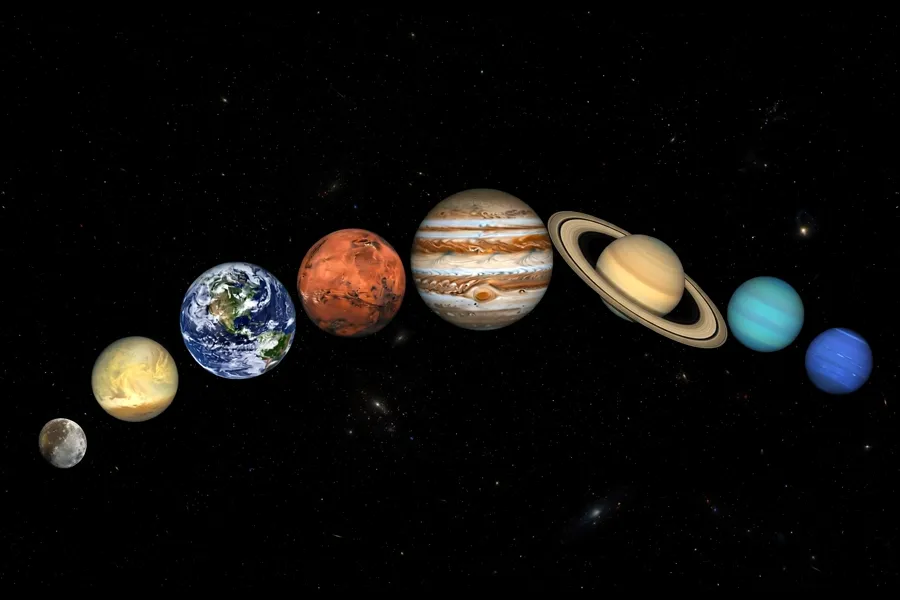
Planets and Our Solar System
Our own neighborhood is the perfect place to start, because the planets around us are far stranger than most people expect. In fact, these fun facts about space begin with worlds that melt metal, hide ice next door to the Sun, and lean completely sideways.
1. A Day on Venus Lasts Longer Than Its Year
Venus takes about 225 Earth days to travel around the Sun, yet it needs roughly 243 Earth days to spin once on its axis. As a result, a single day on Venus outlasts its entire year. Even stranger, Venus spins backwards, so its Sun would rise in the west.
2. Saturn Could Float in a Bathtub
Saturn is the least dense planet in our solar system, less dense than water itself. So if you could find a bathtub big enough, the ringed giant would actually float in it. It is mostly hydrogen and helium gas, which keeps it light for its size.
3. Mars Has a Volcano Three Times Taller Than Everest
Olympus Mons on Mars rises about 22 kilometers above the surrounding plain, nearly three times the height of Mount Everest. It also covers an area about the size of France. Because Mars has no moving tectonic plates, lava kept piling onto the same spot for millions of years.
4. Jupiter’s Giant Storm Is Bigger Than Earth
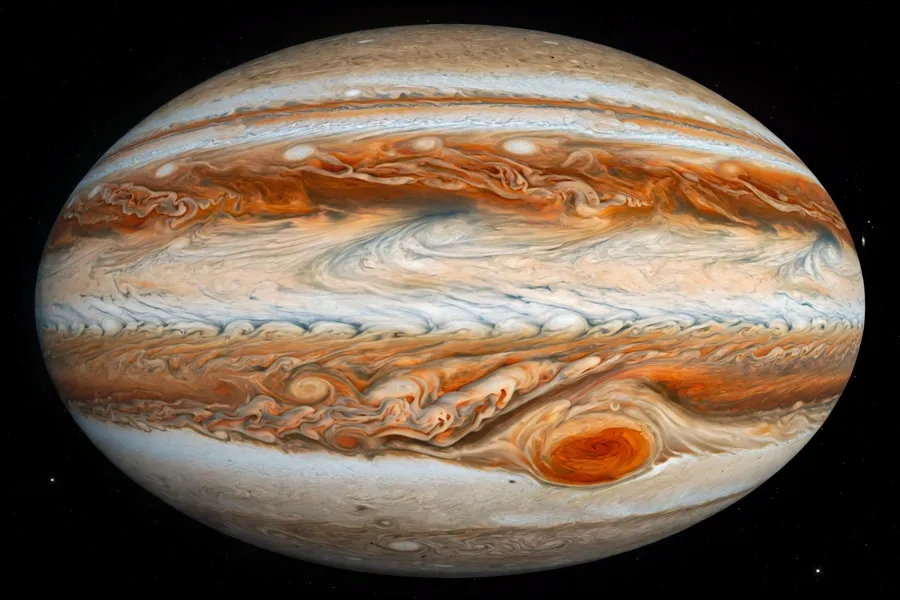
The Great Red Spot is a storm raging on Jupiter for at least 190 years, possibly much longer. It measures about 16,000 kilometers across, wide enough to swallow our entire planet. However, the spot is slowly shrinking, so even this monster storm may not last forever.
5. The Closest Planet to the Sun Still Hides Ice
Mercury sits nearest to the Sun, and its daytime surface can hit about 430°C. Even so, deep craters near its poles never receive direct sunlight at all. Spacecraft have also confirmed water ice hides inside those shadowed craters. As a result, the hottest neighborhood in the solar system keeps frozen water in the dark.
6. Neptune Has the Fastest Winds We Know
Neptune, the most distant planet from the Sun, whips up storms with winds reaching about 2,100 kilometers per hour. That is roughly nine times stronger than the fiercest hurricanes on Earth. Despite faint sunlight, this deep blue world drives the wildest weather in the solar system.
7. Uranus Rolls Around the Sun on Its Side
Most planets spin like tops, but Uranus is tilted about 98 degrees, so it rolls along like a ball. Each pole takes a turn facing the Sun for roughly 21 years at a time. Scientists think a huge ancient collision knocked the planet over.
8. The Sun Holds Almost Everything
The Sun contains about 99.86 percent of all the mass in our solar system. Every planet, moon, and comet combined makes up the tiny leftover fraction. Still, our Sun is only average-sized for a star, which says a lot about how huge others can be. It is only the first of many fun facts about space in this collection.
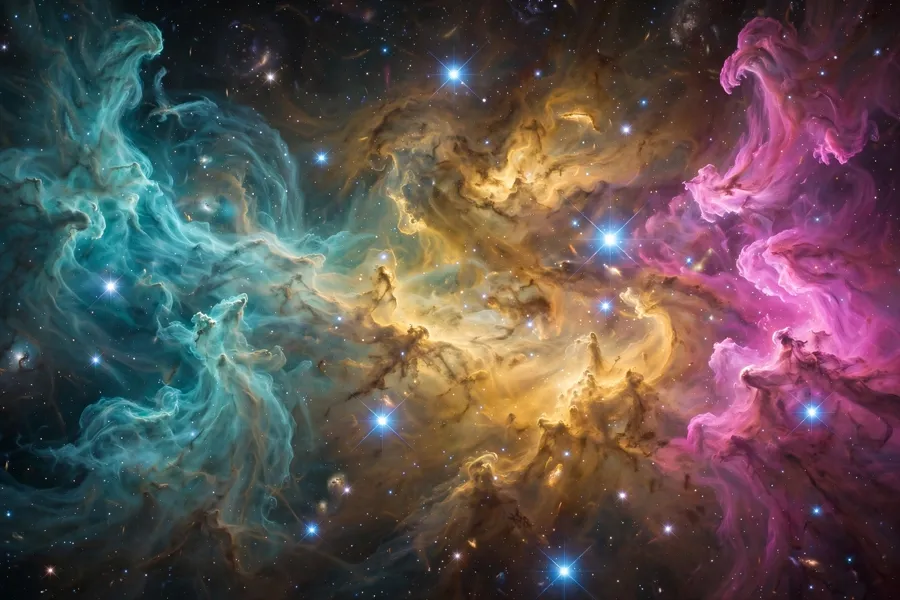
Stars, Galaxies and the Universe
Beyond our solar system, the fun facts about space stop feeling real and start feeling like magic. Stars and galaxies operate on scales that stretch the human brain to its limit.
9. Sunlight Is Eight Minutes Old When It Reaches You
Light travels at about 300,000 kilometers per second, the fastest speed anything can go. Even so, sunlight still needs roughly 8 minutes and 20 seconds to cross the 150 million kilometers between the Sun and Earth. In other words, you always see the Sun as it was eight minutes ago, and if it vanished, we would not know for eight full minutes.
10. The Observable Universe Spans 93 Billion Light-Years
The universe is about 13.8 billion years old, yet the part we can observe stretches roughly 93 billion light-years across. That sounds impossible, but space itself kept expanding while that ancient light traveled toward us. As a result, the most distant galaxies now sit far beyond where they were when their light set out.
11. There Are More Stars Than Grains of Sand on Earth
Astronomers estimate there are around 200 billion trillion stars in the observable universe, a number with 23 zeros. All of Earth’s beaches and deserts, meanwhile, hold far fewer grains of sand. In fact, for every grain of sand on Earth, there may be thousands of stars shining out there.
12. Our Galaxy Will One Day Crash Into Andromeda
The Andromeda galaxy is racing toward the Milky Way at about 110 kilometers per second. In roughly 4.5 billion years, the two galaxies will begin to merge into one giant galaxy. Surprisingly, stars will almost never collide during the merger, because the gaps between them are so vast.
13. One Galactic Year Lasts 230 Million Earth Years
Everything in our solar system orbits the center of the Milky Way, just as Earth orbits the Sun. One full lap takes about 230 million years, which astronomers call a galactic year. Last time we were in this part of the galaxy, dinosaurs were just appearing on Earth.
14. We Share the Universe With at Least 200 Billion Galaxies
Deep-field images show thousands of galaxies in a patch of sky smaller than a grain of sand at arm’s length. Counting across the whole sky, astronomers estimate at least 200 billion galaxies, and some studies suggest far more.
15. Telescopes Are Time Machines
Because light takes time to travel, looking deep into space really means looking into the past. When astronomers observe a galaxy 10 billion light-years away, they see it as it looked 10 billion years ago, long before Earth existed. In fact, the most distant objects show us the universe at only a few hundred million years old.
16. The Sun Will One Day Swell Into a Red Giant
In about 5 billion years, the Sun will run low on hydrogen fuel and expand into a red giant star. It may grow large enough to swallow Mercury, Venus, and possibly Earth. Afterwards, it will shed its outer layers and settle down as a small, dense white dwarf.
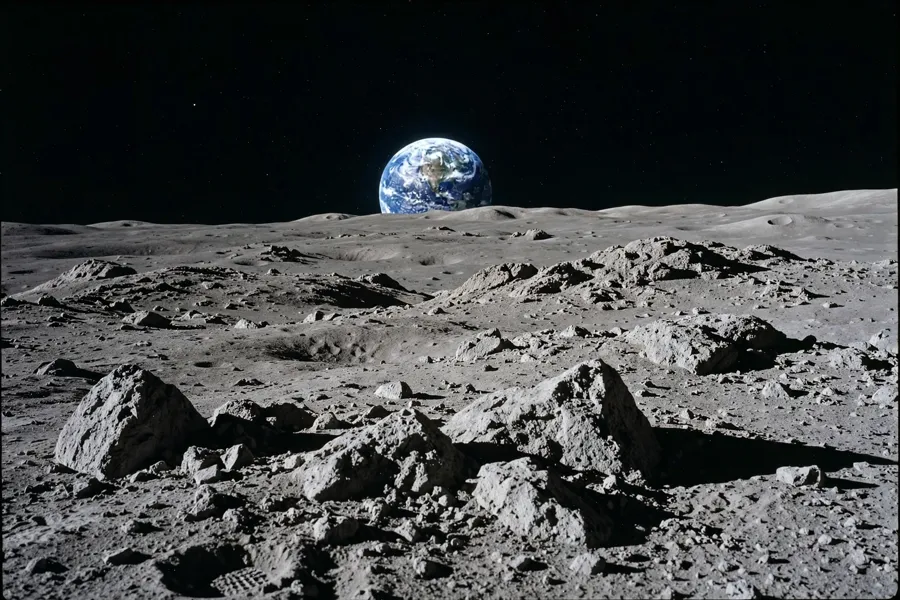
The Moon and Humans in Space
The Moon and the brave humans who visited it deserve their own chapter in any list of fun facts about space. Their stories mix triumph and strangeness, plus a few details that sound made up but are real.
17. Astronaut Footprints on the Moon Will Last Millions of Years
The Moon has no wind, no rain, and no rivers to wash anything away. As a result, the footprints left by Apollo astronauts will likely stay sharp for millions of years. Only slow micrometeorite dust and harsh radiation will gradually soften those famous prints.
18. The Moon Is Quietly Sneaking Away From Us
Every year, the Moon drifts about 3.8 centimeters farther from Earth, roughly the rate your fingernails grow. Laser reflectors left by Apollo astronauts let scientists measure the distance precisely. In fact, hundreds of millions of years ago, an Earth day lasted only about 22 hours.
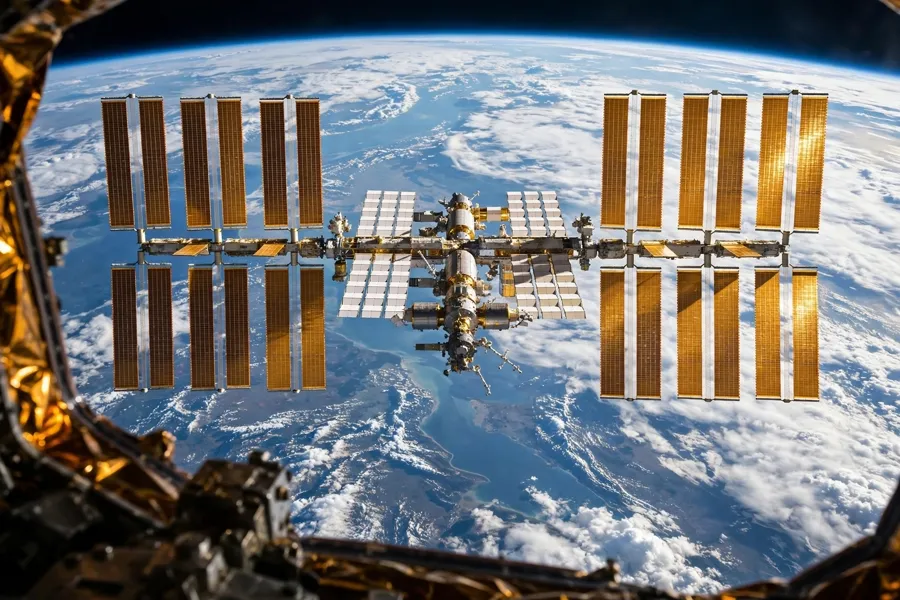
19. ISS Astronauts See 16 Sunrises Every Day
The International Space Station races around Earth at about 28,000 kilometers per hour, completing one orbit roughly every 90 minutes. So the crew witnesses around 16 sunrises and 16 sunsets in a single day. For over two decades now, there has never been a moment when every human was on Earth.
20. Only 12 People Have Ever Walked on the Moon
Between 1969 and 1972, six Apollo missions landed on the Moon, and just 12 astronauts walked on its surface. Neil Armstrong and Buzz Aldrin were the first, on July 20, 1969. In fact, nobody has returned in over 50 years, making those dozen explorers a very exclusive club.
21. Astronauts Come Home Taller Than They Left
Without gravity squeezing the spine all day, astronauts grow up to about 5 centimeters taller in orbit, then shrink back after landing. Meanwhile, their muscles and bones weaken without daily gravity. That is exactly why station crews exercise for around two hours every day.
22. One Man Spent 437 Days Straight in Space
Russian cosmonaut Valeri Polyakov lived aboard the Mir station for 437 days in one stay, from 1994 to 1995. That still remains the longest continuous spaceflight in history. When he landed, he insisted on walking a short distance himself, just to show he was fine.
23. Apollo 8 Gave Us the Most Famous Photo Ever Taken
In December 1968, Apollo 8 became the first crewed spacecraft to orbit the Moon. Swinging around the far side, the crew watched Earth rise above the gray horizon and captured the famous Earthrise photograph. That single image showed our whole world as one small, fragile blue marble.
24. The Moon Was Probably Born From a Crash With Earth
Indeed, the leading theory says a Mars-sized world, nicknamed Theia, slammed into the young Earth about 4.5 billion years ago. The collision blasted molten rock into orbit, and the debris slowly clumped together into the Moon. So the Moon shining above you is, in a sense, a piece of our own planet. Few fun facts about space feel more personal than that.
Black Holes and Deep Space Mysteries
If the facts so far felt extreme, these deep-space fun facts about space go further still. Out there, gravity crushes stars, invisible matter rules galaxies, and time itself stops behaving.
25. A Monster Black Hole Sits at Our Galaxy’s Heart
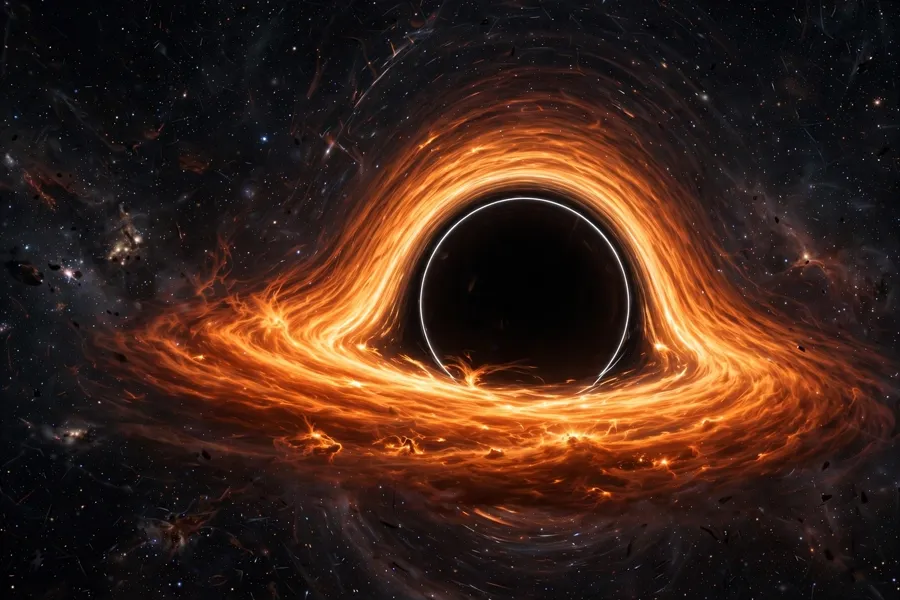
At the center of the Milky Way lurks Sagittarius A*, a black hole with about 4.3 million times the mass of the Sun. In 2022, the Event Horizon Telescope released its first direct image, a glowing ring around total darkness. Luckily, it sits about 26,000 light-years away. We gave these cosmic giants a full article of their own — explore our supermassive black hole facts for 25 more.
26. Black Holes Can Stretch You Like Spaghetti
If you fell toward a black hole, gravity would pull far harder on your feet than on your head. As a result, your body would stretch into a long, thin strand, a fate scientists genuinely call spaghettification. The smaller the black hole, the sooner the stretching begins. Nobody, of course, has volunteered to test it.
27. Time Really Does Slow Down Near a Black Hole
Einstein’s theory of gravity says time passes more slowly wherever gravity is stronger. Near a black hole, that effect becomes extreme, so a watcher far away would see you freeze at the edge and never quite fall in. Meanwhile, your own clock would tick completely normally the whole way down.
28. Most of the Universe Is Made of Something Invisible
Galaxies spin too fast to hold together without extra, invisible mass. Scientists call that hidden mass dark matter, and it makes up roughly 27 percent of the universe. We cannot see or touch it, but we can measure its gravity. In fact, there is about five times more dark matter than all the ordinary matter combined.
29. An Unknown Energy Is Pushing the Universe Apart
In 1998, astronomers discovered that the expansion of the universe is speeding up instead of slowing down. They blame a mysterious force called dark energy, making up about 68 percent of everything that exists. Ordinary matter, by comparison, accounts for only around 5 percent of the cosmos.
30. We Have Found More Than 5,000 Worlds Beyond Our Sun
Since the first confirmed exoplanet discovery in 1995, astronomers have catalogued over 5,000 planets in other star systems. Some are gas giants roasting close to their stars, while others sit in the habitable zone where liquid water could exist. New telescopes keep adding more every year.
31. A Teaspoon of Neutron Star Weighs Billions of Tons
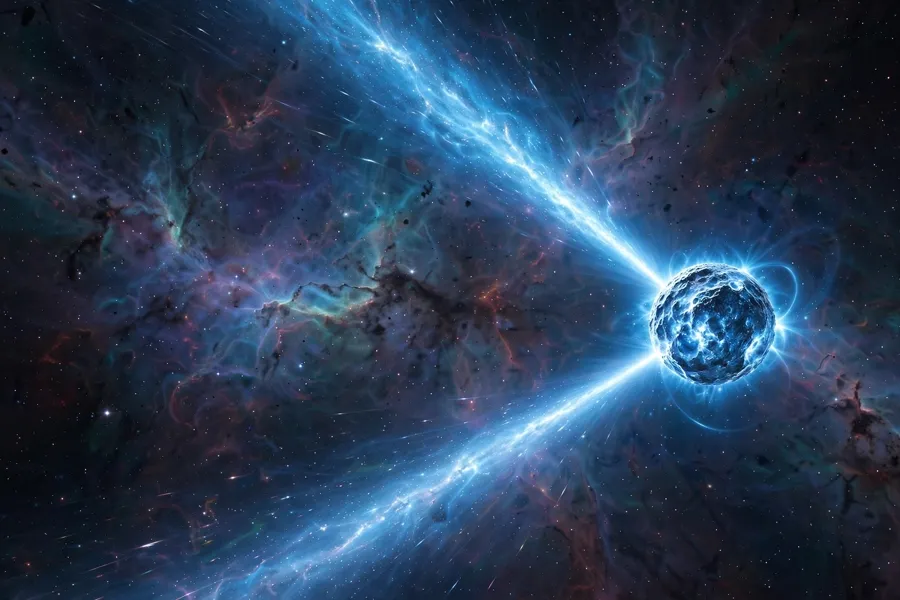
When a massive star dies, its core can collapse into a neutron star barely 20 kilometers wide, yet heavier than the Sun. The matter inside is packed so tightly that a single teaspoon of it would weigh around a billion tons on Earth. That is roughly the weight of a whole mountain squeezed into a spoon.
32. The Fastest Neutron Star Spins 716 Times Per Second
A pulsar known as PSR J1748-2446ad rotates about 716 times every single second, the fastest spin ever measured. Its equator moves at roughly a quarter of light speed. Even so, the star holds together, thanks to almost unimaginable gravity. For comparison, a kitchen blender at full power manages only a few hundred spins per second.
Space Record Breakers
Records are made to be broken, and space holds the most extreme ones imaginable. This final group of fun facts about space rounds up the biggest, fastest, hottest, and most distant things humans have ever measured.
33. Jupiter Could Swallow 1,300 Earths
Jupiter is the record-holder for size in our solar system, with about 1,300 Earths able to fit inside it by volume. It is also more than twice as massive as all the other planets combined. In fact, had Jupiter grown about 80 times heavier, it might have ignited into a small star instead.
34. Venus Is Hot Enough to Melt Lead
With a surface temperature of about 465°C, Venus is the hottest planet in the solar system. Its thick carbon dioxide atmosphere traps heat in a runaway greenhouse effect, and its clouds hold sulfuric acid. That is hotter than a self-cleaning oven, easily hot enough to melt lead.
35. The Coldest Known Place Is a Dying Star’s Cloud
The Boomerang Nebula, about 5,000 light-years away, measures roughly 1 degree above absolute zero, or around −272°C. That also makes it the coldest natural place ever found, even colder than the leftover glow of the Big Bang itself. As a result, this quiet cloud holds a record no Earth winter could ever touch.
36. Our Fastest Machine Ever Built Is Chasing the Sun
NASA’s Parker Solar Probe has flown at about 692,000 kilometers per hour, making it the fastest human-made object in history. At that speed, it could travel from New York to Tokyo in under a minute. The probe dives closer to the Sun than any spacecraft before it, behind a heat shield facing about 1,400°C.
37. Mars Has a Canyon That Would Cross America
Valles Marineris is a system of canyons on Mars stretching about 4,000 kilometers, roughly the distance across the United States. In places it plunges around 7 kilometers deep, far deeper than the Grand Canyon. On Earth, it would stretch from Los Angeles to New York with room to spare.
38. The Biggest Known Star Dwarfs Our Sun
UY Scuti is one of the largest stars ever measured. Newer measurements put it at roughly 900 times wider than the Sun, after older estimates near 1,700 were revised when astronomers pinned down its distance more precisely. Placed at our solar system’s center, its surface would stretch past the orbit of Mars. However, a rival called Stephenson 2-18 may be larger still, so this record keeps changing hands.
39. We Can Still See the Afterglow of the Big Bang
The cosmic microwave background is light left over from when the universe was just 380,000 years old. It has been traveling toward us for more than 13 billion years and now reaches Earth as faint microwave static. In fact, a small share of old TV static came from this very signal.
40. Our Farthest Machine Is Beyond the Sun’s Bubble
Voyager 1, launched in 1977, is now more than 24 billion kilometers from Earth, farther than any human-made object has ever traveled. Then, in 2012, it left the Sun’s protective bubble and entered interstellar space. Its radio signals, moving at the speed of light, still take over 22 hours to reach us. It is a fitting final entry in any collection of fun facts about space.
Why Space Still Amazes Us
For all our telescopes and probes, we have explored only a tiny corner of what exists. New exoplanets appear every month, and deep mysteries like dark matter still refuse to explain themselves. Every year, missions from NASA and the European Space Agency rewrite parts of this list. That is exactly why these fun facts about space keep pulling us back in. Every answer seems to open two new questions. The universe is not finished surprising us, and we are not finished exploring it either. So next time you step outside on a clear night, look up a little longer. Something up there is waiting to blow your mind all over again.
Fun Facts About Space — Frequently Asked Questions
Still curious? These are the questions readers ask most after exploring fun facts about space — here are the short answers.
The part we can observe spans about 93 billion light-years from one side to the other. However, that is only the observable universe, limited by how far light has had time to travel since the beginning. The whole universe could be far larger, and some scientists think it may be infinite.
Astronomers estimate there are around 200 billion trillion stars in the observable universe. Our own Milky Way alone contains somewhere between 100 and 400 billion stars. In fact, that works out to far more stars than there are grains of sand on all of Earth’s beaches combined.
No, you cannot hear sound in the vacuum of space, because sound needs air or another material to travel through. That is why real explosions in space would be eerily silent, unlike the ones in the movies. Astronauts instead talk by radio, which sends signals as light waves.
More Space Questions, Answered
Venus is the hottest planet, with a surface temperature of about 465°C. Its thick carbon dioxide atmosphere traps heat, while clouds of sulfuric acid add to the pressure-cooker effect. As a result, Venus stays hotter than Mercury, even though Mercury orbits closer to the Sun.
With today’s rockets, a one-way trip to Mars takes about seven months. The exact time depends on how the planets line up, so missions launch during windows that open roughly every 26 months. A full round trip, including the wait on Mars, would take around two to three years.
You would be stretched and torn apart by extreme tidal forces, a process scientists call spaghettification. With a smaller black hole, that would happen long before you reached the center. Meanwhile, a distant watcher would see you slow down and fade at the edge, never quite falling in.