
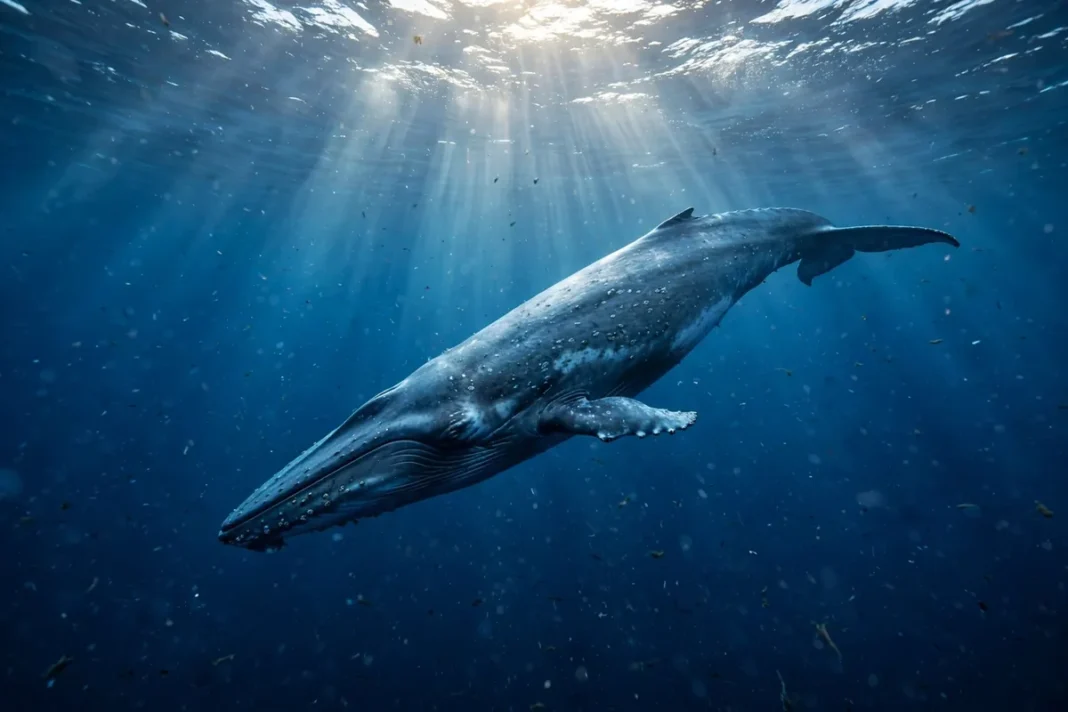

We live on an ocean planet, yet the deep sea remains Earth’s least-known world. It is a vast realm of perpetual darkness, immense pressure, and bizarre life forms. In fact, fewer eyes have seen the deep seafloor than have flown in space. Today, we are diving deep into this mysterious domain to uncover 30 verified ocean facts that will change how you view our world.
From the bone-crushing depths of the deepest trench to 400-year-old sharks, the deep sea feels like another planet altogether. Exploring these underwater landscapes reveals geographic features that dwarf anything found on dry land. The sheer scale and power of Earth’s waters are truly difficult to fathom.
Get ready for a journey from the sunlit surface to the darkest hadal trenches. Here are the first 15 astounding facts about the ocean that prove how wild and uncharted our blue planet really is.
Fact 1: Water Covers Nearly Three-Quarters of Earth
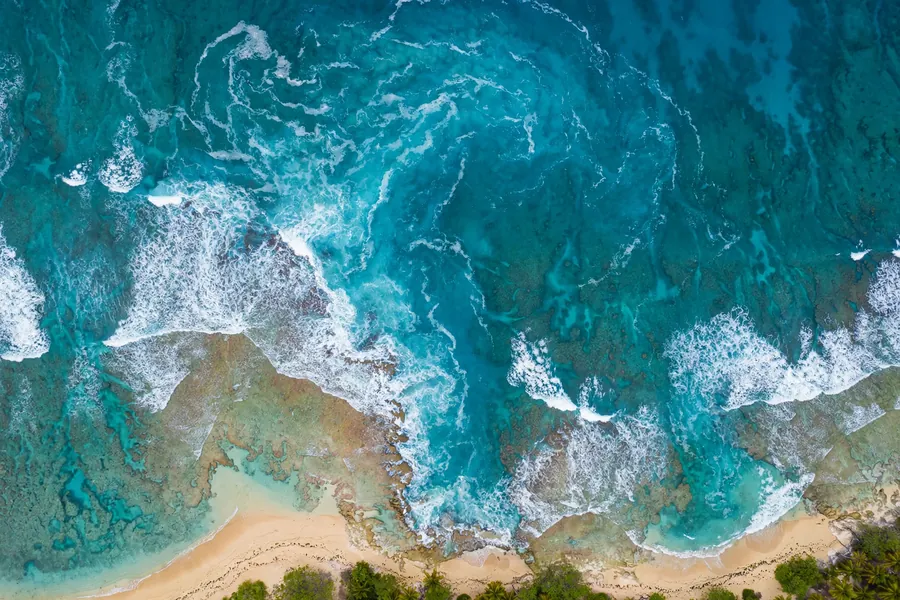
According to figures from the USGS, the ocean covers about 71% of Earth’s surface. It is the defining feature of our world when viewed from space.
Furthermore, this massive expanse holds about 96.5% of all Earth’s water. The remaining tiny fraction is locked in ice caps, glaciers, lakes, rivers, and atmosphere.
Fact 2: The Average Depth Is Over 12,000 Feet
If you stripped away the water, Earth’s ocean basin would reveal an astounding vertical drop. NOAA reports that the ocean’s average depth is 3,682 meters (12,080 feet).
This immense depth means most of the planet’s habitable space exists far below the surface. Entire mountain ranges and vast plains lie hidden under thousands of meters of water.
Fact 3: The Deep Ocean Dominates the Planet
Scientists define the “deep ocean” as everything below 200 meters. This vast, shadowy region covers about 66% of Earth’s surface.
Of all the ocean facts in this list, this may be the most humbling: because it makes up such a massive portion of our planet, the deep ocean is actually Earth’s primary environment. Sunlight cannot reach most of this sprawling, mysterious habitat.
Fact 4: Seawater Holds a Specific Salt Blend
Ocean water is famous for its salty taste, which comes from dissolved minerals. Average seawater salinity is about 3.5% across the global ocean.
This means there are roughly 35 grams of salt per kilogram of seawater. That chemical balance has sustained marine life for hundreds of millions of years.
Fact 5: Sunlight Fades into Total Darkness
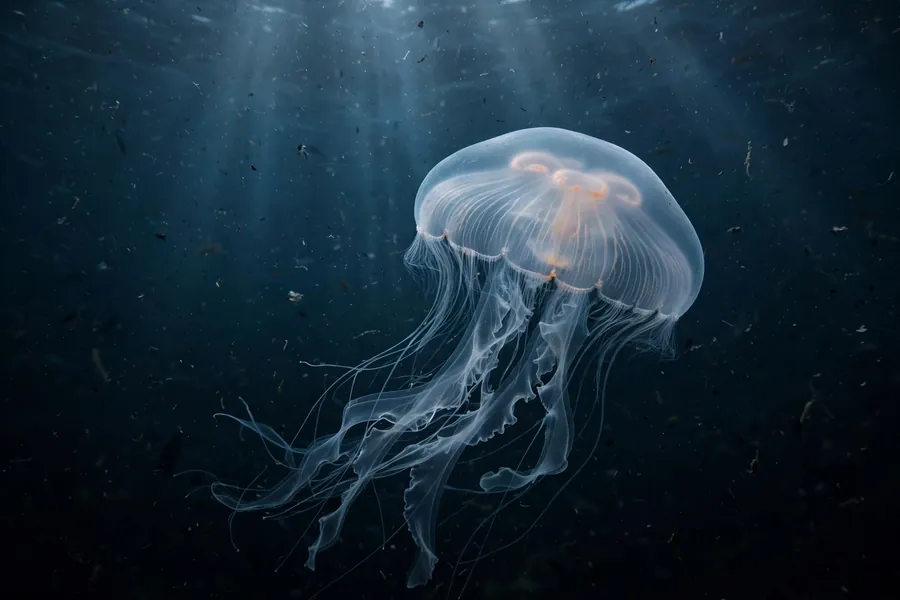
NOAA divides the ocean into distinct light layers. There is plenty of light in the top 200 m, where photosynthetic life flourishes near the surface.
Between 200 and 1,000 m lies the twilight zone, where only minimal light penetrates. Below 1,000 m, no sunlight reaches at all, plunging the abyss into permanent night.
Fact 6: The Abyss Is Consistently Frigid
Surface water temperatures vary wildly depending on location. NOAA notes surface water ranges from about 30°C in the tropics to −2°C near the poles.
However, once you descend past the sunlit layers, conditions change drastically. The deep ocean averages only about 4°C globally, maintaining a constant, icy chill.
Fact 7: Pressure Crushes at Great Depths
Descending into the water column builds immense physical force. NOAA data shows that pressure grows by about 1 atmosphere every 10 meters down.
By the time you reach the bottom of the deepest trench, the force is extreme. Down there, it is more than 1,000 times the pressure at the surface.
Fact 8: Challenger Deep Is Earth’s Lowest Point
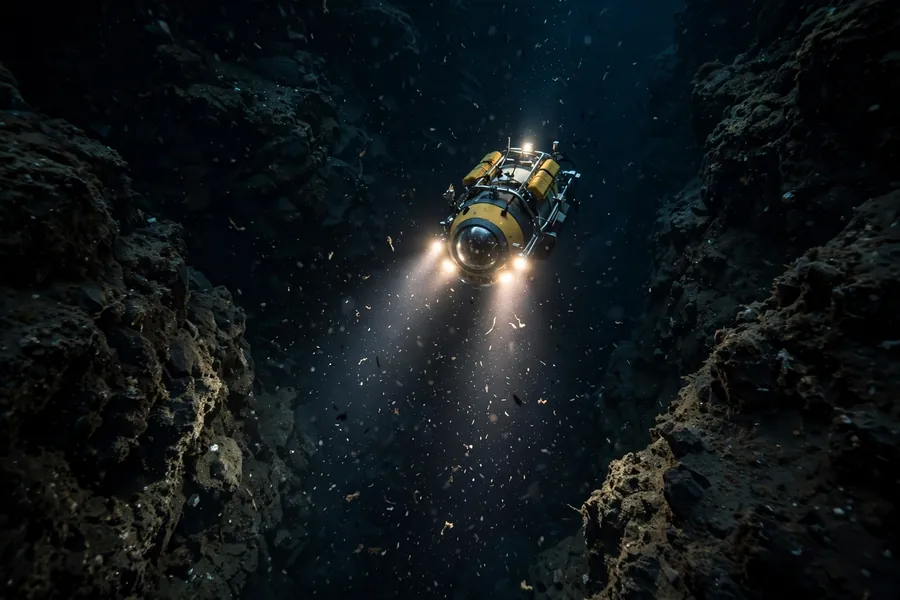
Challenger Deep in the Mariana Trench holds the record as the deepest known point on Earth, plunging down to 10,935 meters.
To put that depth into perspective, Mount Everest (8,849 m) would fit inside the trench with more than 2 km to spare above its peak.
Fact 9: Only a Few Humans Have Reached the Bottom
Descending to Challenger Deep requires specialized technology capable of withstanding crushing forces. The first humans to reach the bottom were Jacques Piccard and Don Walsh aboard Trieste on 23 January 1960.
Decades passed before anyone repeated the feat. Filmmaker James Cameron made the first solo descent to this extreme depth in 2012.
Fact 10: The Hadal Zone Is Named After the Underworld
The hadal zone (6,096–10,973 m) encompasses the deepest ocean trenches. NOAA reveals it is named after Hades, the Greek underworld.
Despite the extreme conditions, life endures in these deep chasms. In fact, more than 400 species are known to live in the ocean’s 21 trenches.
Fact 11: Vertebrates Live At Incredible Depths
For a long time, scientists wondered how deep backboned animals could survive. The Mariana snailfish holds the record as the deepest vertebrate known.
This remarkable creature was successfully filmed at a depth of 8,178 meters in 2017, swimming gracefully despite the extreme pressure.
Fact 12: Earth’s Longest Mountain Range Is Underwater
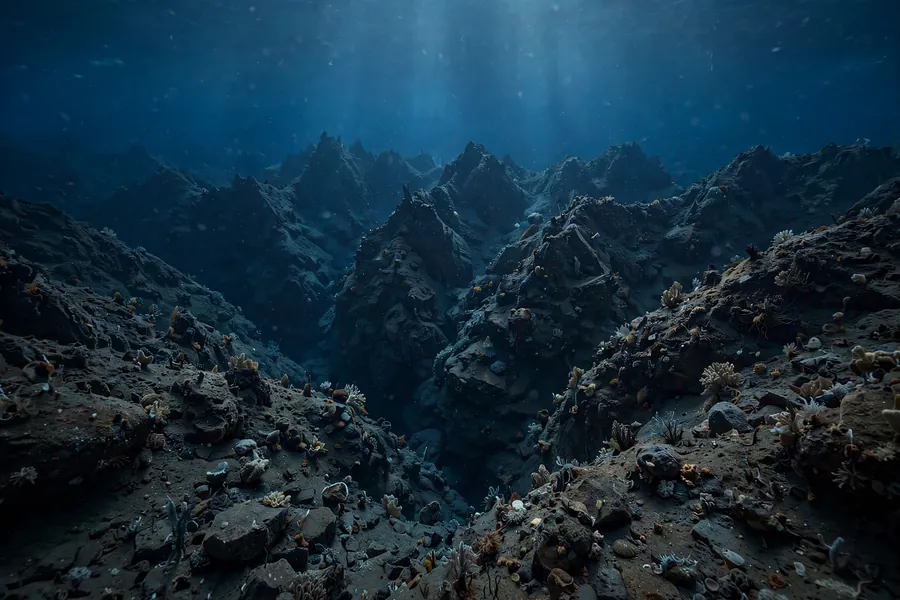
When thinking of mountain chains, most people picture the Andes or Himalayas. However, the mid-ocean ridge is actually the longest mountain range on Earth — an entry that tops almost every list of surprising ocean facts.
According to NOAA, it forms a continuous chain of about 65,000 km. Remarkably, more than 90% of this massive volcanic ridge lies underwater.
Fact 13: The World’s Biggest Waterfall Is Submerged
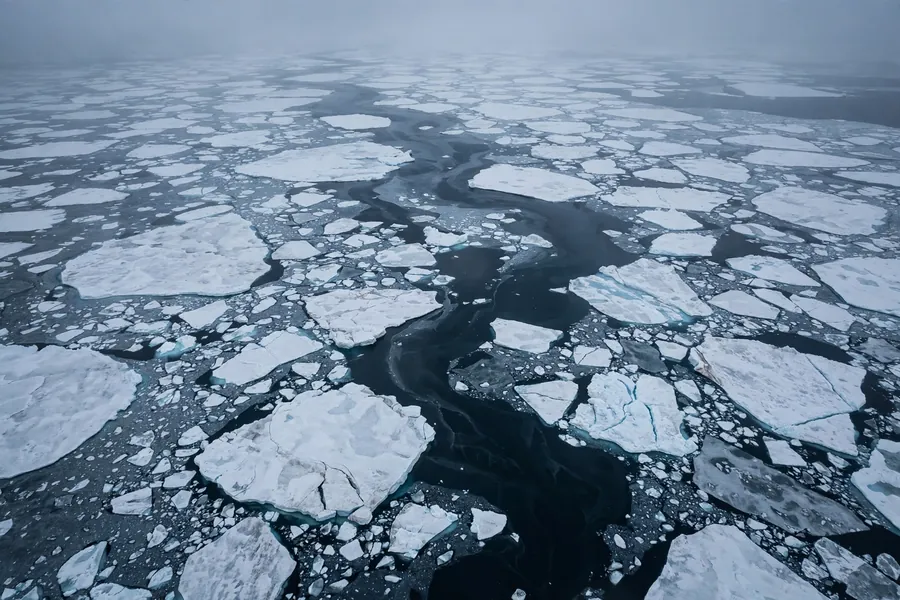
Earth’s largest waterfall isn’t on land. The Denmark Strait cataract drops about 3,500 m, making it over 3 times taller than Angel Falls.
NOAA figures show this massive cold-water cascade carries an estimated 3.5 million cubic meters of water per second beneath the ocean surface.
Fact 14: Point Nemo Is the Farthest Place from Land
Point Nemo in the South Pacific is the ultimate remote location, sitting 2,688 km from the nearest shore in every direction. It was calculated in 1992 by survey engineer Hrvoje Lukatela.
It is so isolated that when the International Space Station passes overhead at about 400 km up, its astronauts are the closest humans to it.
Fact 15: Almost the Entire Ocean Is Unexplored
Despite modern technology, the abyss remains largely unknown. NOAA says about 95% of the ocean remains unexplored by humans.
Even worse, humans have laid eyes on less than 0.001% of the deep seafloor. Endless discoveries still await us in the mysterious depths.
Fact 16: Deep-Sea Life Helps Us Breathe
You might think land plants produce most of our air, but marine organisms produce over half of the oxygen that land animals need to breathe, according to NOAA.
Here is one of those ocean facts worth memorizing: every second breath you take comes directly from the ocean. Without these microscopic ocean organisms powering the planet’s atmosphere, life on land simply could not exist.
Fact 17: Biological Snow Feeds the Abyss
Life in the dark ocean relies on a very unusual food delivery system known as “marine snow.” NOAA defines this as a constant fall of biological debris sinking down from the sunlit upper layers.
This drifting material acts as a primary food source for bizarre animals living in the deep ocean. It ensures energy from the sun reaches ecosystems miles beneath the surface.
Fact 18: Ecosystems Thrive Around Scorching Vents
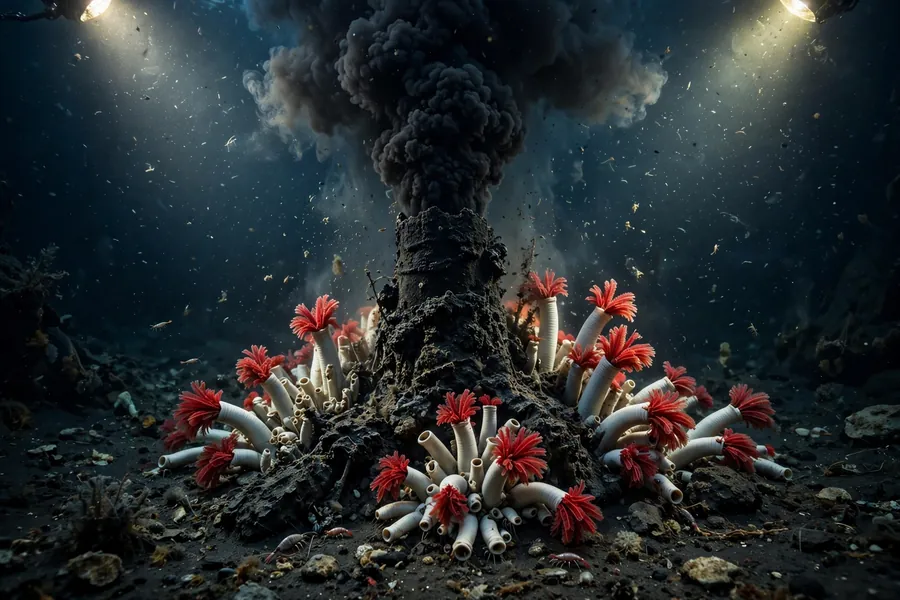
Hydrothermal vents were discovered in 1977 near the Galápagos Rift by the submersible Alvin. The dark “black smoker” fluid shooting out can reach temperatures of about 400°C.
Remarkably, these vent ecosystems run on chemosynthesis instead of sunlight. They host incredible creatures, including giant tube worms that grow over 2 meters long without any sun.
Fact 19: Most Deep-Sea Creatures Glow in the Dark
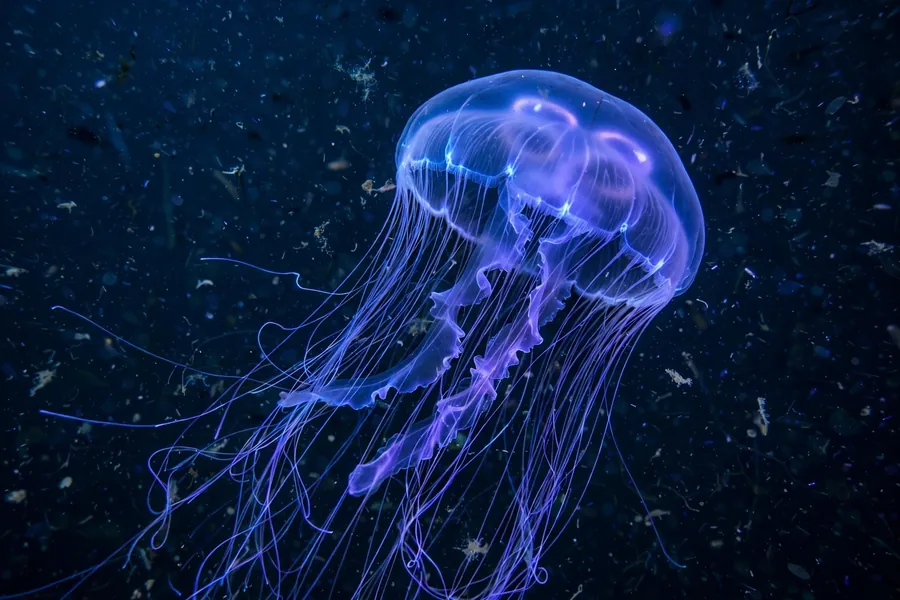
In the pitch-black ocean, making your own light is standard practice. A study analyzing over 350,000 observations by MBARI researchers Martini and Haddock in 2017 found that 76% of observed deep-sea animals produce their own light, called bioluminescence.
Among jellyfish relatives called cnidarians, that figure is even higher. Over 97% of those creatures can light up the dark ocean around them.
Fact 20: The Blue Whale Is a Record-Breaking Giant
The blue whale holds the title of the largest animal ever known to have lived. Growing up to about 30 meters long and weighing around 200 tons, it dwarfs even the biggest dinosaurs.
Everything about this giant is massive. In fact, a preserved blue whale heart specimen at the Royal Ontario Museum weighs about 400 pounds.
Fact 21: A Whale’s Heartbeat Drops Extremely Low
In 2019, a Stanford-led team recorded the heartbeat of a wild blue whale for the very first time. The findings revealed amazing flexibility during deep feeding dives.
The whale’s heart rate can slow to as few as 2 beats per minute while diving deep underwater. When it returns to the surface, it races back up to 30–37 beats per minute.
Fact 22: Greenland Sharks Can Live for Centuries
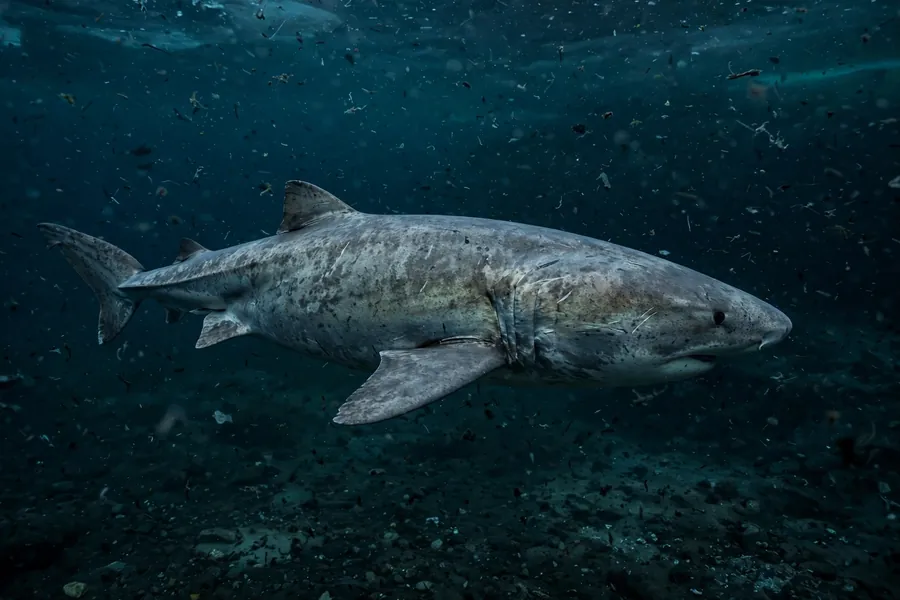
Greenland sharks hold the record as the longest-lived vertebrates known to science. A 2016 study in the journal Science used radiocarbon dating of eye lenses and found a lifespan of at least 272 years.
The largest shark studied was estimated at 392 years old, give or take 120 years. In addition, females may not even reach maturity until about age 156.
Fact 23: One Clam Lives Even Longer Than Sharks
While Greenland sharks live remarkably long lives, they aren’t the oldest animals in the sea. The only animal known to outlive the Greenland shark is the ocean quahog, a type of clam.
One recorded ocean quahog specimen was aged at an astounding 507 years old. It lived quietly on the seafloor for over five centuries.
Fact 24: Sperm Whales Dive Deep for Giant Squid
Sperm whales are master divers that hunt giant squid at extreme depths of 7,000 feet (2,134 m) or more. According to NOAA, their bodies are built for extreme pressure changes.
Their flexible rib cages and collapsible lungs allow them to survive the huge pressure changes during deep dives without collapsing.
Fact 25: Sea Spiders Are Not Real Spiders
Despite their creepy appearance and name, sea spiders are not actually spiders. NOAA notes that they are a completely separate group of marine arthropods.
They crawl across the ocean floor worldwide. They might look like their land namesakes, but their evolutionary path is entirely distinct.
Fact 26: Volcanic Activity Encircles the Pacific
The Pacific Ocean basin is framed by continuous tectonic activity. NOAA explains that the “Ring of Fire” is a massive string of underwater volcanoes and earthquake sites.
This active zone stretches around the outer edges of the Pacific Ocean. It drives frequent tremors and volcanic eruptions deep under the sea.
Fact 27: The Arctic Ocean Is the Smallest Basin
While the Pacific is vast, the northern pole holds a much smaller body of water. According to NOAA, the Arctic Ocean is the world’s smallest ocean basin.
It covers an area of about 14 million square kilometers. Despite its size, it plays a vital role in global ocean systems.
Fact 28: Plastic Debris Accumulates in the Pacific
Human waste has created a massive pollution issue in open waters. The Great Pacific Garbage Patch is an area in the North Pacific Ocean sitting between Hawaii and California.
NOAA highlights that this region contains a high concentration of marine debris. Currents trap floating trash here, creating a significant environmental hazard — one of the saddest modern ocean facts.
Fact 29: Tidal Bores Create Massive River Waves
Tides can create incredible inland phenomena under the right conditions. A tidal bore happens when water in a shallow, sloping estuary or river moves as one massive solitary wave.
According to NOAA, these powerful surge waves can reach up to 20 feet in height. They push upstream with immense force against the natural river flow.
Fact 30: “The Bloop” Was an Iceberg, Not a Monster
A mysterious deep-ocean sound recorded in 1997 was nicknamed “the Bloop” and sparked wild sea monster rumors. However, science eventually solved the mystery.
NOAA scientists later traced the loud noise to an Antarctic iceberg cracking and breaking apart. It was a natural geological event rather than a creature from the deep — a reminder that the best ocean facts need no monsters.
Ocean Facts: Frequently Asked Questions
How deep is the ocean?
Of all the ocean facts readers ask about, this is the big one. The ocean’s average depth is 3,682 meters (12,080 feet), according to NOAA. However, the deepest point reaches down 10,935 meters at Challenger Deep in the Mariana Trench.
How much of the ocean is still unexplored?
NOAA reports that about 95% of the ocean remains unexplored. Furthermore, humans have laid eyes on less than 0.001% of the deep seafloor. That is why new ocean facts are still being discovered on almost every expedition.
What is the deepest point in the ocean?
The deepest known point is Challenger Deep in the Mariana Trench, which drops down to 10,935 meters. Mount Everest (8,849 m) would fit inside it with over 2 km to spare.
What is the largest animal that ever lived?
The blue whale is the largest animal ever known to have lived, reaching up to about 30 meters long and 200 tons. One preserved heart specimen weighs around 400 pounds.
How long can a Greenland shark live?
Greenland sharks can live for centuries, with a 2016 study showing a lifespan of at least 272 years. The largest shark studied was estimated at 392 years old, give or take 120 years.
What is the longest mountain range on Earth?
The mid-ocean ridge is the longest mountain range on Earth, forming a continuous underwater chain of about 65,000 km. NOAA notes that more than 90% of it lies submerged.
The Ocean Still Keeps Its Secrets
From the sunlit waves at the surface down to the crushing darkness of the trenches, exploring these extraordinary ocean facts reveals how alien our own planet really is. Giant tube worms thrive near hydrothermal vents, while centuries-old sharks glide silently through cold abyssal currents. Every expedition into the deep sea brings surprising discoveries that redefine what we know about life on Earth.
If exploring extreme environments fires up your curiosity, readers who love extreme science should also read these fascinating supermassive black hole facts. For those eager to continue diving into marine discovery, you can explore even more marine science straight from NOAA Ocean Exploration. Keep exploring, stay curious, and never stop marveling at the wild wonders hidden right beneath the surface!