
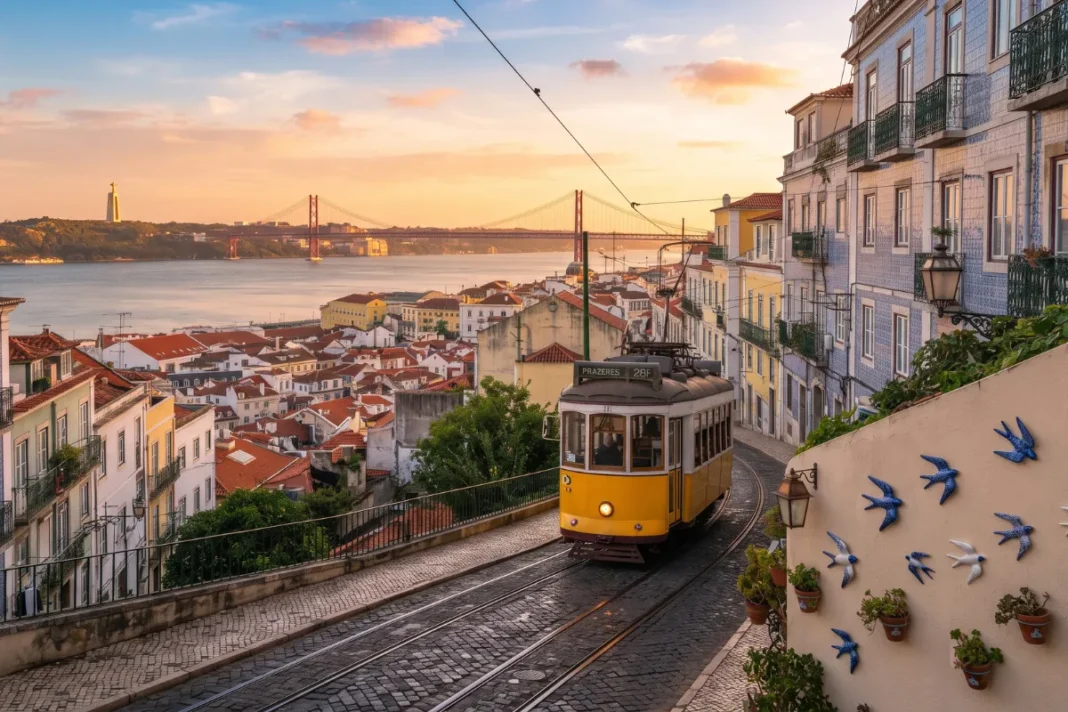

Most travelers think of beaches, trams, and custard tarts when they picture Portugal. However, the weird facts about Portugal go much deeper than that. This small country on the Iberian Peninsula has a surprising royal history, unusual New Year traditions, and food with a global reach. It also has some of the biggest surfable waves on Earth.
In this guide, you will find 25 unusual facts about Portugal. Some come from history, while others come from food, language, and everyday culture. Together, they show why the country deserves a closer look. If you are planning a trip, our Lisbon travel guide is a useful companion to this list.
1. Weird Facts About Portugal’s History: One of Europe’s Oldest Countries
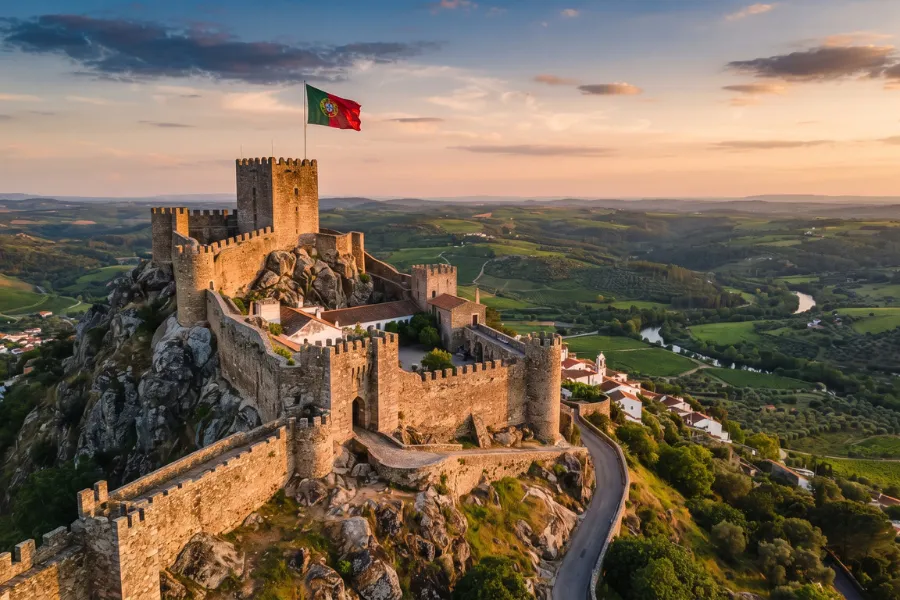
Portugal became an independent kingdom in the twelfth century, and its borders have barely changed since 1297. For that reason, many historians describe it as one of Europe’s oldest nation-states. Few European countries can say the same, because most have redrawn their maps many times.
This stability shaped Portuguese identity. As a result, the country’s culture, language, and traditions developed with fewer interruptions than those of many neighbors.
2. Lisbon Is Often Said to Be Older Than Rome
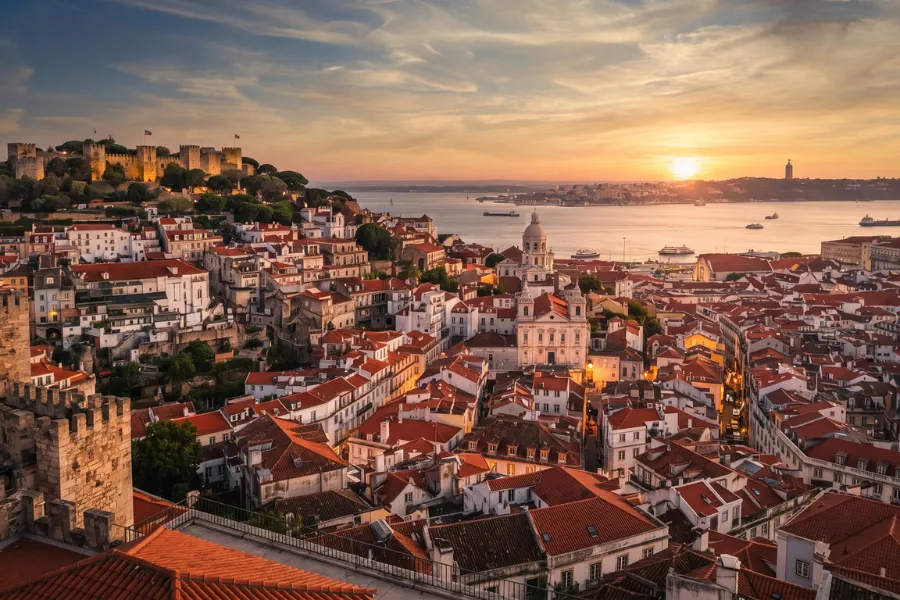
Lisbon is among the oldest cities in Western Europe. Rome is traditionally dated to 753 BC, and people often claim that Lisbon is older. This claim comes from the belief that Phoenician traders settled on the Tagus River around 1200 BC. Archaeologists still debate the exact date. Even so, evidence confirms that people lived in the area long before the Romans arrived.
Therefore, “older than Rome” is best treated as a popular claim rather than a settled fact. Either way, Lisbon’s ancient roots are real.
3. Portugal Once Built One of the World’s Most Powerful Maritime Empires

During the Age of Discovery, Portuguese explorers pushed far beyond the known world. Portugal captured Ceuta in 1415, and Vasco da Gama reached India by sea in 1498. Soon after, Portugal claimed Brazil and built trading posts across Africa and Asia.
Ferdinand Magellan, a Portuguese navigator, led the first expedition to sail around the globe. However, he sailed for Spain, and he died in the Philippines in 1521. His crew completed the journey in 1522. Today, the Portuguese maritime empire still explains why the language and culture spread so widely.
4. Weird Facts About Portugal’s Kings: The Longest and Shortest Reigns

Afonso Henriques, known as Afonso I, is considered the founder of Portugal. He became king in 1139 and ruled until 1185, which makes his reign one of the longest in Portuguese history. Some sources count his rule from his childhood, after he inherited his father’s county. For that reason, you may see even higher numbers online.
One Portuguese King Reigned for Only Minutes
On the other end of the scale, the story of Luís Filipe is dramatic. In 1908, assassins attacked the royal family in Lisbon and killed King Carlos I. His son, Luís Filipe, was wounded and died shortly afterward. Technically, he became king when his father died, so his reign is reportedly the shortest in Portuguese history, at roughly twenty minutes.
5. Weird Facts About Portugal’s New Year Traditions: 12 Raisins at Midnight

Portuguese New Year traditions are some of the most unusual in Europe. At midnight, many people eat twelve raisins, one for each chime of the clock. In addition, each raisin represents a month of the coming year, and the eater makes a wish for every one.
The tradition is meant to bring good fortune. Moreover, it turns the countdown into a small ritual that friends and family share.
Money, Chairs, and Your Right Foot
Superstitions do not stop with raisins. For instance, many people put money in their pockets to attract wealth in the new year. Others climb onto a chair and step down with the right foot as the clock strikes twelve. Traditions vary by family and region, but they all share one goal: starting the year with good luck.
6. Portugal Grows Tea in the Azores
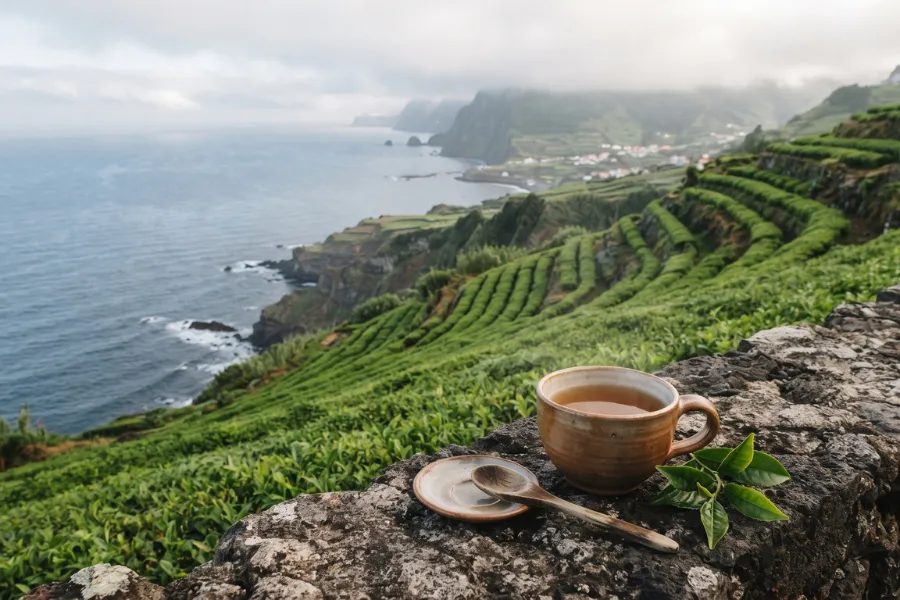
Tea is not the first crop most people link with Portugal. Nevertheless, the Azores island of São Miguel is home to Chá Gorreana, a tea plantation founded in 1883. It is one of the few places in Europe where tea is grown commercially.
The mild, humid Atlantic climate suits the plants well. Consequently, visitors can walk through the green fields and taste fresh tea on the spot.
7. Weird Facts About Portugal’s Food: A Closely Guarded Custard Tart Recipe
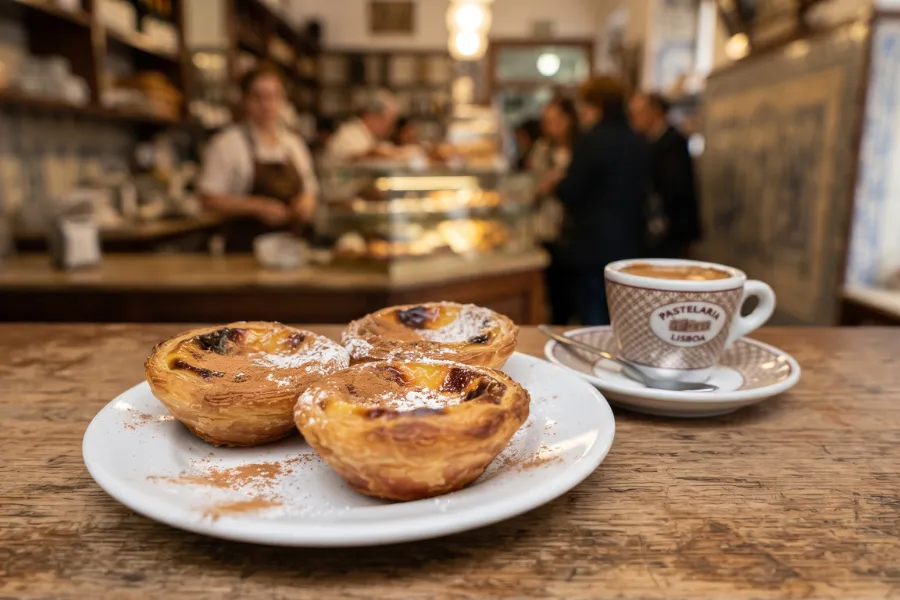
Pastéis de nata are Portugal’s best-known pastry. The original version comes from Pastéis de Belém, a bakery in Lisbon’s Belém district that opened in 1837. Its recipe has a reputation for being secret, and only a few master confectioners are said to know it.
The story goes back further. Monks at the nearby Jerónimos Monastery first made the tarts. After the monastery closed in the nineteenth century, the recipe passed to the bakery. If you love pastries, our guide to Portuguese food covers more local favorites.
8. Weird Facts About Portugal’s Cuisine: Hundreds of Ways to Cook Cod
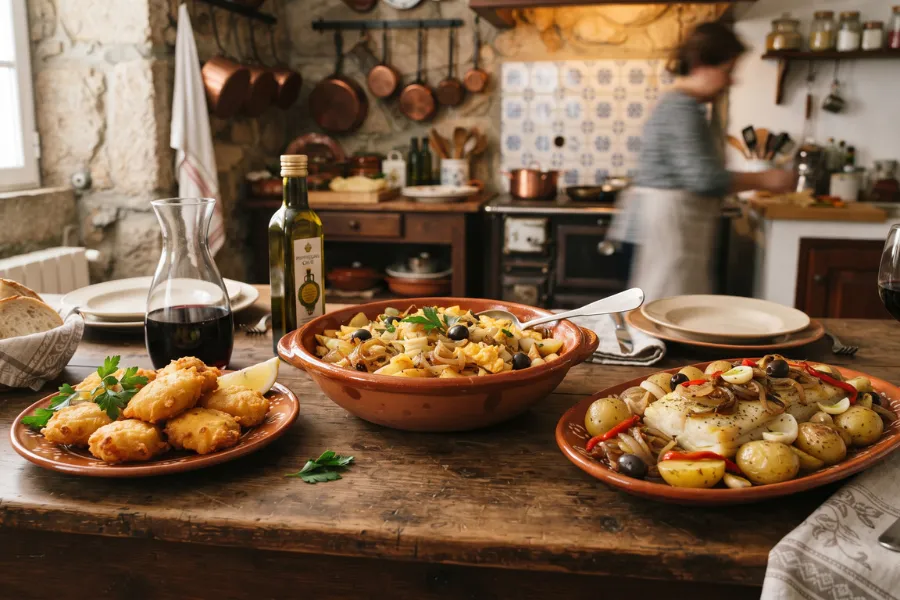
Bacalhau, or salted cod, is a national obsession. People often say the Portuguese know “a thousand ways” to cook it, though this is a popular saying rather than an exact count. Even so, the variety is impressive, from bacalhau à Brás to baked and grilled versions.
Interestingly, cod does not come mainly from Portuguese waters. Fishermen sailed far into the North Atlantic for centuries, and salting kept the fish fresh on the long journey home. As a result, bacalhau became a staple of Portuguese cuisine.
9. A Disputed Tempura Link Adds to the Weird Facts About Portugal
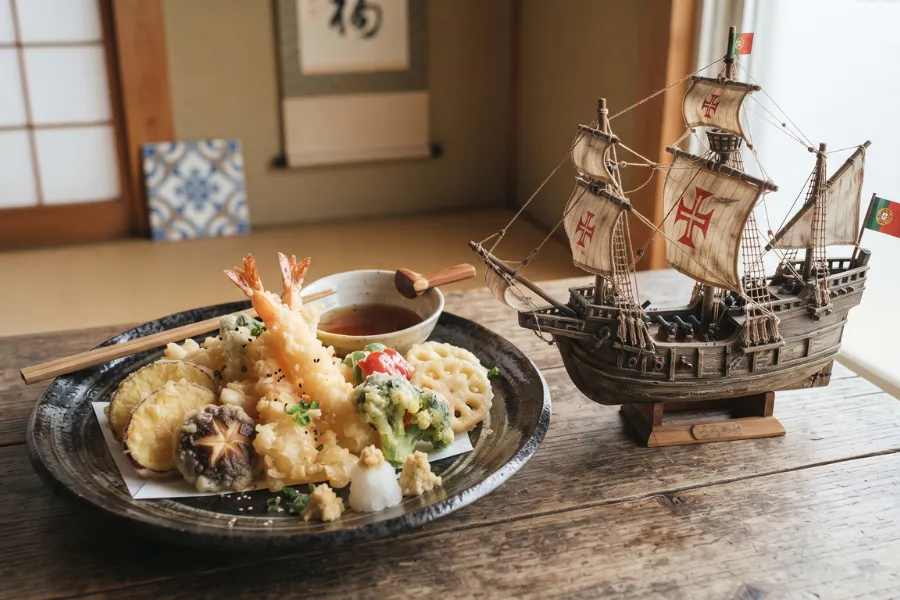
Tempura is a classic Japanese dish, yet many food historians connect it to Portugal. In the sixteenth century, Portuguese missionaries and traders arrived in Japan and brought fried foods with them. One theory says the word “tempura” even comes from a Latin term linked to Lent and other fasting periods.
However, historians do not fully agree on this origin. For that reason, it is safest to call the connection a widely discussed theory.
10. Several Japanese Words Came From Portuguese
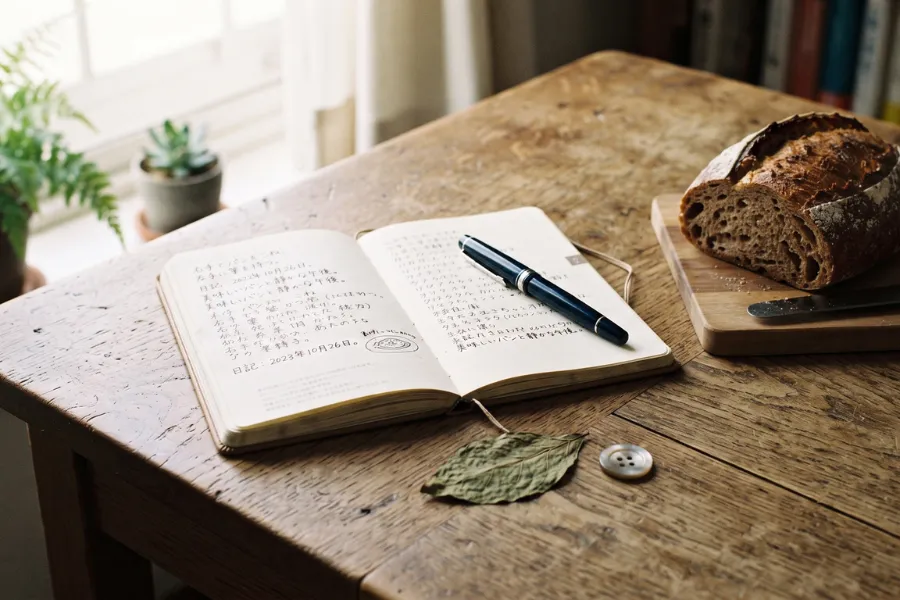
Contact between the two countries left real traces in the Japanese language. For example, “pan” (bread), “tabako” (tobacco), “karuta” (a card game), and “botan” (button) all have Portuguese roots. In contrast, the popular claim that “arigatō” comes from “obrigado” is a myth.
Because of these loanwords, Portuguese remains part of everyday Japanese, even though most speakers never notice.
11. Weird Facts About Portugal’s Coast: Nazaré’s Giant Waves
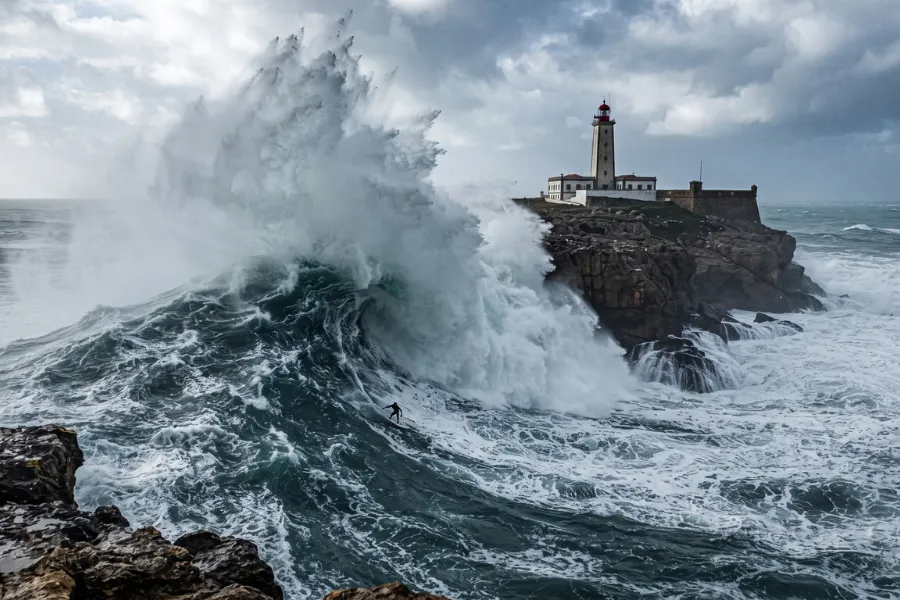
Nazaré, a fishing town on the Atlantic coast, hosts some of the largest surfable waves in the world. The reason lies underwater. The Nazaré Canyon is one of the largest submarine canyons in Europe, and it funnels ocean swells toward the shore. Consequently, waves near Praia do Norte can grow to enormous heights.
Big-wave surfers such as Garrett McNamara and Rodrigo Koxa have set record claims here. Because records change often, it is wise to check the latest official ratings before quoting one.
12. Portugal Is a Major Surfing Destination
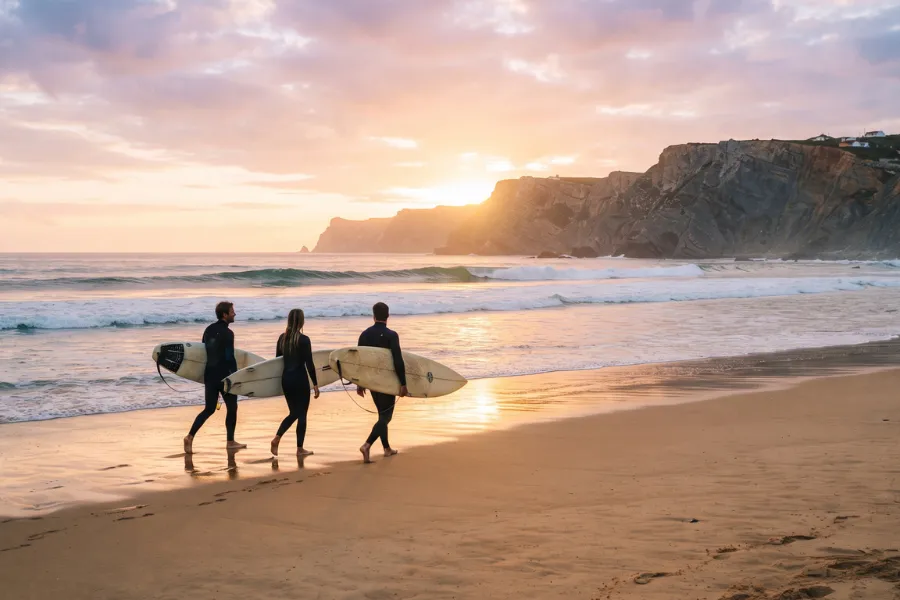
The country’s long Atlantic coastline offers surf for every level. Peniche is known for its powerful Supertubos wave, while Ericeira became Europe’s first World Surfing Reserve in 2011. Beginners, meanwhile, can find gentler beaches close to Lisbon.
Cabo da Roca, near Sintra, is the westernmost point of mainland Europe. It shows how close this country sits to the open ocean.
13. Weird Facts About Portugal’s Cork: The World’s Largest Producer
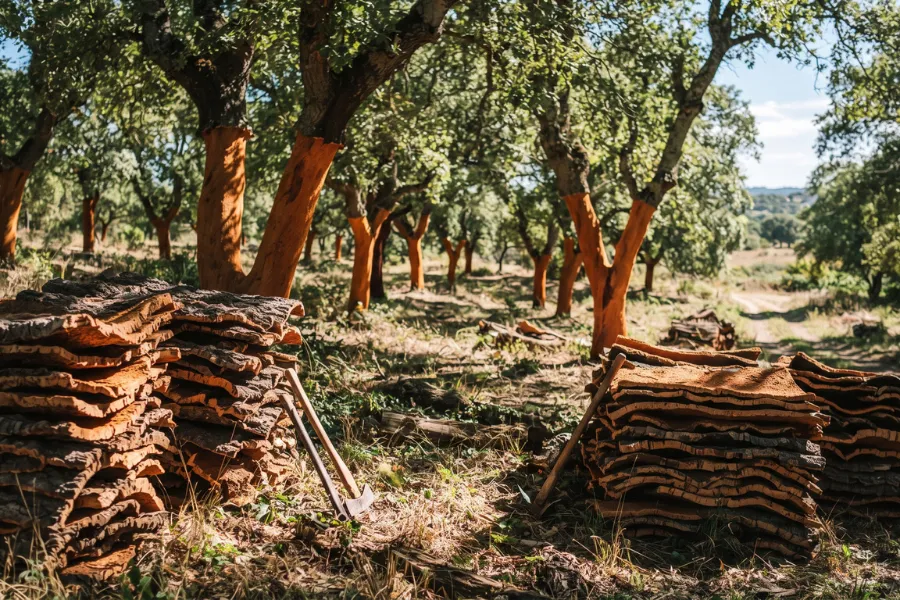
Portugal supplies roughly half of the world’s cork. The material comes from the bark of cork oak trees, and harvesters strip it by hand about every nine years without killing the tree. Because of this, cork is a renewable resource.
Most people know cork as a wine stopper. Yet it also appears in fashion, furniture, interiors, and even spacecraft insulation. In addition, Portuguese law protects cork oaks, which helps preserve the traditional landscape known as the montado.
14. Sintra Hides an Underground Mystery at Quinta da Regaleira
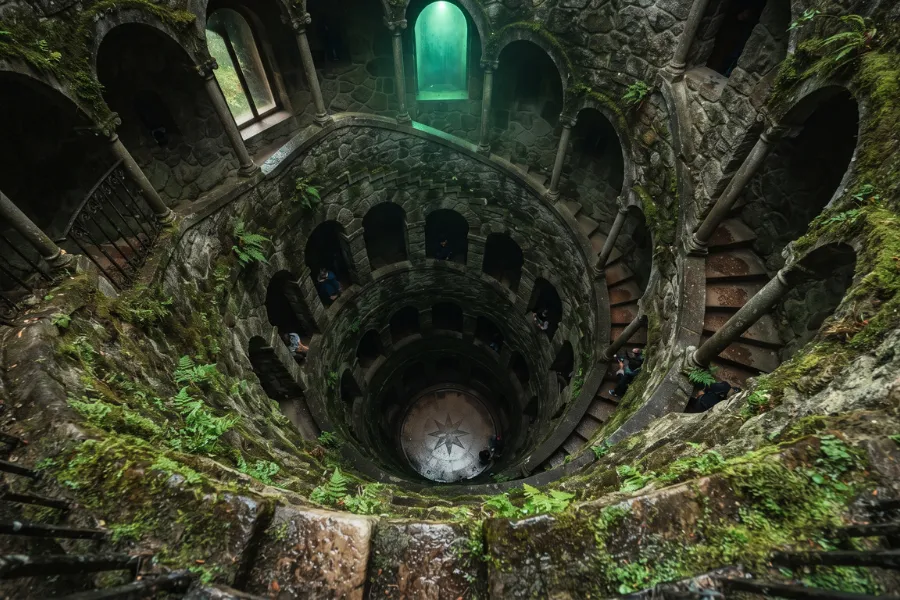
In Sintra, near Lisbon, Quinta da Regaleira is a fairy-tale estate built in the early 1900s. Its most mysterious feature is the Initiation Well. Visitors walk down a spiral staircase of nine levels, around 27 meters deep, and then exit through underground tunnels.
The purpose of the well is debated. Some people link it to Freemasonry, the Knights Templar, or Dante’s Divine Comedy. However, these ideas are theories and legends, not proven facts. Nevertheless, the mystery adds to the charm. For more places like this, read our Sintra travel guide.
15. Lisbon Has One of the World’s Oldest Bookshops

Livraria Bertrand in Lisbon’s Chiado district opened in 1732. Guinness World Records has recognized it as the oldest operating bookshop in the world. It survived the devastating 1755 earthquake by moving to a new location, and it still sells books today.
16. Weird Facts About Portugal’s Language: The Word “Saudade”
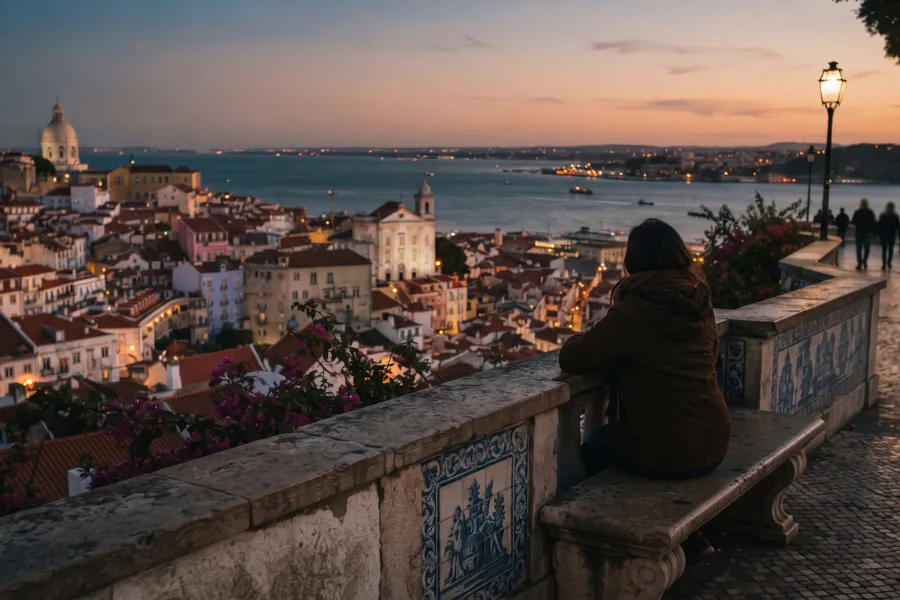
Saudade is one of the most famous Portuguese words. It describes a deep emotional longing for someone or something that is absent, often mixed with nostalgia and affection.
What Does “Saudade” Mean in Everyday Life?
People use it for a lost love, a distant family member, or a past time. Many speakers say the word has no perfect translation. Because of this, saudade also shapes Portuguese music, especially fado, and poetry.
17. Ceramic Swallows Decorate Portuguese Homes
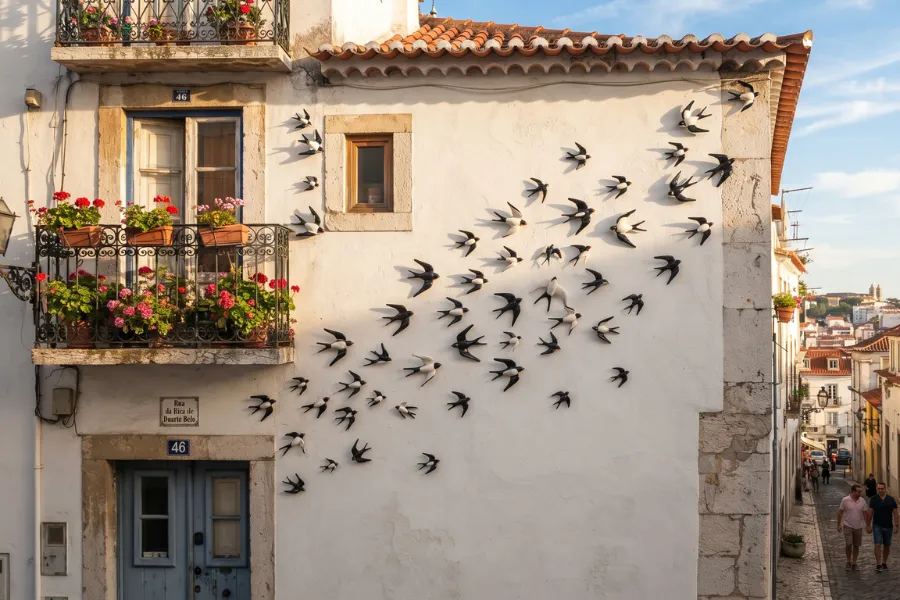
Walk through Lisbon and you will see ceramic swallows on many walls. Rafael Bordalo Pinheiro, a nineteenth-century artist, made them popular. Swallows migrate and return home each year, so they symbolize love, family, loyalty, and the idea of coming back.
For this reason, many Portuguese families hang a group of swallows as a sign of a warm home.
18. Portuguese Is Spoken Far Beyond Portugal
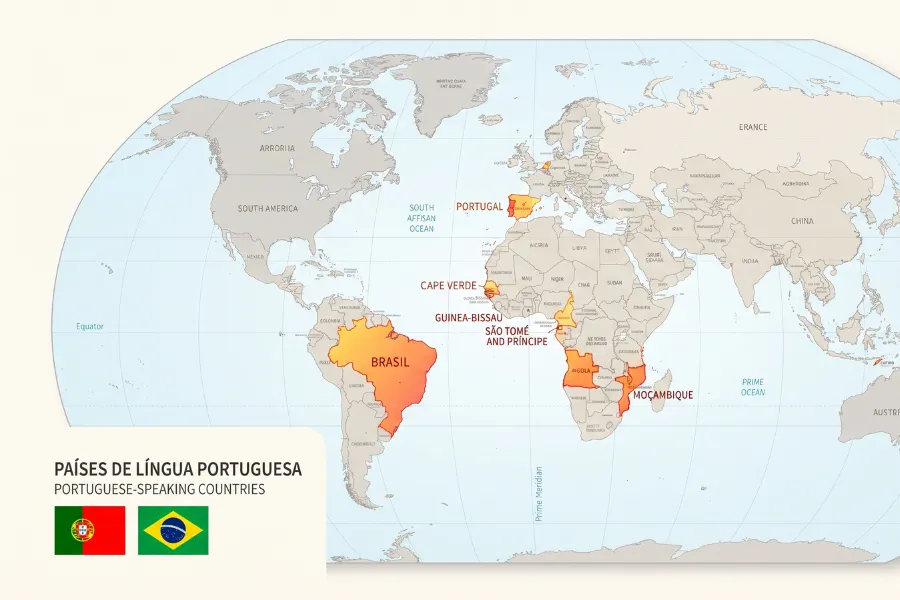
Portugal has only about ten million people, yet Portuguese has more than 250 million speakers worldwide. The main reason is Brazil, whose population is far larger than Portugal’s.
Portuguese is also official in Angola, Mozambique, Cape Verde, Guinea-Bissau, São Tomé and Príncipe, Equatorial Guinea, and Timor-Leste. Therefore, one small European nation shaped languages on four continents.
19. Weird Facts About Portugal’s Street Art: A Famous Trash-Art Movement
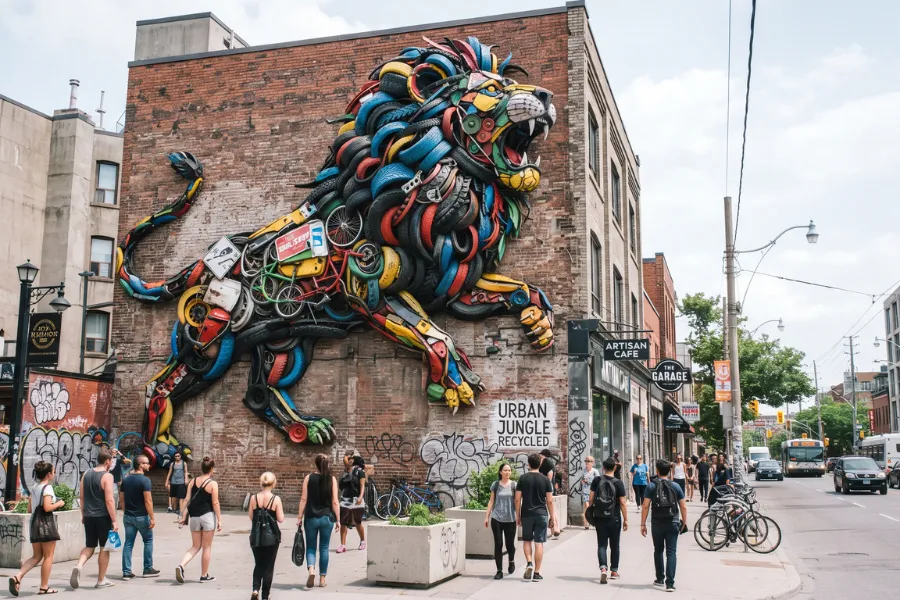
Bordalo II is a Lisbon artist who turns waste into huge animal sculptures. His “Big Trash Animals” series uses discarded materials such as old tires and scrap metal. The works carry a clear message about consumption and pollution.
Because they stand in public spaces, anyone can see them. As a result, the street art draws attention to environmental issues in a creative way.
20. Port Wine Comes From a Specific Region
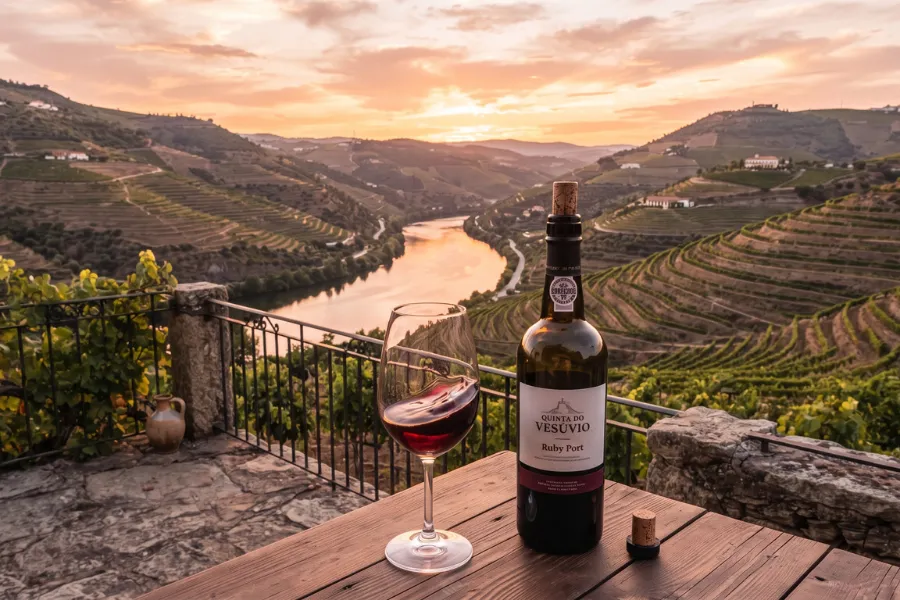
Port is a fortified wine from the Douro Valley, not simply any wine from the city of Porto. Producers add grape spirit during fermentation, which stops the process and leaves natural sweetness. Afterward, the wine traditionally ages in cellars in Vila Nova de Gaia, across the river from Porto.
The Douro was formally demarcated in 1756, making it one of the oldest regulated wine regions in the world.
21. Portugal Was an Early Adopter of the Euro
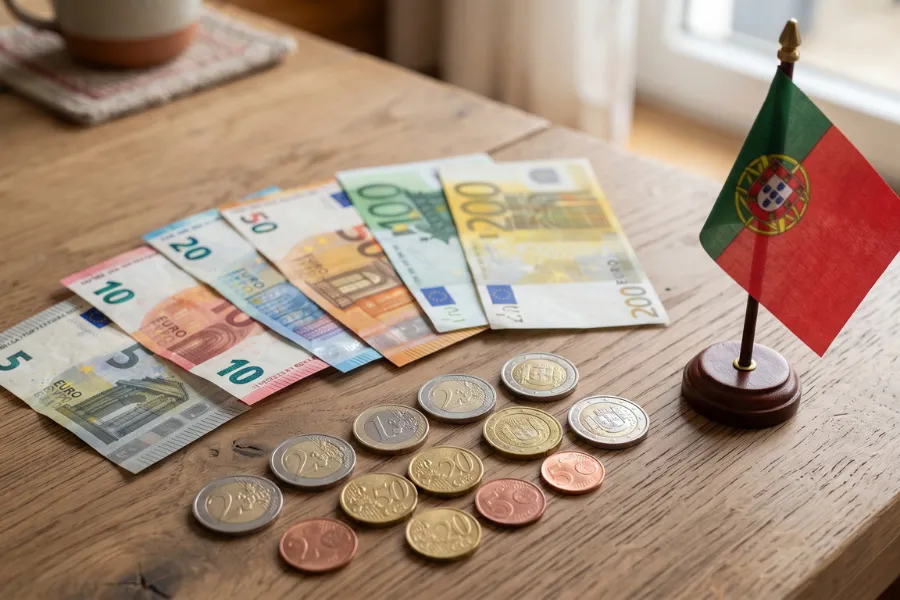
Portugal was one of the first eleven countries to join the euro in 1999. Euro notes and coins replaced the escudo in January 2002. Although this fact is less strange than the others, it shows how fully the country joined European integration.
22. Fátima Is a Major Catholic Pilgrimage Site
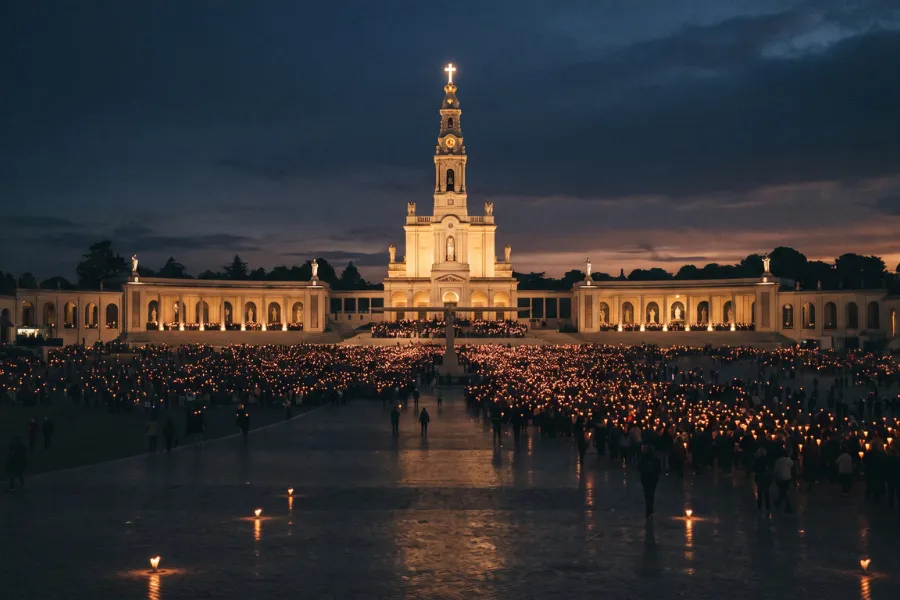
In 1917, three shepherd children reported apparitions of the Virgin Mary near the town of Fátima. Since then, the Sanctuary of Fátima has become one of the most important Catholic pilgrimage destinations in the world. Millions of visitors arrive each year, and the biggest gatherings take place around 13 May and 13 October.
23. Portugal Has a Large UNESCO Heritage Footprint
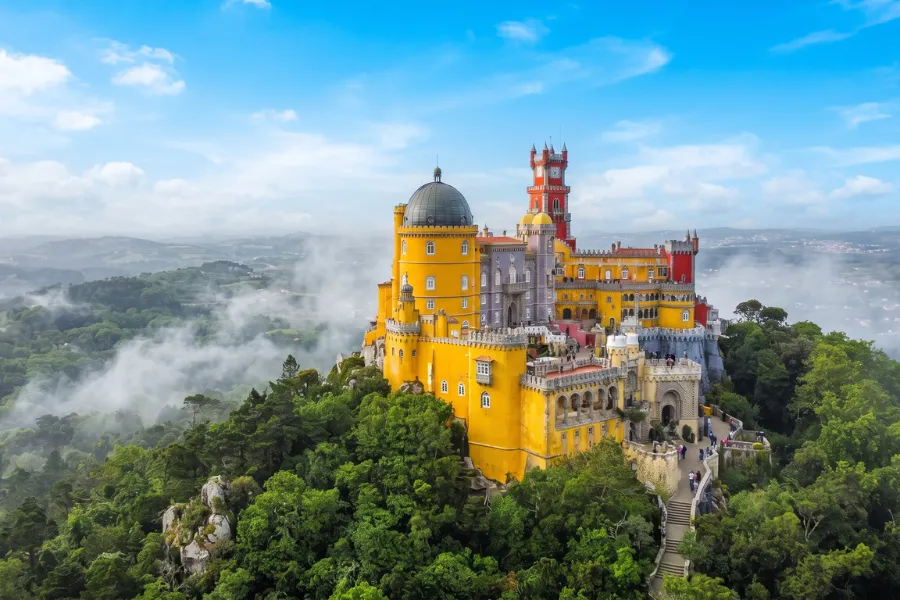
For a small country, Portugal has well over a dozen UNESCO World Heritage Sites. They include the historic centre of Porto, the Monastery of Batalha, the University of Coimbra, the cultural landscape of Sintra, and the Alto Douro wine region. In addition, the Laurisilva forest of Madeira is a natural site.
Together, these places show the country’s rich cultural heritage.
24. Portugal Has a Surprising Renewable-Energy Story
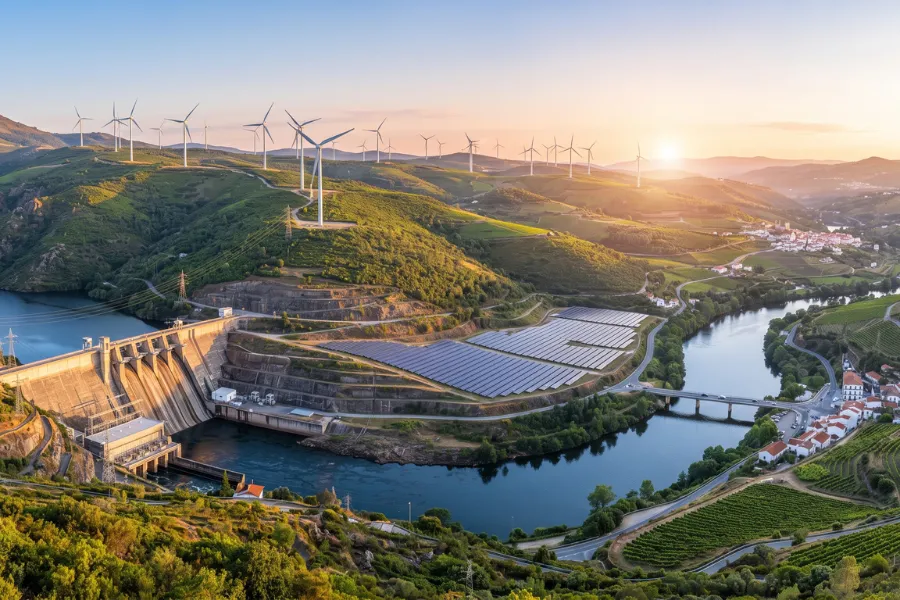
Portugal relies heavily on wind, hydropower, and solar energy. In 2016, reports said the country ran on renewable electricity alone for more than four days in a row. Since then, renewables have supplied a large share of national power.
Because Portugal has no major oil or gas reserves of its own, this energy transition is both practical and impressive.
25. Portuguese Coffee Culture Is Stronger Than You Might Expect
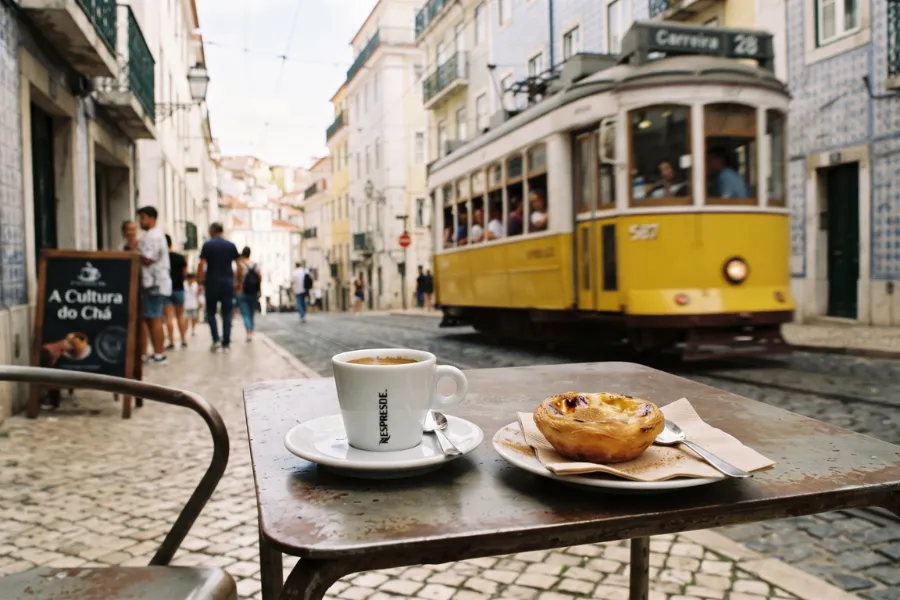
Coffee is part of daily life. People drink a quick espresso after lunch, and cafés are social spaces where neighbors meet. The names also vary by city. For example, Lisbon calls an espresso a “bica,” while Porto calls it a “cimbalino.”
Order a “galão,” a tall milky coffee, if you want something gentler. Overall, a coffee break here is a small ritual, not just a caffeine stop.
Final Thoughts on These Weird Facts About Portugal
As you can see, the weird facts about Portugal reach far beyond its beaches. From a king who reigned for minutes to raisins at midnight, the country’s history and customs are full of surprises. Whether you plan to visit or simply enjoy learning, these facts offer a fresh view of a remarkable place.
Frequently Asked Questions About Portugal
What are 5 weird facts about Portugal?
First, Portugal’s borders have barely changed since 1297. Second, it once built a vast maritime empire. Third, it produces about half of the world’s cork. Fourth, Nazaré has some of the biggest surfable waves in the world. Finally, locals eat twelve raisins at midnight on New Year’s Eve.
Why do people say 70% of Portugal is empty?
The claim is exaggerated. Portugal is not literally empty. However, many interior regions have low population density because people moved to the coast and to cities like Lisbon and Porto. Consequently, the countryside has fewer residents than the coast.
What is the leading cause of death in Portugal?
Diseases of the circulatory system, such as heart disease and stroke, have traditionally been the leading cause, with cancer next. Figures change each year, so check the latest data from INE, Eurostat, or the WHO.
What are the don’ts of Portugal?
- Don’t assume every Portuguese person speaks Spanish. Many people prefer English or Portuguese.
- Don’t be loud inside churches or at religious sites.
- Don’t forget that bread and olives brought to your table are usually charged if you eat them.
- Don’t expect large tips. A small tip is appreciated, but it is not required.
What are some weird traditions in Portugal?
Eating twelve raisins at midnight, carrying money for luck, stepping down from a chair with the right foot, and hanging ceramic swallows are all well-known customs. In addition, saudade is a cultural idea that Portuguese people take very seriously.