
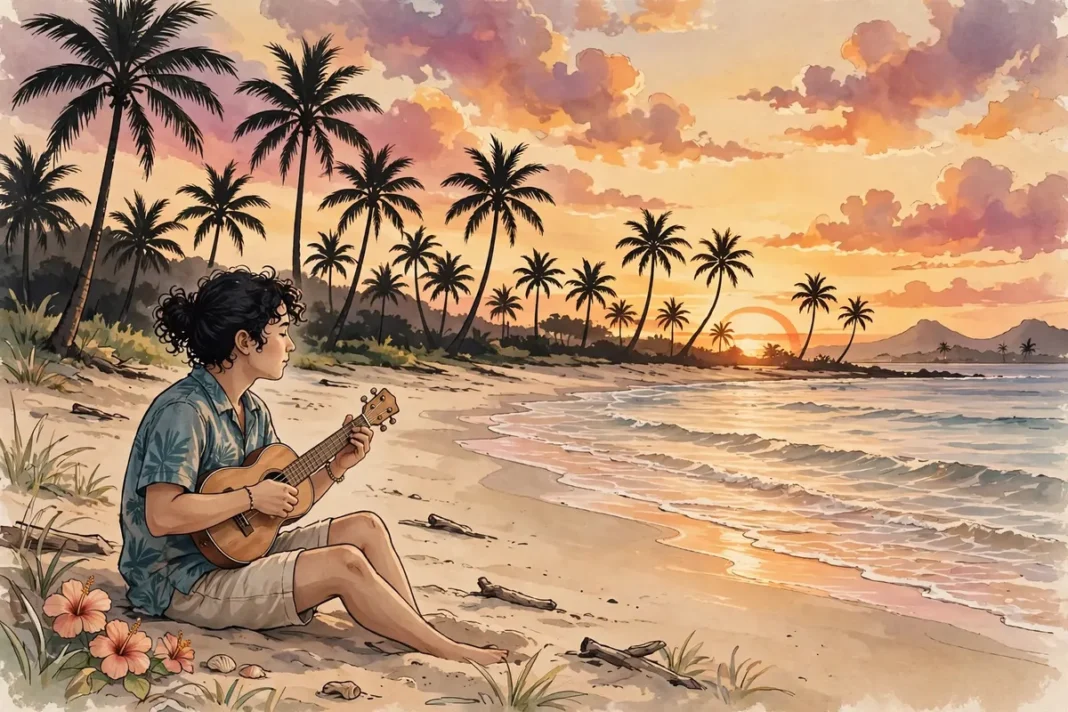

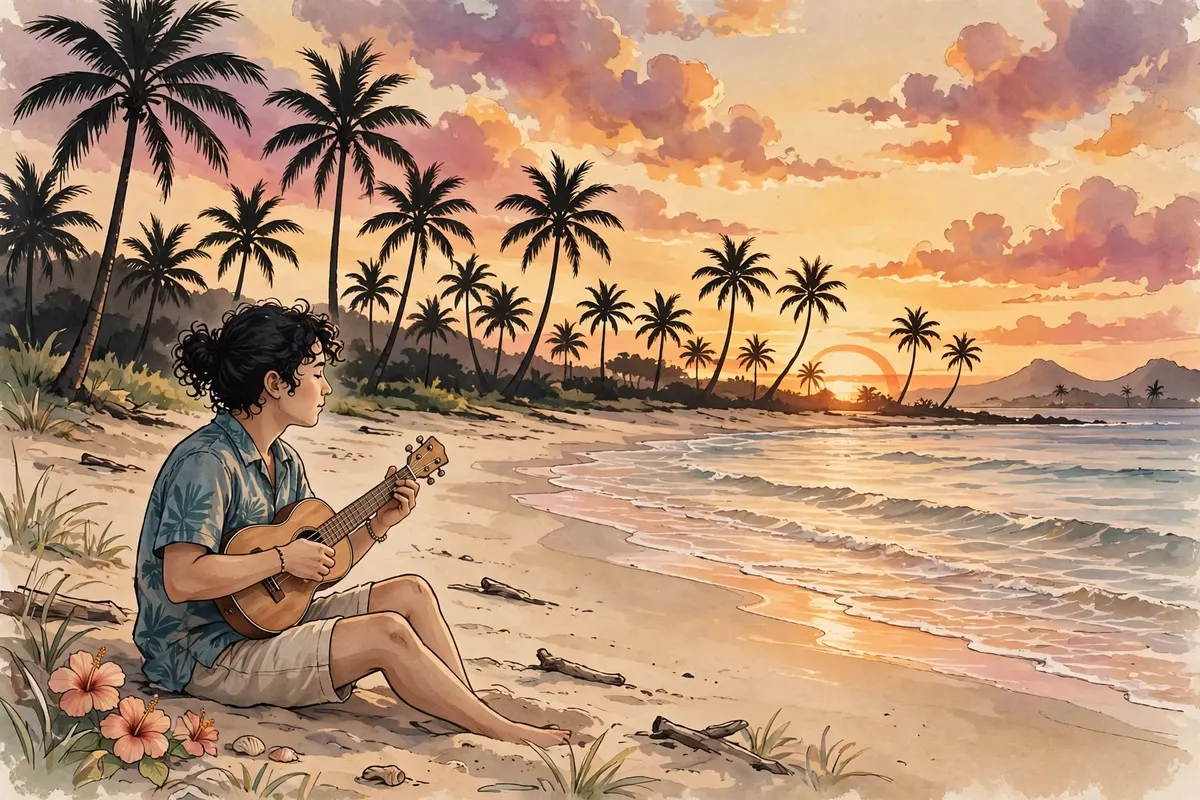
Few instruments are as instantly recognizable as the ukulele. Yet the story behind this little four-stringed instrument is far richer than most people realize. The ukulele history begins not in Hawaii, as many assume, but on a small Portuguese island in the Atlantic — and it involves immigrant ships, Hawaiian kings, world expositions, and rock legends.
Where Did the Ukulele Originate?
The ukulele did not begin its life in Hawaii. Its roots lie in Portugal — specifically on the island of Madeira. Without this Portuguese chapter, the ukulele as we know it would never have existed.
The Ukulele’s Portuguese Roots in Madeira
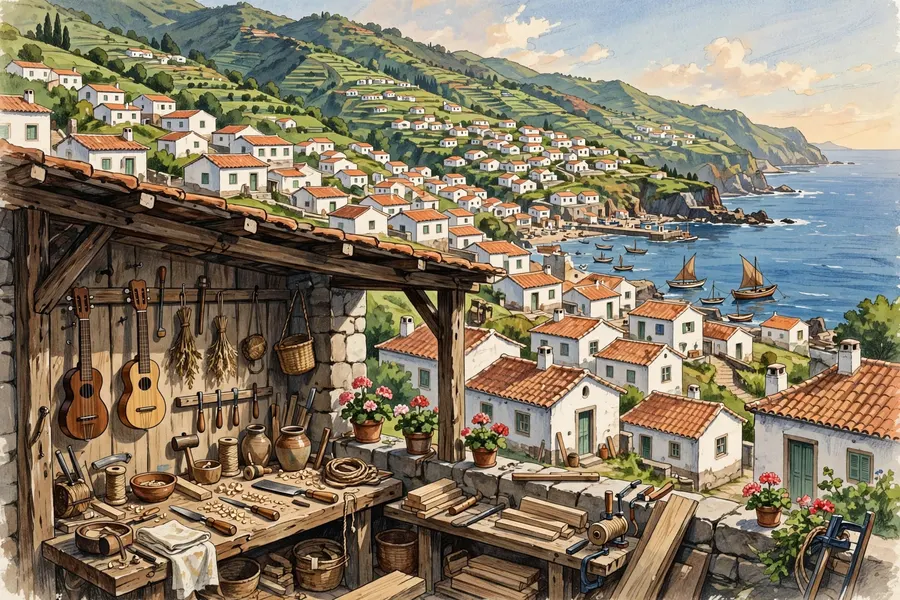
In the 19th century, Madeira faced hard economic times, and many islanders looked overseas for work. Hawaii’s booming sugar plantations were recruiting laborers, and when Madeiran workers crossed the ocean, they brought their music with them — including small, guitar-like folk instruments from everyday life back home.
Traditional Instruments That Inspired the Ukulele
Three Portuguese instruments shaped what would become the ukulele. The machete (also called the braguinha) was a small four-stringed instrument popular in Madeira. The rajão was a slightly larger five-stringed relative. And the cavaquinho, found across Portugal, contributed its own design ideas. All were portable, bright-sounding, and easy to play — qualities the ukulele would inherit.
How the Ukulele Became a Hawaiian Instrument
Once these instruments reached Hawaii, local musicians and craftsmen didn’t simply copy the Portuguese designs — they reshaped them. They adjusted the size, changed the tuning, and built the instruments from local Hawaiian woods. Within a few years, the adapted instrument had a new identity, a new sound, and a new name. It was becoming Hawaiian.
For more on the country where it all began, check out our 25 weird facts about Portugal.
How the Ukulele Came to Hawaii in 1879
August 23, 1879, is the most important date in early ukulele history — the day the ship Ravenscrag arrived in Honolulu Harbor with the instruments that would change Hawaiian music forever.
The Arrival of Portuguese Immigrants
The Ravenscrag was a British sailing ship that had left Funchal, Madeira, four months earlier carrying 419 Portuguese immigrants contracted to work on Hawaii’s sugar plantations. Legend says that when the ship docked, one passenger began playing his small stringed instrument right on the deck — and the Hawaiians watching from shore were captivated. You can read more about the voyage on the SS Ravenscrag’s historical record.
Manuel Nunes, Augusto Dias, and José do Espírito Santo
Among the passengers were three Madeiran cabinetmakers: Manuel Nunes, Augusto Dias, and José do Espírito Santo. These three men are generally credited as the first ukulele makers, each opening a workshop in Honolulu within a few years of arriving. Historians avoid crowning any single one the definitive “inventor” — the evidence doesn’t support such a clean claim — but their role as the founding builders is well established.
The First Ukulele Makers in Hawaii
What the three builders created differed subtly but importantly from the instruments of Madeira. They experimented with local koa wood, refined the body shape, and settled on the bright, re-entrant tuning behind the ukulele’s cheerful voice. Their Honolulu workshops became the birthplace of an instrument Portuguese in ancestry but Hawaiian in spirit.
How the Ukulele Became Popular in Hawaii
A new instrument needs champions, and the ukulele found its most powerful one on the Hawaiian throne itself.
King David Kalākaua and the Ukulele
King David Kalākaua, who reigned over Hawaii in the late 19th century, was a passionate patron of music and the arts. He learned to play the ukulele himself and featured it at royal gatherings. When the king picks up your instrument, people notice — his enthusiasm gave it a prestige no advertising could buy.
The Ukulele in Hawaiian Music and Culture
Under royal patronage, the ukulele wove itself into Hawaiian musical life, becoming a natural companion to traditional songs and hula. What had arrived as an immigrant’s folk instrument was becoming a symbol of Hawaiian cultural identity.
The Role of Royal Gatherings and Hula
In 19th-century Hawaii, the royal court set cultural fashion. By bringing the ukulele into palace performances, Kalākaua signaled that this instrument belonged to Hawaii — an endorsement that carried it from novelty to tradition in a single generation.
How the Ukulele Spread from Hawaii to America
For its first decades, the ukulele was a Hawaiian phenomenon. Two great expositions would carry its sound to the American mainland.
The 1893 Chicago World’s Fair
The 1893 World’s Columbian Exposition in Chicago gave mainland Americans an early exposure to Hawaiian music and the ukulele. It was an introduction, not yet a craze — but the seed was planted.
The 1915 Panama-Pacific International Exposition
If 1893 was the introduction, 1915 was the explosion. The Panama-Pacific International Exposition in San Francisco featured Hawaiian music prominently, and this time the ukulele truly captured the public imagination. Mainland musicians picked it up, manufacturers began producing affordable models, and the instrument went from Hawaiian curiosity to American sensation.
The Ukulele Craze of the 1920s
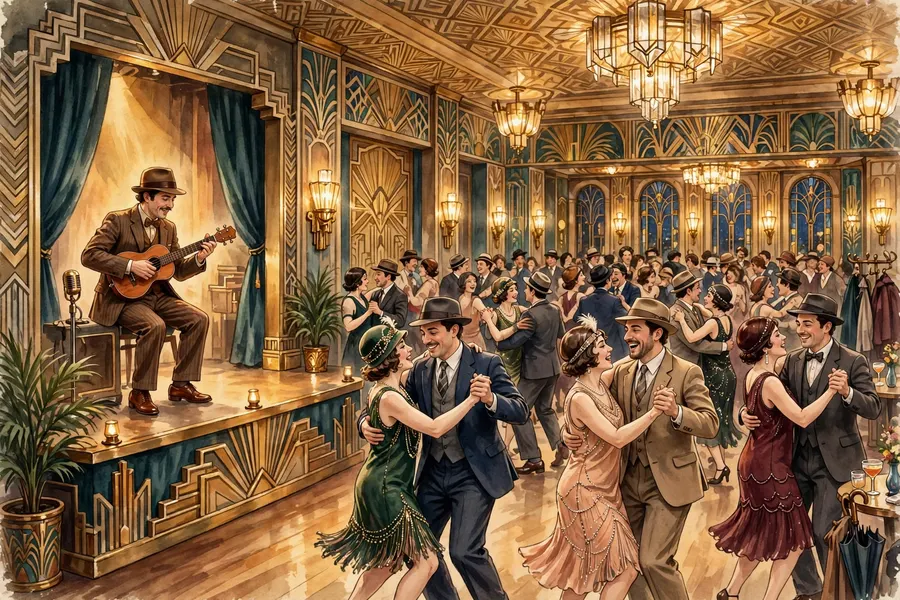
By the 1920s, America was in the grip of a full ukulele craze — vaudeville acts, jazz bands, Tin Pan Alley songs. Cheap, portable, and easy to learn, it was the perfect Jazz Age instrument, and manufacturers couldn’t make them fast enough.
The Ukulele in the Mid-20th Century
Through the middle of the century, the ukulele’s popularity ebbed and flowed with new technology and new personalities.
Plastic Ukuleles and Affordable Music
After World War II, inventor Mario Maccaferri began mass-producing inexpensive plastic ukuleles, putting the instrument within reach of virtually everyone. Millions found their way into American homes.
Arthur Godfrey and Tiny Tim
Radio and TV host Arthur Godfrey, an enthusiastic player, introduced the ukulele to a huge 1950s mainstream audience. Then in 1968, Tiny Tim took his falsetto “Tiptoe Through the Tulips” — ukulele in hand — onto national television, creating one of the century’s most memorable ukulele moments.
Why the Ukulele Lost Some of Its Popularity
As rock and roll put the electric guitar at the center of youth culture, the ukulele came to be seen as a novelty rather than a serious instrument. By the 1970s and 1980s it was largely out of the spotlight — though not for long.
The Modern Ukulele Revival
The ukulele’s comeback is one of music’s great second acts — driven by waves of performers, each finding something new in the little instrument.
The Ukulele Orchestra of Great Britain
Formed in 1985, the Ukulele Orchestra of Great Britain treated the ukulele as a serious ensemble instrument, performing everything from classical to rock with wit and virtuosity — stripping away the “novelty” label for good.
Israel Kamakawiwoʻole and “Over the Rainbow”
No single recording did more for the modern ukulele than Israel Kamakawiwoʻole’s gentle medley of “Over the Rainbow” and “What a Wonderful World.” Released in the early 1990s, it introduced the instrument’s emotional depth to millions who had only known it as cheerful background strumming.
Jake Shimabukuro and Online Music Videos
In 2006, a video of Hawaiian virtuoso Jake Shimabukuro performing “While My Guitar Gently Weeps” spread rapidly online — one of the first viral music videos. It stunned viewers with what four strings could do and inspired a generation who discovered the ukulele through a screen.
Why People Still Love the Ukulele
The ukulele endures for the same reasons it first caught on: affordable, portable, and welcoming to beginners. The revival added proof of its depth — the Orchestra’s artistry, Kamakawiwoʻole’s soul, Shimabukuro’s virtuosity. The COVID-19 pandemic gave it another recent lift as homebound people picked up new hobbies, but the revival was well underway long before that.
How the Ukulele Has Changed Over Time
The ukulele of today would be recognizable to Manuel Nunes, but it has evolved in materials, sizes, and sound.
Traditional Hawaiian Koa Wood Ukuleles
The classic Hawaiian ukulele is built from koa, a native hardwood prized for warm tone and beautiful grain. Mahogany and spruce are also traditional choices — the gold standard for the authentic Hawaiian sound.
Ukulele Sizes and Their Differences
Modern ukuleles come in four sizes: soprano (smallest, most traditional), concert (slightly larger and louder), tenor (favored by performers), and baritone (largest, tuned differently). Each has its own voice.
Modern Materials, Strings, and Tunings
Today’s ukuleles range from traditional wood to plastic, composite, and carbon fiber. Most use nylon or fluorocarbon strings with standard G–C–E–A tuning (the high G gives the signature bright sound). The baritone is the exception, typically tuned D–G–B–E.
The ukulele is just one of many unusual stringed instruments out there — see our roundup of the world’s weirdest musical instruments.
What Does the Word “Ukulele” Mean in Hawaiian?
The “Jumping Flea” Translation
The most commonly cited translation of ukulele is “jumping flea” — from uku (flea) and lele (to jump) — supposedly describing the player’s rapidly moving fingers.
Why the Name’s Origin Is Still Debated
An alternative account attributes the name to Edward William Purvis, an English officer to King Kalākaua, nicknamed “ukulele” for his small size and fidgety playing. Historical sources note genuine uncertainty, so “jumping flea” is best called the commonly cited translation rather than the proven one.
Famous People Who Helped Popularize the Ukulele
King David Kalākaua
Hawaii’s “Merrie Monarch” gave the ukulele its first great boost, bringing it into royal performances in the late 1800s.
Jonah Kumalae
A Hawaiian maker and performer whose instruments were showcased at the 1915 Panama-Pacific Exposition, Kumalae helped meet the mainland demand the exposition created.
George Harrison and His Love of Ukuleles
The Beatles’ George Harrison was the ukulele’s most famous modern champion — buying them in batches and giving them to friends. In a 1999 handwritten note he wrote: “Everybody should have and play a ‘uke’… it is one instrument you can’t play and not laugh!” Paul McCartney recalled: “Whenever you went round George’s house, after dinner the ukuleles would come out.”
Israel Kamakawiwoʻole and Jake Shimabukuro
Kamakawiwoʻole’s “Over the Rainbow” medley and Shimabukuro’s viral performances showed the world what the little instrument could do — inspiring millions to pick one up.
Ukulele History Timeline
| Year / Period | Historical Milestone |
|---|---|
| 1879 | Portuguese immigrants arrive in Hawaii aboard the Ravenscrag (August 23) |
| 1880s | Nunes, Dias, and Espírito Santo open workshops; early Hawaiian ukulele making develops |
| Late 1800s | King Kalākaua champions the ukulele at royal gatherings |
| 1893 | Hawaiian performers appear at Chicago’s World’s Fair — early mainland exposure |
| 1907 | Word “ukulele” appears in the Metropolitan Museum of Art’s Crosby Brown Collection catalogue |
| 1915 | San Francisco’s Panama-Pacific Exposition sparks the great American ukulele craze |
| 1920s | Ukulele becomes prominent in vaudeville, jazz, and Tin Pan Alley |
| 1950s | Mass-produced plastic ukuleles reach wide audiences; Arthur Godfrey popularizes it on TV |
| 1968 | Tiny Tim’s “Tiptoe Through the Tulips” becomes a national sensation |
| 1985 | The Ukulele Orchestra of Great Britain forms |
| Early 1990s | Israel Kamakawiwoʻole’s “Over the Rainbow” medley captivates the world |
| 2006 | Jake Shimabukuro’s “While My Guitar Gently Weeps” goes viral online |
| 2000s–today | Ongoing global revival driven by online videos, new artists, and beginner-friendly appeal |
Frequently Asked Questions About Ukulele History
Where did the ukulele originally come from?
The ukulele’s ancestors came from Madeira, Portugal — small folk instruments like the machete (braguinha) and rajão. Portuguese immigrants brought them to Hawaii in 1879, where local craftsmen adapted them into a new instrument. So the ukulele has Portuguese roots but was truly born and developed in Hawaii.
What does ukulele mean in Hawaiian?
“Ukulele” is commonly translated as “jumping flea,” supposedly describing the quick movement of a player’s fingers. However, historians note that this etymology is debated — an alternative theory links the name to a nickname for one of King Kalākaua’s officers. “Jumping flea” remains the most widely cited meaning.
Who invented the ukulele?
No single person can be definitively credited with inventing the ukulele. Three Madeiran cabinetmakers — Manuel Nunes, Augusto Dias, and José do Espírito Santo — are generally recognized as the first ukulele makers, building the earliest Hawaiian versions in the 1880s. The instrument emerged from their collective craft rather than one inventor’s eureka moment.
When did the ukulele become popular in America?
Mainland Americans first encountered the ukulele at the 1893 Chicago World’s Fair, but real popularity came later. The 1915 Panama-Pacific International Exposition in San Francisco was the true turning point, sparking a nationwide craze that carried through the 1920s.
What did George Harrison say about ukuleles?
In a handwritten note from 1999, George Harrison wrote: “Everybody should have and play a ‘uke’… it is one instrument you can’t play and not laugh!” He was known for buying ukuleles in batches and giving them to friends. Paul McCartney recalled that after dinner at Harrison’s house, “the ukuleles would come out” and everyone would sing old songs together.
Did Taylor Swift play the ukulele?
Yes. Taylor Swift is documented as playing four instruments live — guitar, banjo, piano, and ukulele. She has performed songs including “Fearless” on the ukulele during her Speak Now World Tour and played it on television appearances, showing the instrument’s continuing place in mainstream pop music.
The Bottom Line
From a Madeiran folk instrument to a Hawaiian treasure to a global phenomenon, the ukulele’s journey spans nearly 150 years and three continents. It survived the rise of rock and roll, rode the wave of the internet age, and never lost the cheerful spirit that won over Honolulu in 1879. Whether you’re a seasoned player or have never touched one, the ukulele history is a reminder that the simplest instruments often carry the richest stories. For a deeper look, the ukulele’s detailed historical record is a good next stop.