
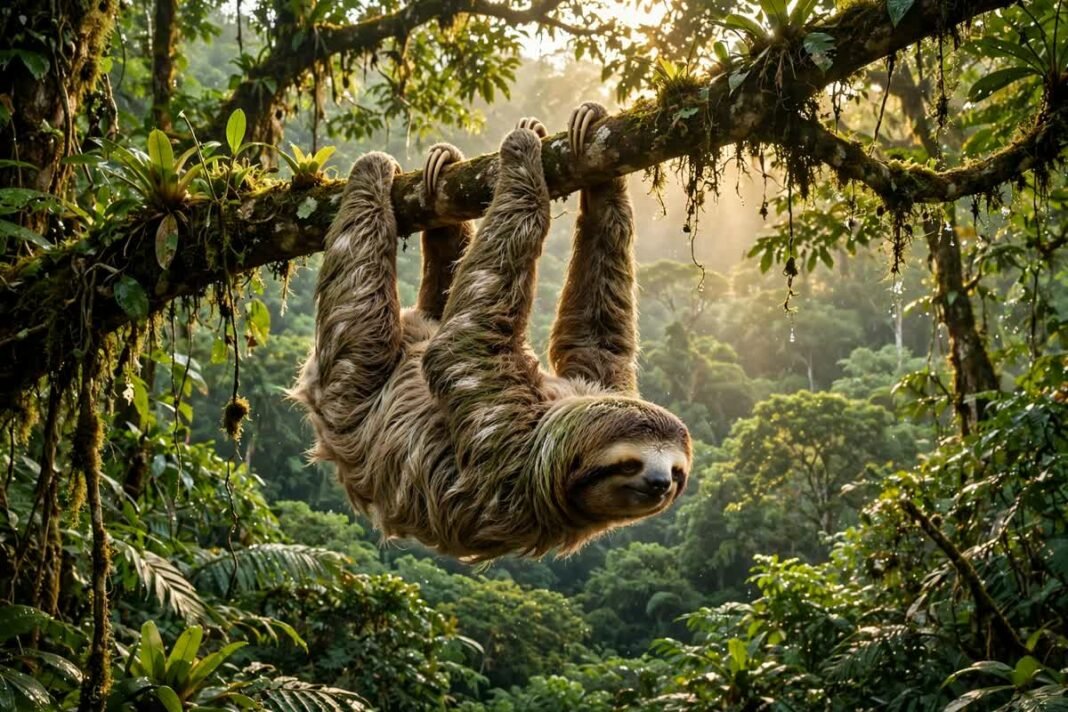

Sloths might be the most misunderstood animals on the planet. Most people picture a lazy creature that sleeps all day and barely moves, but the real story is far stranger than that. Sloths can hold their breath longer than dolphins can, their fur is a living garden full of moths and algae, and they risk their lives once a week just to go to the bathroom. Scientists have been studying these slow-motion mammals for decades, and they keep finding surprises. Here are 25 fun facts about sloths that will completely change how you see them.
25 Fun Facts About Sloths
1. Sloths Poop Only Once a Week — and Lose a Third of Their Body Weight
This is easily the strangest fact on this list. A sloth climbs down from its tree roughly once a week to do its business on the forest floor, and when it finally goes, it can lose up to a third of its entire body weight in one sitting. Why take the risk? The trip is genuinely dangerous, because more than half of all sloth deaths happen on the ground. Scientists think the habit is connected to the moths living in sloth fur, which need the dung to complete their life cycle.
2. A Sloth’s Fur Is a Whole Ecosystem
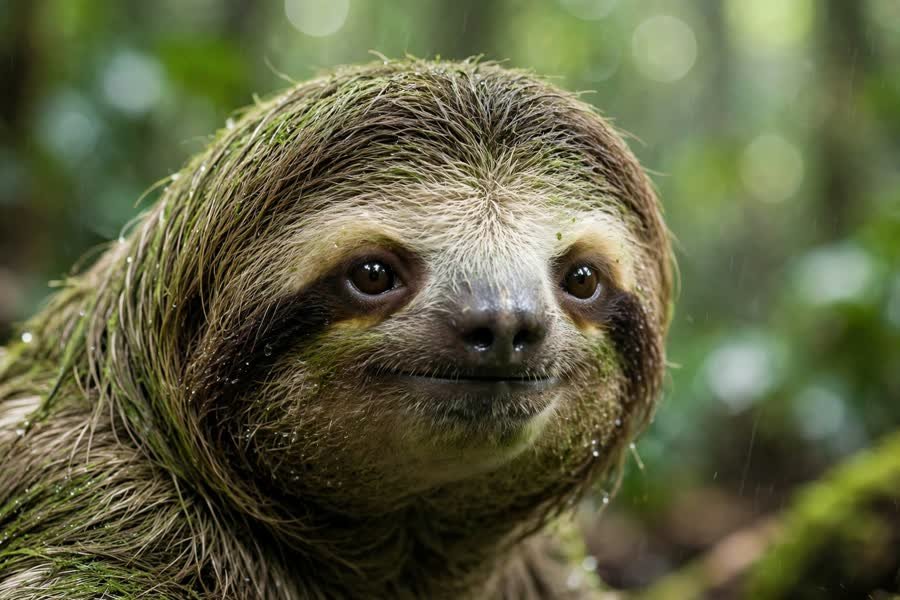
Sloth fur is not just hair. It is a moving habitat that hosts algae, moths, beetles and fungi all at the same time. The algae grow inside cracks in the hair shafts and turn the sloth’s coat green during the rainy season, which works as perfect camouflage among the leaves. A single sloth can carry more than 900 moths and beetles in its fur. The sloth gets camouflage and possibly extra nutrients from the algae, and the tiny creatures get a safe home. Everybody wins.
3. Sloths Can Hold Their Breath for Up to 40 Minutes
Here is one of the most surprising fun facts about sloths. Sloths can slow their heart rate down so much that they can hold their breath underwater for as long as 40 minutes. That is longer than a dolphin can manage. This ability helps them when they drop into rivers to swim between trees, which brings us to the next surprise.
4. Sloths Swim Three Times Faster Than They Walk
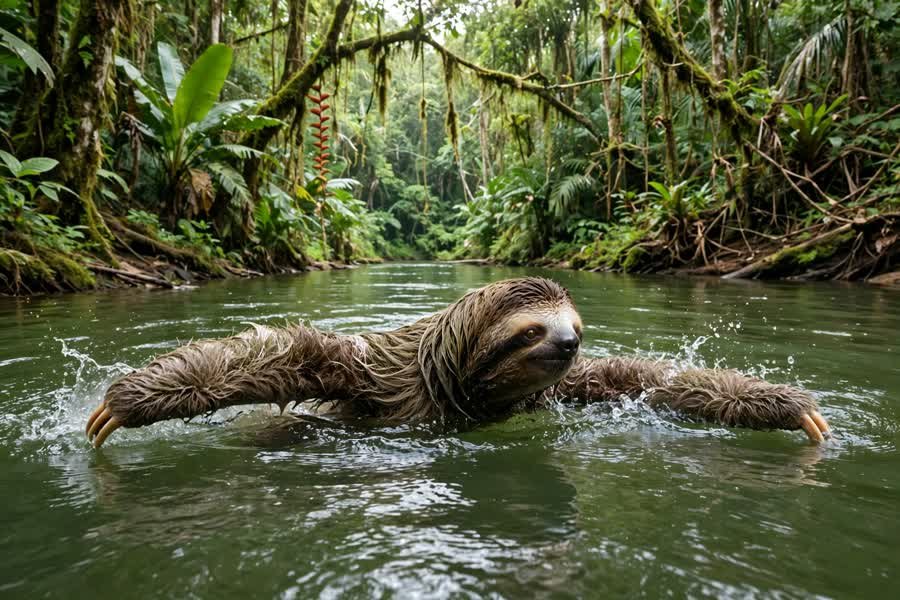
On land, a sloth crawls at a painfully slow pace. In water, it is a different animal entirely. Sloths are surprisingly strong swimmers and move about three times faster in water than they do on the ground, paddling with their long front arms in a slow, steady stroke. In the flooded forests of the Amazon, swimming is often their fastest way to travel.
5. Sloths Fall Out of Trees About Once a Week — and Walk Away Fine
Sloths have terrible eyesight, so their weekly life in the canopy involves a lot of guessing. According to the Wildlife Conservation Society, sloths fall from trees roughly once a week. Amazingly, their bodies are built for it. Sloths can survive falls of up to 100 feet without injury, thanks to a tough frame and a lifestyle that keeps them light.
6. Three-Toed Sloths Can Turn Their Heads 270 Degrees
Most mammals, including giraffes and humans, have seven neck vertebrae. Three-toed sloths have up to nine, and that extra hardware lets them rotate their heads about 270 degrees, almost like an owl. Since moving their whole body costs precious energy, swiveling the head instead is a smart energy-saving trick for spotting predators.
7. One Leaf Can Take 30 Days to Digest
Sloths run on one of the slowest digestive systems in the animal kingdom. Their large, multi-chambered stomach is packed with bacteria that slowly ferment tough leaves, and a single meal can take up to 30 days to fully digest. That stomach is so big that a full one can account for a serious share of the sloth’s total weight. Slow digestion is the price of surviving on food that barely contains any energy.
8. Wild Sloths Don’t Actually Sleep All Day
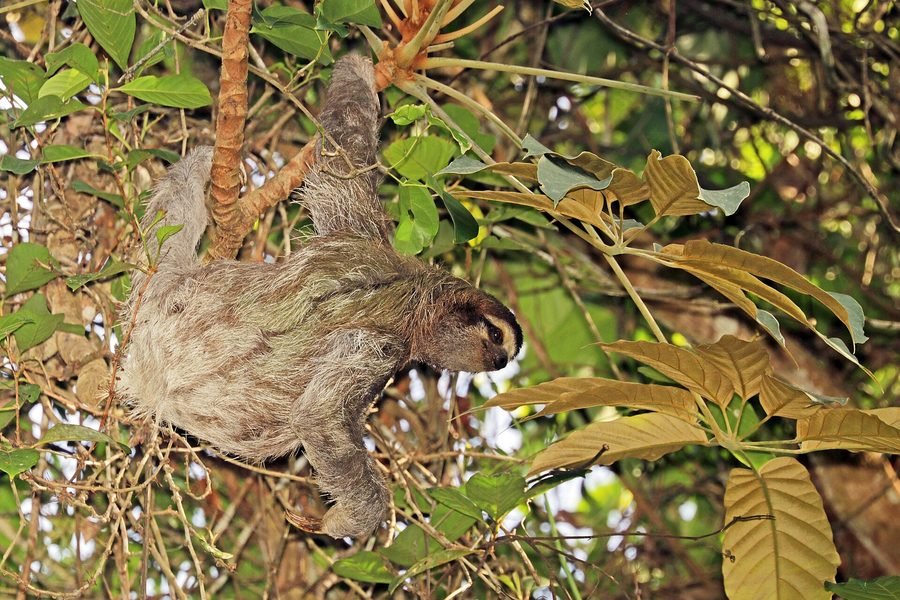
The sleepy reputation is only half true. Sloths in zoos may doze for 15 hours or more, but studies of wild sloths show they sleep only around 9 to 10 hours a day. The rest of the time they are busy eating, grooming and slowly working their way through the canopy. They are not lazy. They are running the most extreme energy-saving program in the mammal world.
9. Sloths Move About 40 Yards a Day
On an average day, a wild sloth travels less than half the length of a football field, roughly 125 feet. Some sloths spend most of their lives in just a handful of favorite trees, and a few barely leave a single tree for years. When your food is leaves and your defense is not being noticed, staying put is a perfectly good strategy.
10. Sloths Have Been Around for About 65 Million Years
Sloths are ancient survivors. Their family tree stretches back around 65 million years, which means sloths were already around not long after the dinosaurs disappeared. They have outlasted ice ages, shifting continents and countless predators by doing one thing extremely well: almost nothing, very efficiently.
11. Ancient Sloths Were the Size of Elephants
The ancestors of today’s tree sloths were giants. The ground sloth Megatherium stood up to 20 feet tall when it reared up on its hind legs and weighed several tons, about the size of a modern elephant. These giants roamed South America until roughly 10,000 years ago. Today’s sloths are the small, tree-dwelling survivors of that giant family. Few fun facts about sloths are harder to picture than that.
12. Two-Toed and Three-Toed Sloths Aren’t Close Cousins
Despite looking almost identical, two-toed and three-toed sloths belong to different families and are not each other’s closest relatives. Their similar lifestyles evolved separately. And here is the twist: the name refers to their front feet. Every sloth, whatever its group, has three toes on its back feet.
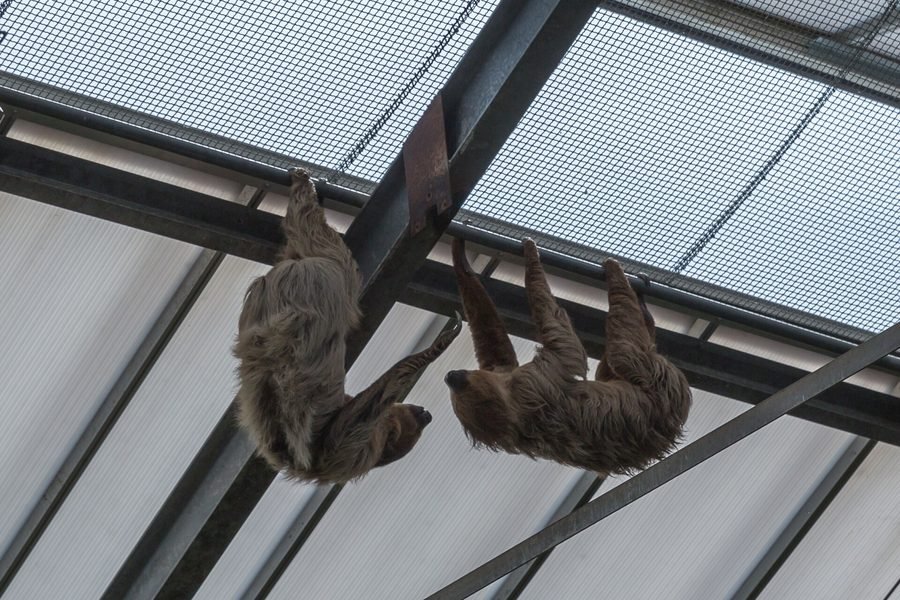
13. A Sloth’s Closest Relatives Are Anteaters and Armadillos
It sounds unlikely, but sloths belong to the same ancient group as anteaters and armadillos, a clan called Xenarthra that split off from other mammals very early in history. So the sleepy animal hanging in the canopy is family to the armor-plated armadillo.
14. Sloths Spend Over 90% of Their Lives in Trees
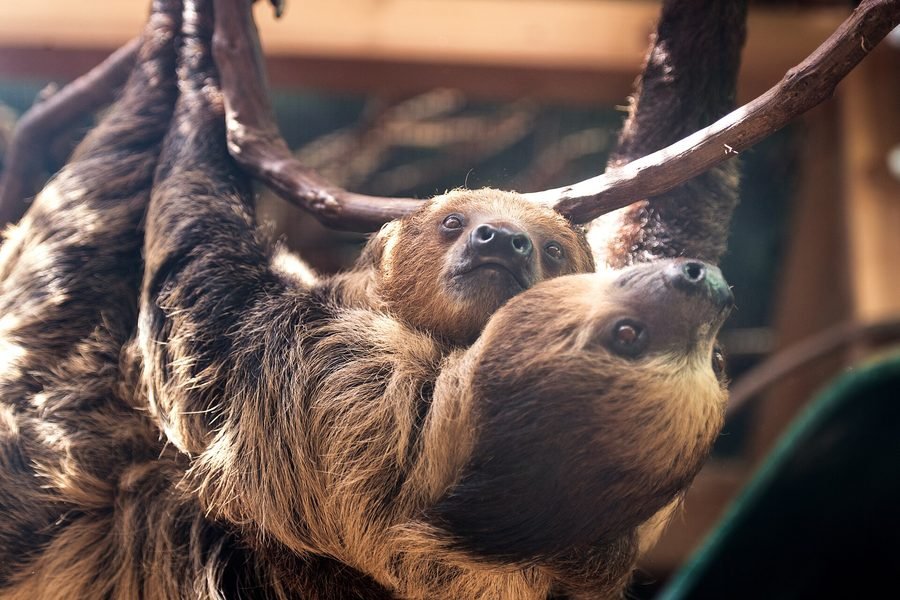
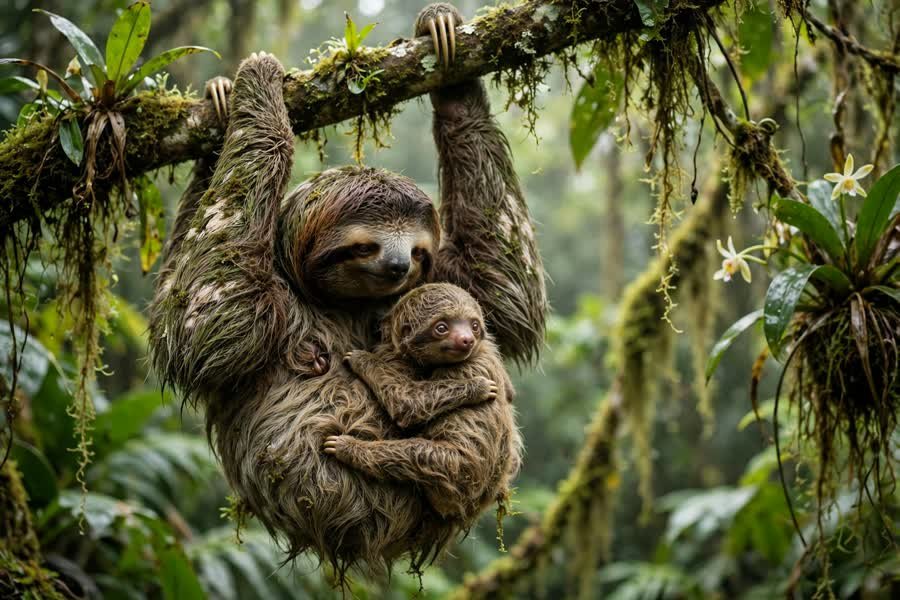
Sloths are built for the canopy and barely built for anything else. They eat, sleep, mate and even give birth hanging in the branches. Females deliver their babies upside down, and newborns cling to their mother’s fur within moments, spending their first months riding on her belly before striking out on their own at around six months old.
15. The Pygmy Sloth Lives on Just One Tiny Island
The pygmy three-toed sloth is one of the rarest mammals on Earth. It lives only on Isla Escudo de Veraguas, a tiny island off the coast of Panama, where it is smaller than its mainland cousins. Sadly, it is listed as critically endangered, and its entire world is that one small island’s mangrove forests. If you love rare island wildlife, you might also enjoy our fun facts about Puerto Rico.
16. There Are Six Species of Sloth
Here is one of the simpler fun facts about sloths: the family is small, with six species in total, split between the two-toed and three-toed groups. They live in the rainforests of Central and South America, including the forests of Colombia and Peru. Habitat fans can explore those regions further in our Colombia fun facts and our guide to unusual facts about Peru.
17. A Sloth’s Grip Is So Strong It Can Hang On After Death
Sloth claws work like permanent hooks, and special tendons lock them around a branch with almost no muscle effort. The grip is so automatic that dead sloths have occasionally been found still hanging from the branch. It is a grim detail, but it shows how completely these animals are designed for life upside down.
18. Sloths Barely Fart — Their Gas Is Absorbed Into the Blood
File this under fun facts about sloths you never expected to learn today. Researchers who catalog which animals pass gas concluded that sloths likely do not fart at all. Gas produced in their slow, fermentation-heavy gut is absorbed directly into the bloodstream and breathed out instead. With digestion that slow, there is plenty of time for it.
19. Female Sloths Scream to Find a Mate
Romance, sloth style, is loud. When a female three-toed sloth is ready to mate, she lets out a piercing scream that echoes through the forest to announce her location. Males then slowly race, if that is the word, toward the sound, sometimes fighting rivals along the way. The whole courtship happens up in the trees.
20. Male Three-Toed Sloths Wear an Orange Patch
Adult males of the three-toed species carry a bright orange-yellow patch of fur between their shoulders, with a dark stripe running through the middle. The patch, called a speculum, appears as the male matures, and its strong colors are thought to signal health and quality to females. It makes males easy to tell apart from females at a glance.
21. Sloths Rely on Smell, Not Sight
Sloths have poor eyesight and weak hearing, so they experience the world mostly through smell and touch. Their sense of smell is sharp enough to help them find the right leaves and detect each other through the forest. Being nearly blind is one more reason slowness makes sense: if you cannot see a predator coming, your best defense is to be too boring and too still to notice.
22. Sloth Fur Grows in the Opposite Direction
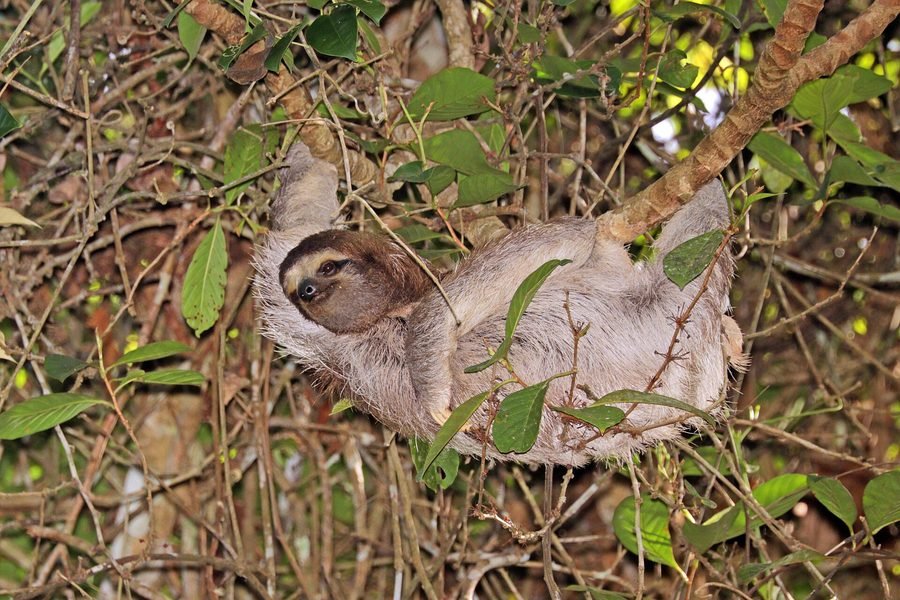
Most furry animals have hair that flows from back to belly. Sloth hair flows the other way, from belly to back. Because a sloth spends its life hanging upside down, that reversed direction lets rainwater run off its coat instead of soaking in. Even their fur is engineered for hanging.
23. A Sloth’s Body Temperature Drifts With the Weather
Sloths run colder than almost any other mammal, and their body temperature can drift up and down by several degrees over a single day depending on the weather. Warming up in the morning sun and cooling down at night saves enormous amounts of energy. It is another quiet trick in their survival plan, and you can read more about how their slow lifestyle works at the Wildlife Conservation Society.
24. Sloths Are Far Stronger Than They Look
Underneath the slow act, sloths are seriously strong. Their arms are packed with specialized muscles for pulling their body weight through the canopy, and their grip strength is remarkable relative to their size, strong enough to resist being pulled off a branch by a predator. Harpy eagles and ocelots do hunt sloths, but a healthy adult is not an easy meal.
25. Baby Sloths Learn What to Eat by Licking Their Mother’s Mouth
Leaves are not all safe, and a young sloth has to learn which trees are on the menu. Baby sloths do this by licking food from around their mother’s mouth as she eats, tasting exactly what she tastes. Within weeks, the baby starts sampling leaves on its own, already trained in the family cookbook.
Fun Facts About Sloths: Frequently Asked Questions
Still curious? These are the questions people ask most after reading fun facts about sloths, answered in short.
How long do sloths live?
In the wild, sloths typically live around 20 years, though their secretive lifestyle makes them hard to track. In zoos, where food is steady and predators are absent, they can live 30 years or more, and some have passed 40.
Why are sloths so slow?
Sloths are slow because their leaf-based diet provides very little energy. A slow metabolism, low body temperature and energy-saving muscles all work together to stretch that small energy budget as far as possible. Speed would literally starve them.
Are sloths dangerous to humans?
No. Sloths are gentle, shy animals that avoid confrontation. They can bite or scratch if cornered, like any wild animal, but they pose no real threat and much prefer to be left alone in their trees.
What do sloths eat?
Sloths are folivores, meaning they eat mainly leaves, along with buds, tender shoots and occasionally fruit. Their multi-chambered stomachs use bacteria to ferment the tough leaves, a process that can take up to a month for a single meal.
Where do sloths live?
All six sloth species live in the tropical rainforests of Central and South America, from Honduras down through Brazil and Peru. They spend nearly their whole lives in the forest canopy.
Can sloths swim?
Yes, and they are good at it. Sloths swim about three times faster than they move on land and can hold their breath underwater for up to 40 minutes by slowing their heart rate.
Slow, strange and quietly brilliant — these fun facts about sloths prove that survival does not always go to the fastest. Sometimes it goes to the animal that figured out how to spend almost no energy at all — and has been making that trick work for 65 million years.