

Science is full of surprising discoveries, and these fun facts about science show just how fascinating the world around us can be. From the human body and animals to Earth, space, physics, chemistry, and everyday life, science helps explain things we see and experience every day. Get ready to discover 50 fascinating science facts that may completely change the way you look at the world.
Fun Facts About Science and the Human Body
1. Your Stomach Contains Powerful Acid
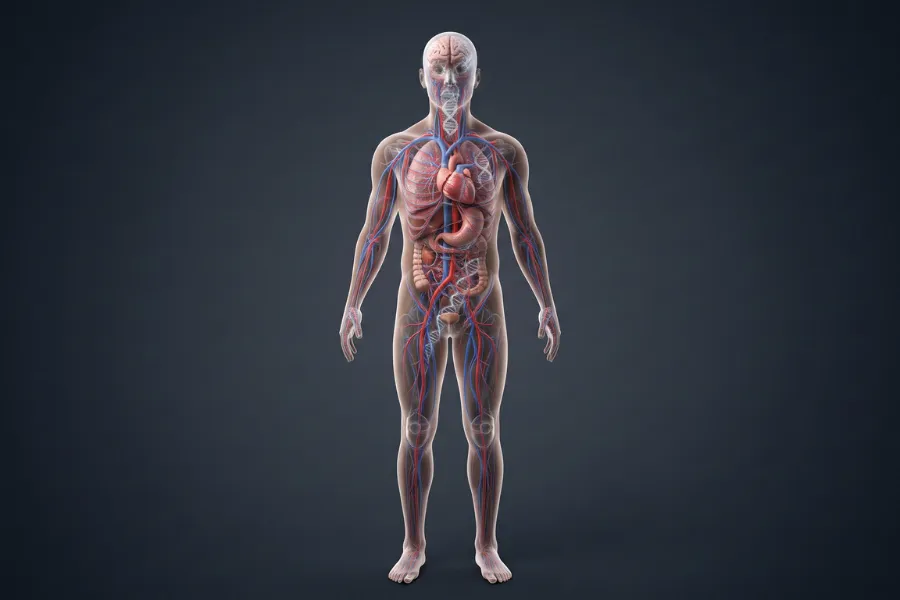
Your stomach produces hydrochloric acid to help break down food and destroy many microorganisms. The acid is strong, but your stomach lining has protective mechanisms that help keep the tissue safe.
2. Identical Twins Have Different Fingerprints
Identical twins share almost the same genetic information, but their fingerprints are not identical. Small differences during development in the womb help create each person’s unique fingerprint patterns.
3. Your Taste Depends on Saliva
Saliva plays an important role in tasting food. It helps dissolve substances from food so they can interact with taste receptors on your tongue.
4. Your Blood Travels Throughout Your Body
Your circulatory system continuously moves blood through your body. Blood delivers oxygen and nutrients to cells while carrying waste products away.
5. Your DNA Stores Huge Amounts of Information
DNA contains the biological instructions that help living organisms grow, develop, and function. This remarkable molecule stores an enormous amount of genetic information inside microscopic cells.
6. Your Brain Uses a Lot of Energy
The human brain makes up only a small portion of your body’s weight, yet it uses a significant amount of the body’s energy. Brain cells need this energy to communicate and maintain their functions.
7. Your Body Is Home to Trillions of Microorganisms
The human body contains huge communities of microorganisms, especially in the digestive system. These microbes interact with our bodies in complex ways and remain an important area of scientific research.
These are some of the most fascinating fun facts about science because they reveal how much is happening inside the human body every second.
Fun Science Facts About Animals

8. Butterflies Taste With Their Feet
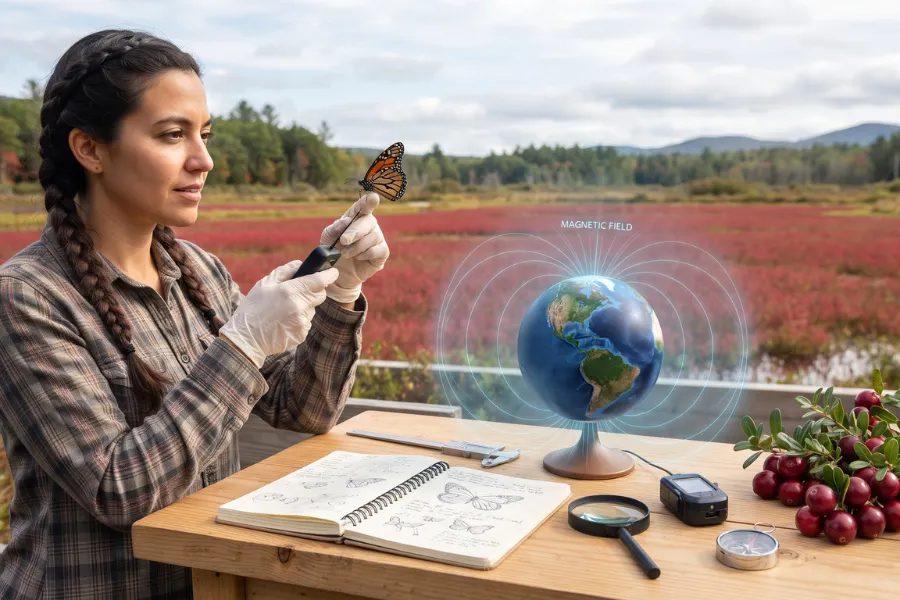
Butterflies have taste receptors on their feet. When they land on a plant, these receptors help them detect chemical compounds and identify suitable plants.
9. Some Animals Can Sense Earth’s Magnetic Field
Several animals can detect or respond to Earth’s magnetic field. Migratory birds, sea turtles, and some fish use environmental information to help them navigate over long distances.
10. Hummingbirds Have Extremely Fast Heartbeats
Hummingbirds have very high metabolic demands because of their rapid wing movements. Their heart rate can become extremely fast, especially during intense activity.
11. Koalas Use Trees to Help Stay Cool
Koalas spend much of their time in eucalyptus trees. During hot weather, they may press their bodies against cooler tree surfaces to help regulate their temperature.
12. Armadillos Have Natural Armor
Armadillos have bony plates covered by tough skin that protect their bodies. Claims that armadillo shells routinely stop bullets are oversimplified, so this fact should not be treated as a safety claim.
13. Toads Can Eat Large Numbers of Insects
Toads can consume surprisingly large numbers of insects when food is available. Their sticky tongues help them catch prey quickly.
14. Grasshoppers Have Hearing Organs on Their Bodies
Grasshoppers do not have ears on the sides of their heads like humans. Instead, their hearing organs are located on the abdomen.
15. Monarch Butterflies Travel Long Distances
Monarch butterflies are famous for their long migrations. They use environmental cues, including the position of the Sun, to help maintain their direction.
The animal kingdom provides countless fun science facts, and many of them show how animals have adapted to survive in different environments.
Fun Facts About Earth and Nature
16. About 71% of Earth’s Surface Is Covered by Water
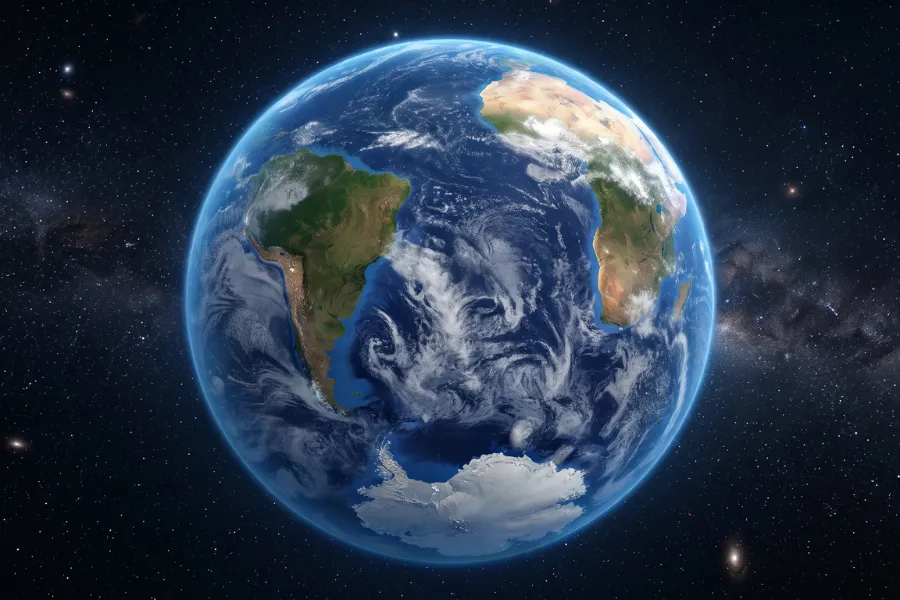
Water covers roughly 71% of Earth’s surface. Oceans, seas, lakes, rivers, glaciers, and groundwater are all parts of Earth’s interconnected water system.
17. Antarctica Is a Desert
Antarctica is covered with ice, but scientists classify it as a polar desert because it receives very little precipitation. Some parts of the continent are among the driest places on Earth.
18. Oceans Play a Major Role in Earth’s Oxygen Cycle
Marine organisms, particularly microscopic phytoplankton, contribute significantly to global oxygen production. The ocean therefore plays an important role in supporting life on Earth.
According to the National Ocean Service, the ocean contributes roughly half of Earth’s oxygen production.
19. Clouds Can Be Surprisingly Heavy
A large cloud can contain an enormous amount of water in the form of tiny droplets or ice crystals. Although each droplet is tiny, their combined mass can be surprisingly large.
20. Earth Has a Magnetic Field
Earth’s magnetic field is generated mainly by movements of molten metal in its outer core. It also helps protect our planet from charged particles carried by the solar wind.
21. Plants Remove Carbon Dioxide From the Atmosphere
Plants use photosynthesis to convert carbon dioxide and water into chemical energy while releasing oxygen. This process supports most life on Earth either directly or indirectly.
22. Trees Support Entire Ecosystems
A tree is much more than a tall plant. Its roots, leaves, bark, flowers, and surrounding soil can provide food and shelter for insects, birds, fungi, bacteria, and many other organisms.
23. Water Naturally Exists in Three Common States
Water can exist as a solid, liquid, or gas. Ice, liquid water, and water vapor are all H₂O, but temperature and pressure determine its physical state.
If you enjoy geography and natural-world discoveries, you can also explore our unusual facts about Peru for more interesting facts about the planet.
Earth and nature provide some of the most surprising fun facts about science, especially when we look beyond what we see on the surface.
Fun Science Facts About Space
24. Sunlight Takes About Eight Minutes to Reach Earth
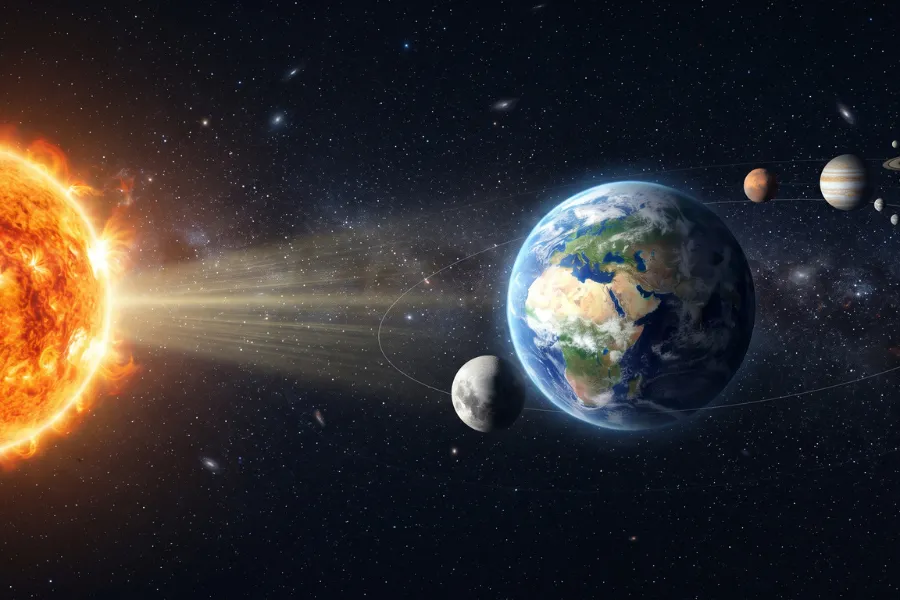
Light travels incredibly fast, but the Sun is still about 150 million kilometers from Earth. As a result, sunlight takes roughly eight minutes and 20 seconds to reach our planet.
25. Looking Into Space Means Looking Into the Past
Light takes time to travel through space. Therefore, when astronomers observe distant objects, they are seeing those objects as they appeared in the past.
26. The Sun Is a Star
The Sun may look different from the stars we see at night, but it is actually a star. It appears much larger and brighter because Earth is relatively close to it.
27. Gravity Shapes Planetary Systems
Gravity attracts objects with mass toward one another. It helps keep planets in orbit around stars and moons in orbit around planets.
28. Space Is Not Completely Empty
Outer space contains extremely thin clouds of gas and dust, radiation, particles, and magnetic fields. Some regions are incredibly empty, but space is not simply a perfect vacuum everywhere.
29. Every Planet Has a Different Year
A planet’s year depends on how long it takes to complete one orbit around its star. Earth takes about 365 days, while other planets have different orbital periods.
30. Stars Have Different Sizes and Temperatures
Stars can differ greatly in size, mass, temperature, brightness, and age. Their characteristics also influence how they develop throughout their lifetimes.
31. Helium Can Become a Superfluid
At extremely low temperatures, helium can enter a strange state called superfluidity. In this state, liquid helium can flow with extremely low viscosity.
Space contains some of the most amazing fun facts about science because its extreme conditions allow matter and energy to behave in unusual ways.
Fun Facts About Physics
32. Light Travels Faster Than Sound
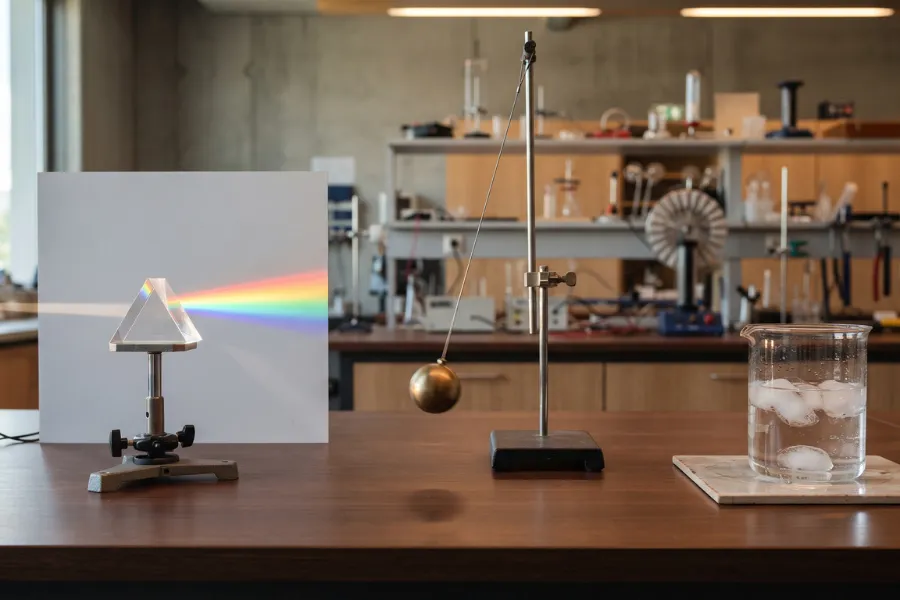
Light travels through a vacuum at about 300,000 kilometers per second. Sound moves much more slowly through air, which explains why you see lightning before hearing thunder.
33. Gravity Affects Objects With Mass
Gravity is one of the fundamental forces of nature. It influences falling objects, ocean tides, planetary orbits, and the large-scale structure of the universe.
34. Sound Needs a Medium to Travel
Sound is a mechanical wave, so it needs a medium such as air, water, or a solid material to travel through. Ordinary sound cannot travel through the vacuum of outer space.
35. Ice Floats on Liquid Water
Most substances become denser when they become solid, but water behaves differently. The molecular structure of ice makes it less dense than liquid water, allowing ice to float.
36. Pressure Changes the Boiling Point of Water
Water does not always boil at exactly 100°C. Its boiling point changes with atmospheric pressure, which is why water boils at a lower temperature at higher altitudes.
37. Motion Depends on the Observer’s Reference Frame
An object can appear stationary to one observer and moving to another. For example, a person sitting inside a moving train is stationary relative to the train but moving relative to someone standing outside.
For a deeper look at physical science, check out our guide on cross-curricular focus in physical science.
These physics examples show why fun facts about science can turn ordinary experiences into fascinating scientific questions.
Fun Science Facts About Chemistry

38. Bananas Are Naturally Slightly Radioactive
Bananas contain potassium, and a tiny amount of natural potassium is the radioactive isotope potassium-40. This produces a very small amount of natural radioactivity.
39. Water Has Unusual Properties
Water is a simple molecule made from two hydrogen atoms and one oxygen atom. Despite its simple structure, water has unusual physical and chemical properties that make it essential for life.
40. Chemical Reactions Happen Every Day
Cooking food, digesting meals, rusting metal, and burning fuel all involve chemical changes. Chemistry is therefore happening around us all the time.
41. Temperature Changes How Matter Behaves
Heating or cooling a substance can change its physical state. For example, heating ice eventually turns it into liquid water and then water vapor.
42. Atoms Make Up Ordinary Materials
Everything from the air you breathe to the phone you use is made of atoms. Different combinations and arrangements of atoms create the enormous variety of materials around us.
Chemistry gives us many interesting science facts because familiar objects can behave in surprising ways at the molecular level.
Fun Facts About Science You See Every Day

43. Your Nose Affects How Food Tastes
Taste and smell work together to create much of what we experience as flavor. When your nose is blocked, food can seem less flavorful even though your taste receptors are still working.
44. Metal Can Feel Colder Than Wood
Metal and wood can have the same temperature, yet metal often feels colder. The reason is that metal transfers heat away from your hand more efficiently than wood.
45. Bread Rises Because of Gas
Yeast can produce carbon dioxide during fermentation. That gas becomes trapped inside the dough and creates bubbles that help bread rise.
46. Static Electricity Can Make Hair Stand Up
When certain materials rub together, electrons can move from one surface to another. The resulting electrical imbalance can create static electricity and cause hair to repel itself.
47. Lightning Heats the Air Very Quickly
A lightning channel can heat the surrounding air extremely rapidly. The sudden expansion of that heated air creates the sound wave we hear as thunder.
48. Plants Respond to Light
Plants need light for photosynthesis, but light also affects their growth and development. Many plants respond to the direction, duration, and intensity of light.
You can find fun facts about science in many ordinary things we see and use every day.
More Fun Facts About Science That Sound Impossible
49. Some Animals Navigate Using Earth’s Magnetic Field
Certain migratory animals can travel huge distances using environmental cues that humans cannot easily detect. Earth’s magnetic field is one source of information that several species appear able to use.
50. Ripe Cranberries Can Bounce
Some ripe cranberries can bounce because of their internal structure. Air pockets inside the fruit contribute to this unusual behavior and can even help indicate ripeness.
These examples prove that fun facts about science can sometimes sound impossible until we understand the scientific explanation behind them.
FAQs About Fun Facts About Science
What Are 50 Facts About Science?
Fifty science facts can cover many areas, including biology, chemistry, physics, astronomy, Earth science, animals, and the human body. The facts in this article provide a broad introduction to these scientific topics.
What Are 20 Amazing Science Facts?
Some amazing science facts include sunlight taking about eight minutes to reach Earth, identical twins having different fingerprints, Antarctica being a desert, and some animals being able to sense Earth’s magnetic field.
What Are 100 Interesting Facts About Science?
A list of 100 interesting science facts could explore even more topics, such as genetics, evolution, microorganisms, geology, electricity, space exploration, climate, and scientific discoveries.
What Are 50 Fun Facts?
Fun facts are short pieces of information that are surprising, unusual, interesting, or useful. Science is especially suitable for fun facts because research continues to reveal unexpected details about the natural world.
What Is the Coolest Science Fact?
There is no single answer because different areas of science offer different fascinating discoveries. Some people may find DNA fascinating, while others may prefer space, animal behavior, physics, or the unusual properties of matter.
Final Thoughts
Science becomes much more exciting when we connect it to things we already know. A banana, a cloud, a butterfly, a glass of water, or even your own fingerprints can reveal a fascinating scientific story.
These fun facts about science are only a small glimpse into the enormous amount of knowledge scientists have discovered about Earth, life, matter, and the universe. Keep asking questions, look for reliable evidence, and stay curious. The more you explore science, the more surprising the world becomes.