
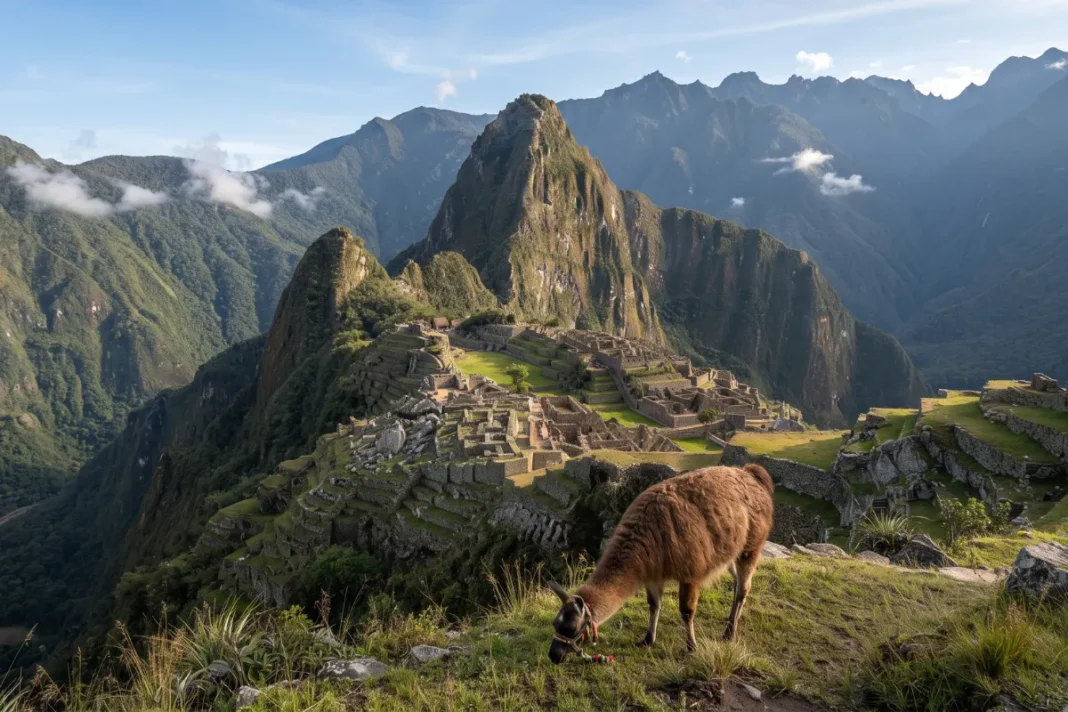

Peru is much more than Machu Picchu and the ancient Inca Empire. From enormous desert dunes and floating islands to mysterious geoglyphs, thousands of potato varieties, and remarkable wildlife, the country has an incredible range of natural and cultural wonders. These unusual facts about Peru reveal just how diverse this South American country really is.
Located on the western side of South America, Peru stretches from the Pacific coast across the Andes and into the Amazon Basin. Because of this dramatic geography, the country contains deserts, snow-covered mountains, tropical forests, deep canyons, high-altitude lakes, and ancient archaeological sites. So, whether you are interested in history, geography, food, wildlife, or strange discoveries, these unusual facts about Peru offer plenty of surprises.
1. Peru Is One of the Most Geographically Diverse Countries
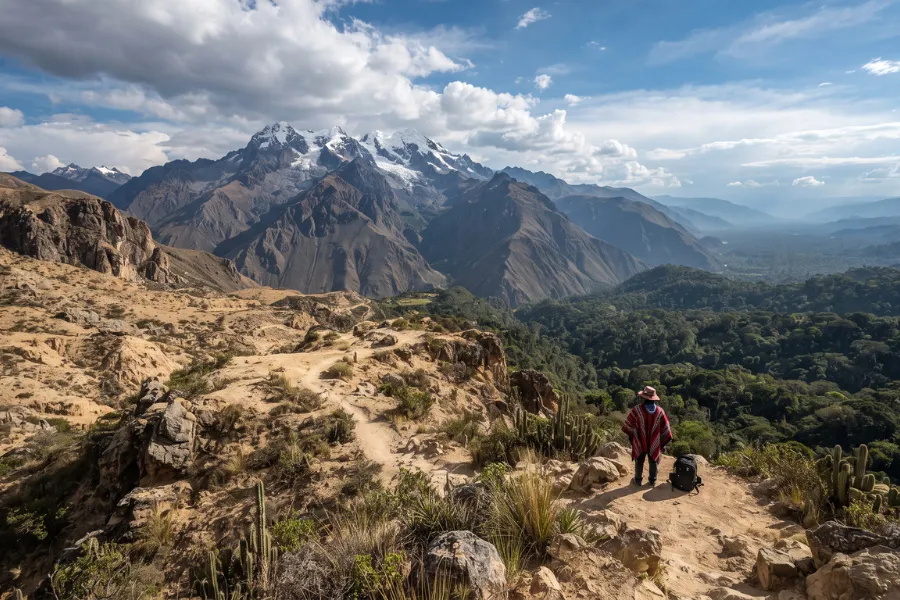
One of the most interesting things about Peru is how much geographical variety exists within one country.
Peru has three major geographical regions: the Pacific coastal area, the Andes Mountains, and the Amazon rainforest. Each region has its own climate, landscape, wildlife, traditions, and food culture. The coastal region includes dry desert landscapes, while the Andes contain enormous peaks, valleys, glaciers, and high plateaus. Farther east, the landscape changes again as the mountains descend toward the Amazon Basin. This dramatic combination makes Peru one of the most fascinating places in South America for geography lovers. In fact, the country’s geography helps explain many of the other unusual facts about Peru, including its unusual foods, wildlife, ancient settlements, and climate differences.
2. Lake Titicaca Sits High in the Andes
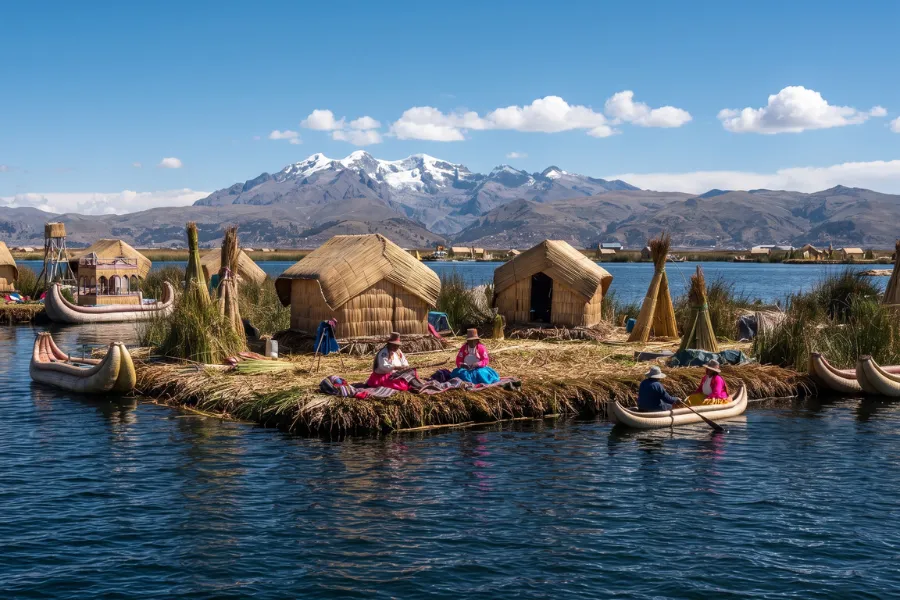
Lake Titicaca is one of the most remarkable lakes in South America. It sits at roughly 3,810 meters above sea level on the border between Peru and Bolivia. UNESCO describes it as the largest freshwater lake in South America and the highest of the world’s large lakes. UNESCO: Lake Titicaca The lake is also famous for its cultural importance. Indigenous communities have lived around its shores for centuries, and the Uros people are especially known for their traditional floating islands made from totora reeds. Because of its altitude, size, history, and living cultural traditions, Lake Titicaca is far more than an ordinary lake.
3. Peru Is Famous for Thousands of Potato Varieties
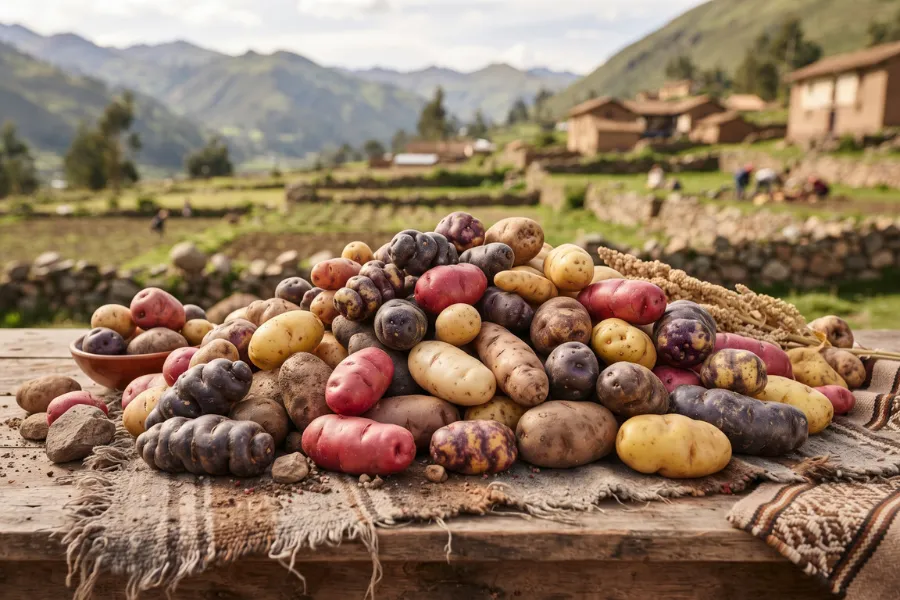
Here is one of the most surprising food-related facts about Peru: the country is considered an important center of potato diversity. Potatoes have been cultivated in the Andes for thousands of years. Indigenous communities developed and preserved many different varieties adapted to different elevations and environmental conditions. Today, potatoes remain an essential part of Peruvian cuisine. They appear in traditional dishes in many forms, including boiled, roasted, dried, mashed, and incorporated into stews. The diversity is particularly impressive because different potatoes can vary in color, shape, texture, and taste. This connection between the Andes and the potato is one of the most memorable unusual facts about Peru because a food that is now common around the world has deep roots in the region.
4. Peru Has Dozens of Indigenous Languages
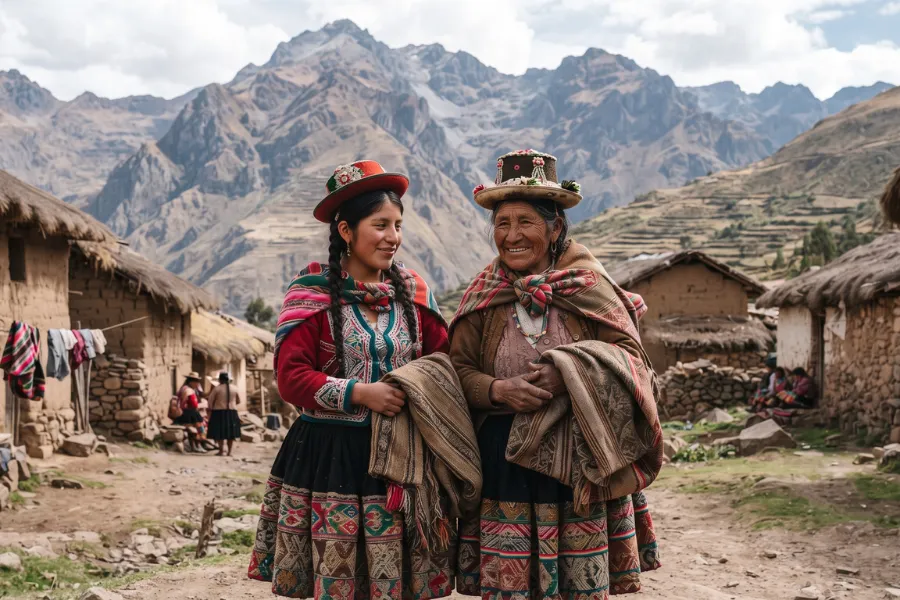
Spanish is the most widely spoken language in Peru, but it is far from the country’s only language. Quechua has a particularly important historical and cultural role. It was widely used across the Inca world and continues to be spoken by communities throughout the Andes. Aymara is another important Indigenous language, especially around the Lake Titicaca region. Peru is also home to numerous other Indigenous languages, particularly in the Amazonian areas. Language therefore provides an important window into Peru’s cultural diversity. Different communities have preserved their own traditions, stories, and ways of understanding the natural world.
5. Huacachina Is a Desert Oasis
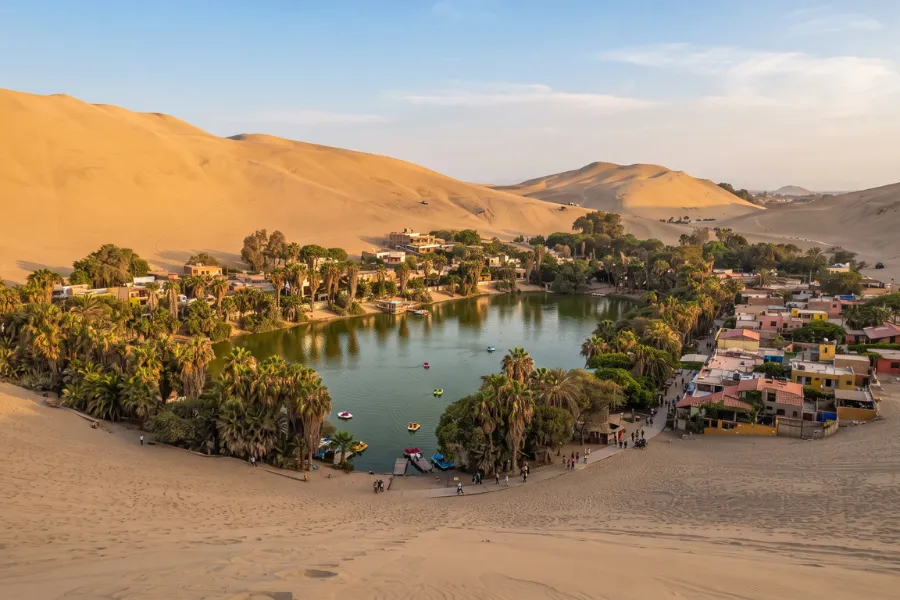
Imagine finding a palm-lined lagoon surrounded by enormous sand dunes in the middle of a desert.
That is Huacachina.
Located near the city of Ica, Huacachina is one of Peru’s best-known desert landscapes. The small oasis is surrounded by towering dunes, creating a scene that looks almost unreal. Visitors commonly explore the surrounding desert by dune buggy or sandboard. The oasis also has an interesting place in Peruvian tourism because it combines a natural water feature with one of the country’s driest landscapes. For travelers looking for unusual facts about Peru, Huacachina is a perfect example of how dramatically the country’s landscapes can change.
6. Peru Has Enormous Sand Dunes
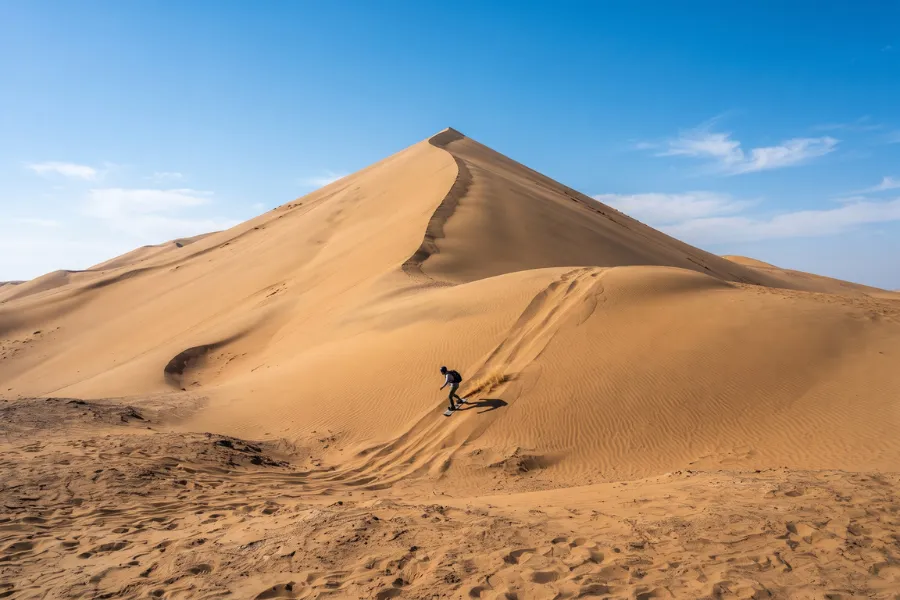
Peru’s desert landscapes are not limited to Huacachina.
The country is also home to some extraordinarily large sand dunes. One of the most famous is Cerro Blanco in the Nazca region. Cerro Blanco rises dramatically above the surrounding desert and has become a popular destination for sandboarding and adventure activities. Standing beside a giant dune gives visitors a completely different impression of Peru. The country is often associated with mountains and ancient ruins, yet large sections of its coastline are dominated by extremely dry desert environments. These massive dunes are among the more fascinating unusual facts about Peru because they contrast so strongly with the country’s tropical Amazon rainforest.
7. The Andean Condor Has a Huge Wingspan
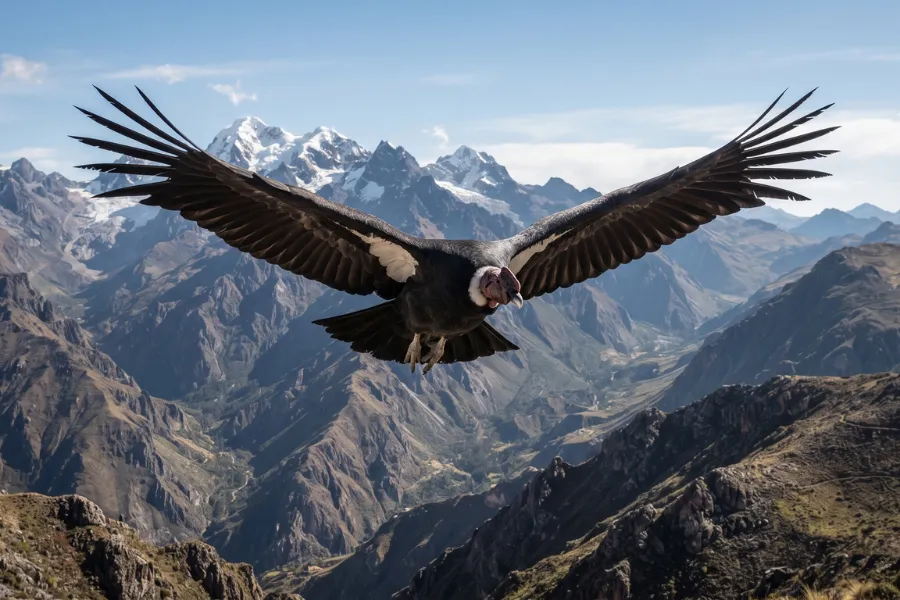
The Andean condor is one of South America’s most impressive birds.
It lives in the Andes and is famous for its enormous wingspan. Instead of constantly flapping, the bird often uses rising air currents to glide across mountainous landscapes. The condor also has deep cultural significance in Andean traditions. For centuries, it has been associated with strength, freedom, and the high mountains. Its slow reproductive cycle makes conservation especially important. Seeing an Andean condor flying over a deep Peruvian valley can be an unforgettable experience, particularly because the bird appears almost effortless as it rides the mountain winds.
8. Colca Canyon Is Exceptionally Deep
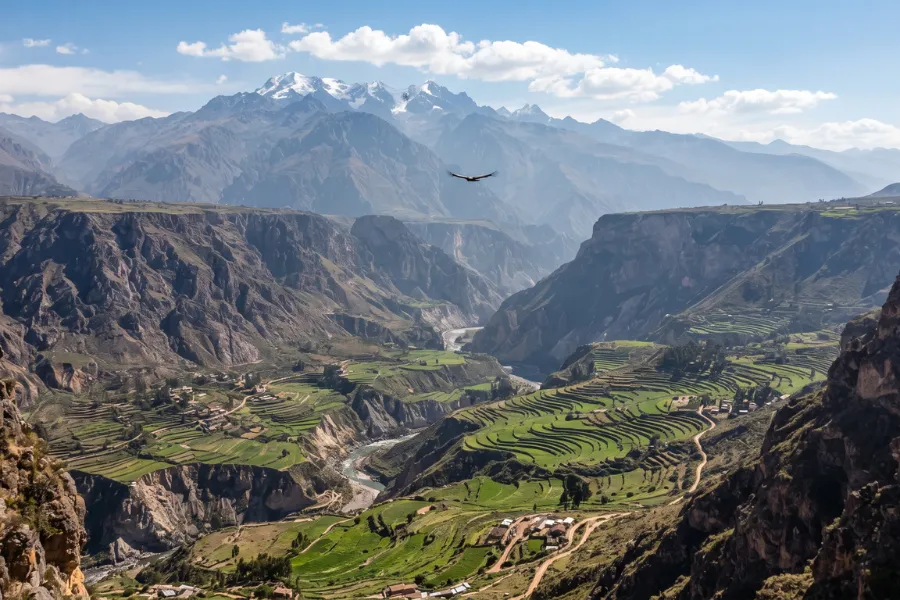
Many people think of the Grand Canyon when they hear the word canyon. However, Peru has some spectacular canyons of its own.
Colca Canyon is one of the country’s most famous natural attractions. It reaches enormous depths and is surrounded by steep mountain slopes, agricultural terraces, and traditional communities. The canyon is also closely associated with Andean condors. Visitors often travel to viewpoints in the surrounding area to watch the birds riding thermal currents above the valley. The combination of geology, agriculture, wildlife, and Indigenous culture makes Colca Canyon much more than a scenic viewpoint.
9. Peru Has Mountains Covered With Tropical Glaciers
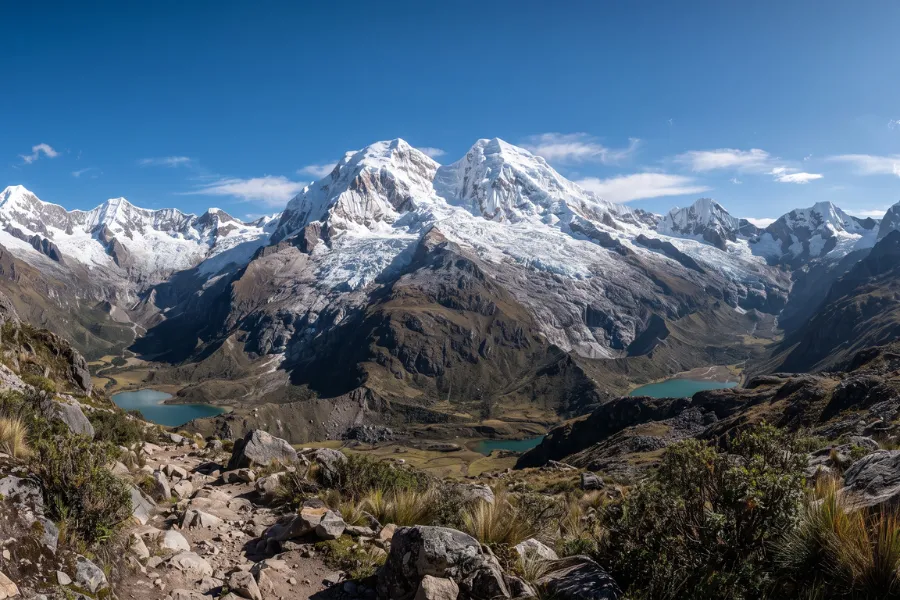
The Peruvian Andes contain some extremely high mountains, including Huascarán, the country’s highest peak.
Huascarán rises to approximately 6,768 meters above sea level and is located within Huascarán National Park. The region is especially unusual because these high mountain environments exist relatively close to the equatorial zone. The combination of altitude and tropical latitude creates distinctive glacier and mountain ecosystems. Huascarán National Park is also recognized as a UNESCO World Heritage natural site. The mountain is a powerful reminder that Peru’s geography extends from hot coastal deserts to freezing high-altitude environments.
10. Rainbow Mountain Gets Its Colors From Geology
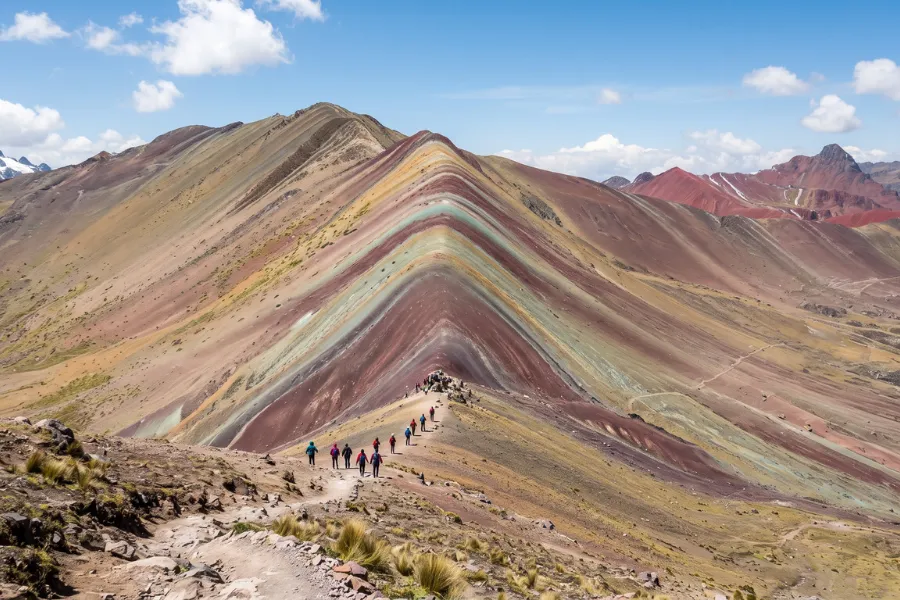
Vinicunca, commonly called Rainbow Mountain, has become one of Peru’s most recognizable natural attractions.
Its colorful appearance comes from different mineral deposits within the surrounding rocks. Instead of one uniform color, the slopes show bands and shades that can appear red, yellow, green, and other earthy tones. The landscape looks almost painted from a distance. However, the colors are a natural geological feature rather than an artificial design. Weather, light, altitude, and viewing conditions can also affect how strong the colors appear. This is another example of how unusual facts about Peru are often connected directly to its extraordinary geology.
11. Guinea Pig Is a Traditional Peruvian Food
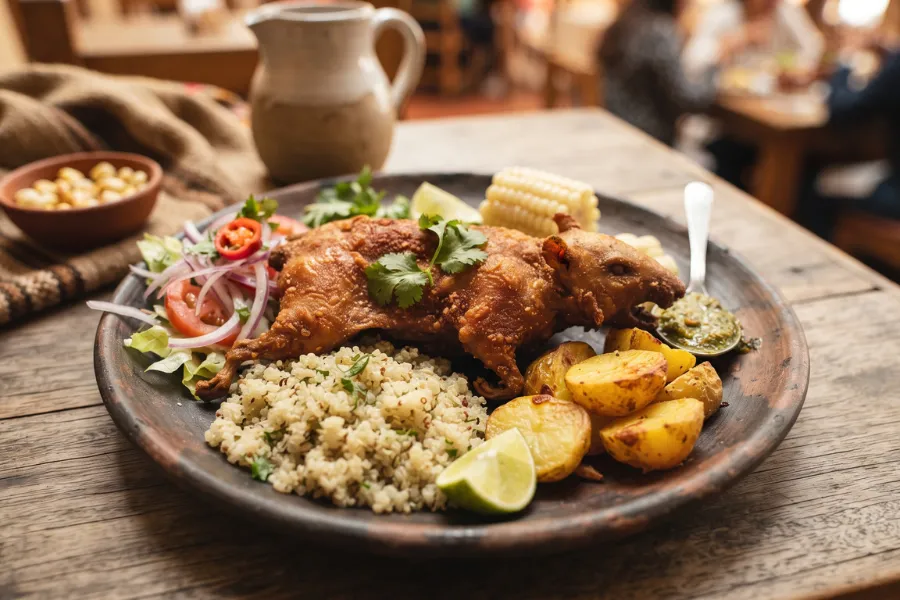
Guinea pigs are commonly kept as pets in many parts of the world, but in Peru they have a very different cultural history.
Known locally as cuy, guinea pig has been raised and eaten in the Andes for centuries. It remains part of traditional cuisine and can be served during celebrations and special occasions. Cuy is typically prepared whole and cooked using traditional methods. Although the dish may seem unusual to visitors from countries where guinea pigs are primarily considered pets, it reflects the long agricultural history of Andean communities. Food traditions often reveal how closely people have adapted to their local environment, and cuy is a clear example of that relationship.
12. Peru Is a Major Center of Crop Diversity
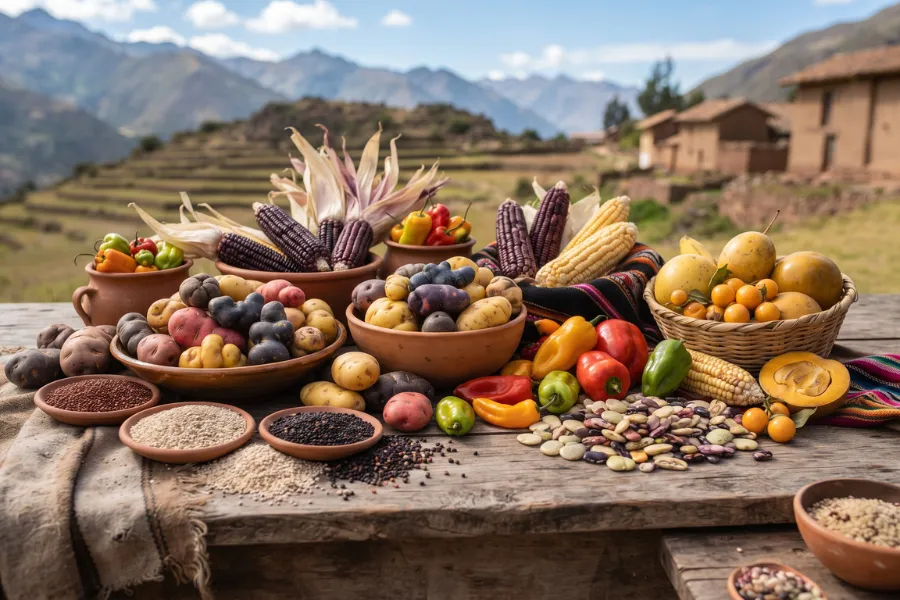
Peru’s agricultural importance goes far beyond potatoes.
The Andes and surrounding ecosystems have contributed to the diversity of numerous crops and edible plants. Local agriculture includes potatoes, maize, quinoa, ají peppers, beans, fruits, and many other foods. Different elevations create different growing conditions. Farmers have historically developed crops and farming techniques suited to particular environments. This agricultural diversity is one reason Peruvian cuisine has such a distinctive character. It also explains why some unusual facts about Peru are really stories about the relationship between people, mountains, climate, and food.
13. Quinoa Has Deep Andean Roots
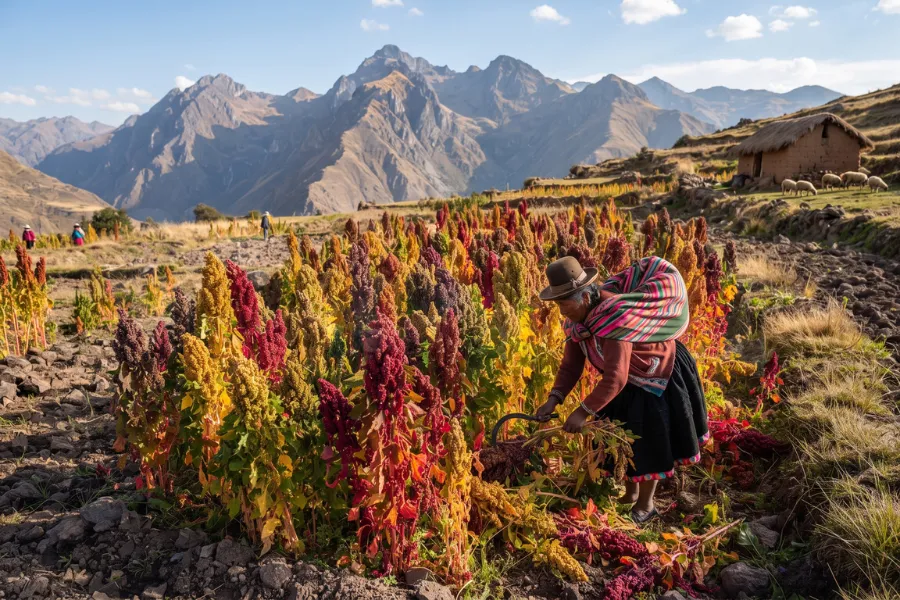
Quinoa has become popular around the world as a nutritious grain-like food, but its history in the Andes goes back thousands of years.
It has traditionally been cultivated in high-altitude areas where other crops can be more difficult to grow. Quinoa is valued for its nutritional profile and versatility. It can be used in soups, salads, bowls, side dishes, and many modern recipes. Peru remains one of the world’s important quinoa-producing countries, particularly in the highlands. The crop is another example of how traditional Andean foods have moved from local communities into kitchens around the world.
14. The Nazca Lines Are Still an Archaeological Mystery
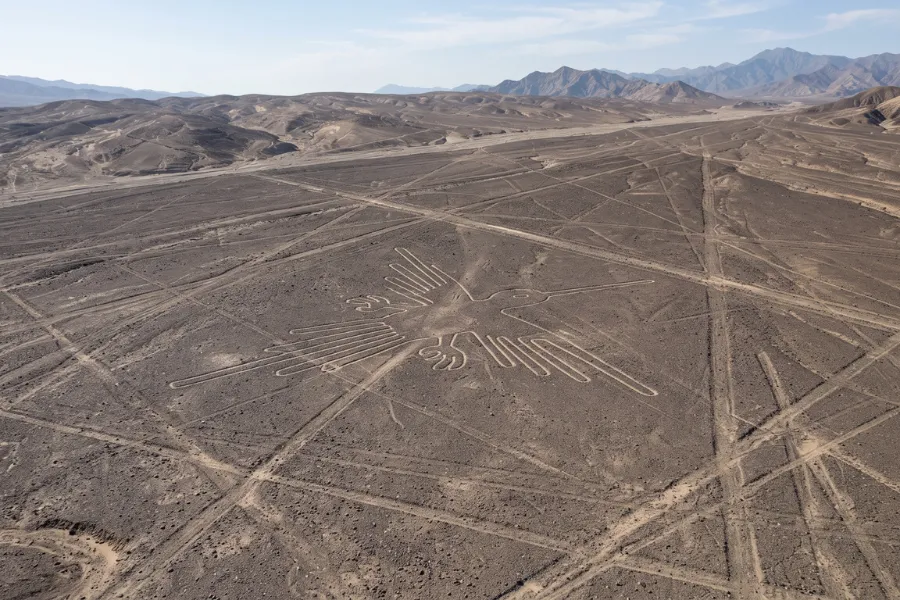
The Nazca Lines are among the most famous archaeological features in Peru.
Created on the desert surface of southern Peru, the geoglyphs include enormous representations of animals, plants, geometric shapes, and other forms. Some figures are hundreds of meters across. UNESCO states that the lines were created between approximately 500 BC and AD 500 and describes them as one of archaeology’s great enigmas. The site covers a vast area of the arid coastal plain.
UNESCO: Lines and Geoglyphs of Nasca and Palpa
The dry desert environment helped preserve the designs for centuries.
Why Were the Nazca Lines Created?
Researchers have proposed different explanations for the lines. Archaeological evidence points toward ritual and astronomical functions, although the full meaning of every design remains debated. That uncertainty is exactly what makes the Nazca Lines so fascinating. Rather than being a simple collection of drawings, they represent a large-scale cultural landscape created by ancient societies. Among all the unusual facts about Peru, this ancient mystery remains one of the most famous.
15. Machu Picchu Was Built High in the Andes
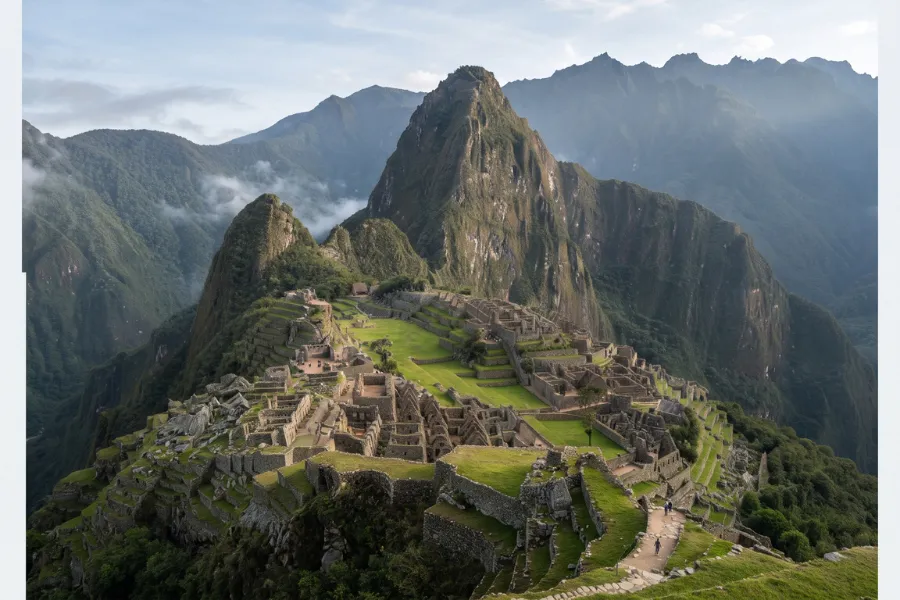
Machu Picchu is Peru’s most famous archaeological site, but its location is just as impressive as its stone architecture.
The Inca citadel stands at about 2,430 meters above sea level in a dramatic mountain environment where the Andes meet the Amazon Basin. UNESCO recognizes the Historic Sanctuary of Machu Picchu as a mixed World Heritage property because of both its cultural and natural importance.
UNESCO: Historic Sanctuary of Machu Picchu
The site contains terraces, stone structures, plazas, walls, and other architectural features that demonstrate the engineering abilities of the Inca civilization. Machu Picchu was brought to international attention in 1911 through the work of Hiram Bingham, although local people already knew the area.
16. Machu Picchu Was Not Peru’s Only Lost City
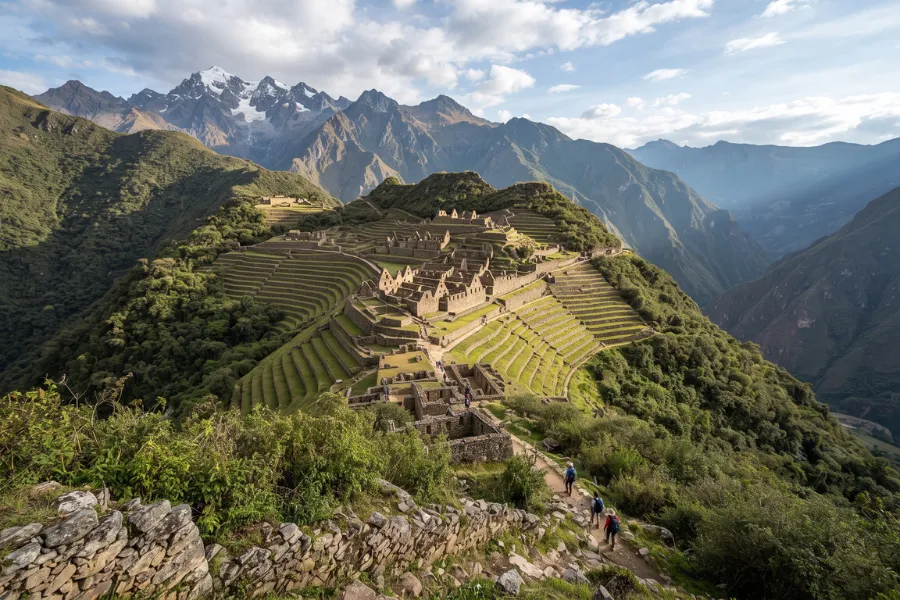
Machu Picchu may be the most famous, but Peru contains many other archaeological sites connected to ancient civilizations.
One example is Choquequirao, an extensive archaeological complex located in a remote mountainous area. Because of its difficult access, Choquequirao receives far fewer visitors than Machu Picchu. Peru also contains major sites connected to cultures that existed before the Inca Empire. These include Chavín, Chan Chan, Caral-Supe, and the Nazca cultural tradition. Therefore, Peru’s archaeological story is much larger than the Inca period alone.
17. The Inca Built an Enormous Road Network
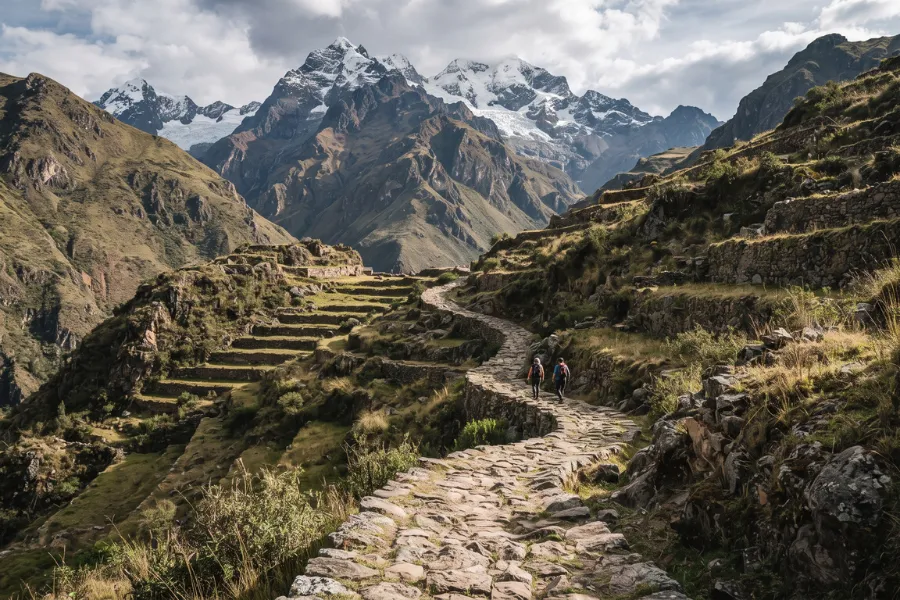
The Inca civilization created an extensive road system connecting settlements across the Andes.
The network, known as the Qhapaq Ñan, crossed difficult mountain terrain and connected important centers of the empire. Engineers had to deal with steep slopes, rivers, valleys, and high elevations. Some routes are now famous as trekking paths, including sections associated with the Inca Trail to Machu Picchu. The roads were important for communication, administration, movement of goods, and travel between different parts of the empire. This remarkable infrastructure shows that the Inca world depended on much more than impressive stone buildings.
18. Traditional Peruvian Textiles Have a Long History
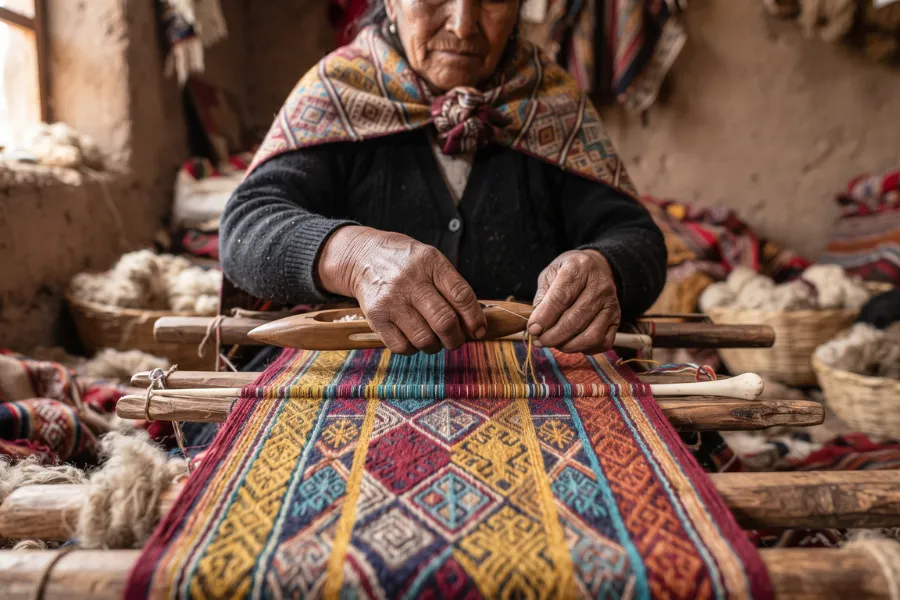
Textile production has played an important role in Andean culture for thousands of years.
Traditional weaving can involve detailed patterns, strong colors, symbolic designs, and locally sourced fibers. Alpaca wool is especially valued for its softness and warmth, while other natural fibers have also been used by Andean communities. Textiles can communicate cultural identity as well as practical information. Patterns and clothing styles may differ between communities and regions. As a result, traditional Peruvian clothing is not simply decorative. It can represent history, place, community, and heritage.
19. Peru Is Closely Associated With Alpacas
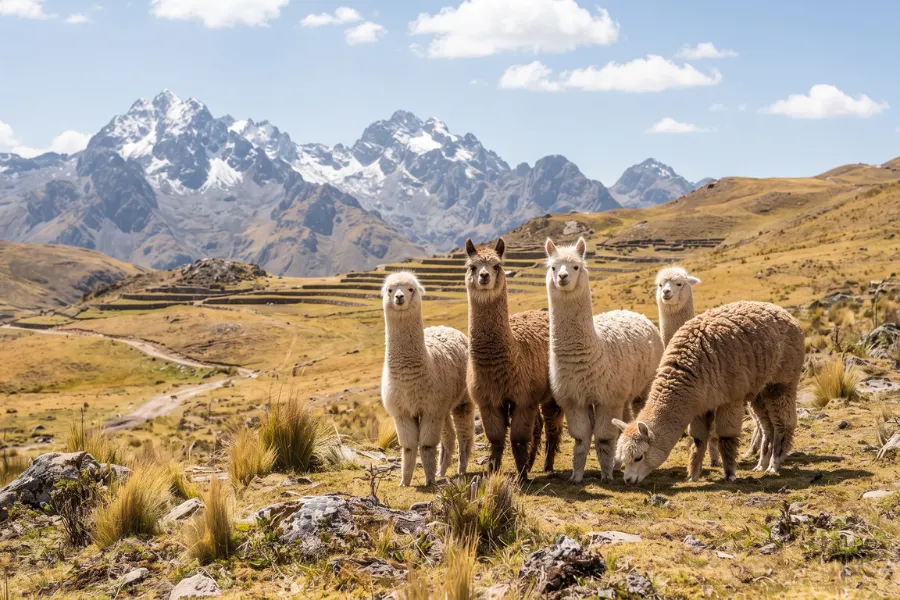
Alpacas are strongly connected with the high Andes and have become one of Peru’s most recognizable animals.
They are raised primarily for their valuable fiber, which is known for being soft, warm, and lightweight. Alpacas are related to llamas, but the two animals have different physical characteristics and traditional uses. Visitors to Peru can often see alpacas in highland areas, particularly around regions such as Cusco and Puno. Their importance goes beyond tourism. Alpaca herding and fiber production remain connected to the livelihoods and traditions of Andean communities.
20. The Amazon Covers a Huge Part of Peru
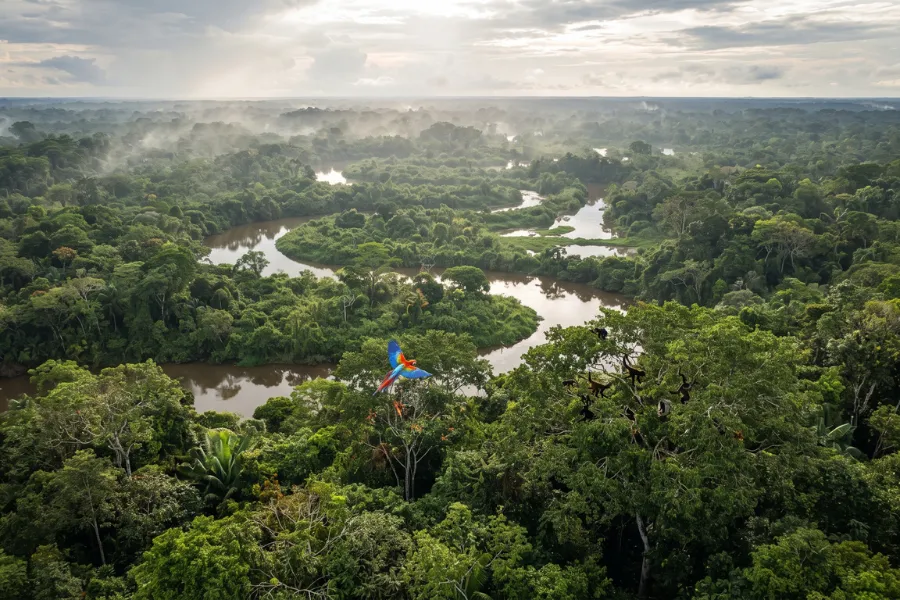
When people picture Peru, they often imagine mountains and ancient ruins. However, a huge portion of the country lies within the Amazon rainforest.
Peruvian Amazonia contains rivers, wetlands, forests, and an extraordinary variety of plant and animal life. Important protected areas include Manu National Park, Tambopata, and Pacaya-Samiria. Wildlife in the Peruvian Amazon can include jaguars, giant river otters, monkeys, colorful birds, reptiles, and pink river dolphins. This incredible biodiversity is one of the strongest unusual facts about Peru because the country contains both extremely dry deserts and one of the world’s great tropical rainforest environments.
21. The Amazon River System Is Connected to Peru
The Amazon River system has important connections to the Peruvian Andes.
Rivers descending from the mountains eventually contribute to the enormous Amazon Basin. This relationship between the Andes and Amazon is especially important because the mountains influence water systems, climate, ecosystems, and human settlements far beyond the highlands. Peru’s geography therefore works as one interconnected system. Snow and rainfall in the mountains can ultimately contribute to rivers flowing through tropical forests thousands of meters lower.
22. Peru Has Extraordinary Butterfly and Bird Diversity
Peru is one of the world’s great destinations for wildlife enthusiasts.
Its combination of Pacific coast, Andes, cloud forests, and Amazon rainforest creates habitats for a remarkable range of species. Birdwatchers can encounter hummingbirds, macaws, condors, toucans, and many other species. The Amazonian forests are especially important for biodiversity, while the Andes provide completely different ecological environments. The country’s wildlife diversity also demonstrates why geography matters so much when understanding Peru.
23. Peruvian Cuisine Combines Many Cultural Influences
Peruvian food is another subject filled with fascinating history.
Traditional Andean ingredients have mixed with influences introduced through centuries of migration and cultural exchange. Peruvian cuisine includes Indigenous, Spanish, African, Chinese, Japanese, and other influences. This has helped create distinctive food traditions such as Chifa, which reflects Chinese-Peruvian cuisine, and Nikkei cuisine, which combines Japanese and Peruvian influences. Ceviche is perhaps the country’s best-known international dish, while potatoes, maize, peppers, quinoa, seafood, and tropical fruits also play major roles. The result is a food culture that is both deeply traditional and constantly evolving.
24. Peru Has More UNESCO World Heritage Sites Than Many People Realize
Peru’s cultural and natural importance is recognized internationally.
UNESCO currently lists 13 World Heritage properties in Peru, including cultural, natural, and mixed sites.
The list includes famous locations such as Machu Picchu and the Nazca Lines, but it also includes sites such as Huascarán National Park, Manú National Park, Chavín, Chan Chan, Caral-Supe, and the Qhapaq Ñan road system. This makes Peru especially interesting for travelers who want to explore both natural landscapes and ancient civilizations.
25. Peru Is a Country of Extreme Contrasts
Perhaps the biggest of all the unusual facts about Peru is that so many completely different environments exist within one country.
You can find Pacific coastal deserts, enormous sand dunes, ancient archaeological landscapes, high-altitude lakes, snow-covered mountains, fertile valleys, cloud forests, and tropical Amazon rainforest. These contrasts have influenced almost every part of Peruvian life. They have shaped agriculture, transportation, architecture, clothing, languages, wildlife, food, and settlement patterns. That is why Peru cannot easily be described with one image. Machu Picchu is only one part of a much larger story.
Frequently Asked Questions About Peru
What is the most unusual fact about Peru?
One of the most unusual facts about Peru is that the country combines dramatically different environments, including coastal deserts, the Andes Mountains, and Amazon rainforest. This geographical variety creates extraordinary differences in climate, wildlife, agriculture, and culture.
What is Peru famous for besides Machu Picchu?
Peru is famous for Lake Titicaca, the Nazca Lines, Rainbow Mountain, Colca Canyon, Huacachina, the Amazon rainforest, Andean wildlife, traditional textiles, potatoes, quinoa, and its internationally recognized cuisine.
What are 5 interesting facts about Peru?
Five interesting facts are that Peru is home to Lake Titicaca, has thousands of potato varieties, contains the mysterious Nazca Lines, includes part of the Amazon rainforest, and has one of the world’s most famous ancient Inca sites at Machu Picchu.
Why is Peru famous for potatoes?
Potatoes have been cultivated in the Andes for thousands of years, and Peru is an important center of potato diversity. Many varieties developed to survive different elevations and environmental conditions.
What languages are spoken in Peru?
Spanish is widely spoken, while Quechua and Aymara are important Indigenous languages. Peru also has numerous other Indigenous languages, particularly in Amazonian communities.
What makes Lake Titicaca unusual?
Lake Titicaca is remarkable because it sits at a very high elevation and is one of the world’s highest large navigable lakes. It is also culturally important and is associated with traditional communities such as the Uros.
Why are the Nazca Lines famous?
The Nazca Lines are famous because ancient societies created enormous geoglyphs across the desert landscape. Their size, age, precision, and uncertain full meaning have made them one of archaeology’s most fascinating subjects.
Is Peru only a mountainous country?
No. Peru contains three major geographical zones: the coastal region, the Andes, and the Amazonian region. Its landscapes range from extremely dry deserts to high mountains and tropical rainforest.
What food is Peru famous for?
Peruvian cuisine is known for dishes such as ceviche and for ingredients including potatoes, maize, quinoa, ají peppers, seafood, and tropical fruits. Chinese-Peruvian Chifa and Japanese-Peruvian Nikkei traditions are also important.
Final Thoughts
These unusual facts about Peru show why the country is one of the most fascinating destinations in South America. Its story goes far beyond Machu Picchu. Peru combines ancient civilizations, extraordinary geography, Indigenous traditions, remarkable wildlife, diverse agriculture, archaeological mysteries, and a globally recognized food culture.
From the high waters of Lake Titicaca to the mysterious Nazca desert, from enormous Andean peaks to the Amazon rainforest, every region adds another layer to the country’s identity. If you look beyond the famous tourist attractions, Peru becomes even more interesting. Its landscapes and cultures explain why so many unusual facts about Peru continue to attract travelers, historians, scientists, and curious readers from around the world.